

The right replacement chain depends on the Himiway Cruiser’s gearing, not just its model name. For Himiway Cruiser chain replacement in Camrose, the key fitment details are the bike’s 7-speed drivetrain and the 120-link chain listed for the Cruiser. Warranty coverage is a separate question: a listed two-year warranty doesn’t establish whether chain wear is covered.
It makes sense to want a clear picture of the work before arranging service. The drivetrain and gearing determine chain compatibility, while wear in connected parts can affect the repair. This guide explains what shapes a Himiway Cruiser chain replacement, what to consider when reviewing warranty coverage, and what information helps a mechanic assess your bike. It also covers why matching the chain to the gearing matters for reliable shifting and drivetrain care.
Key Takeaways
- Confirm the replacement chain matches the Cruiser’s drivetrain; speed compatibility matters more than the bike’s name alone.
- Separate the chain’s replacement from warranty coverage: wear and the warranty’s terms affect whether a claim may apply.
- Learn which measuring and chain tools a shop uses to assess fit and complete the replacement.
- Recognize signs of chain wear early, since a worn chain can affect shifting and put added wear on drivetrain parts.
- Understand how a professional removes and installs the chain, then checks shifting and drivetrain operation.
Drivetrain and gearing
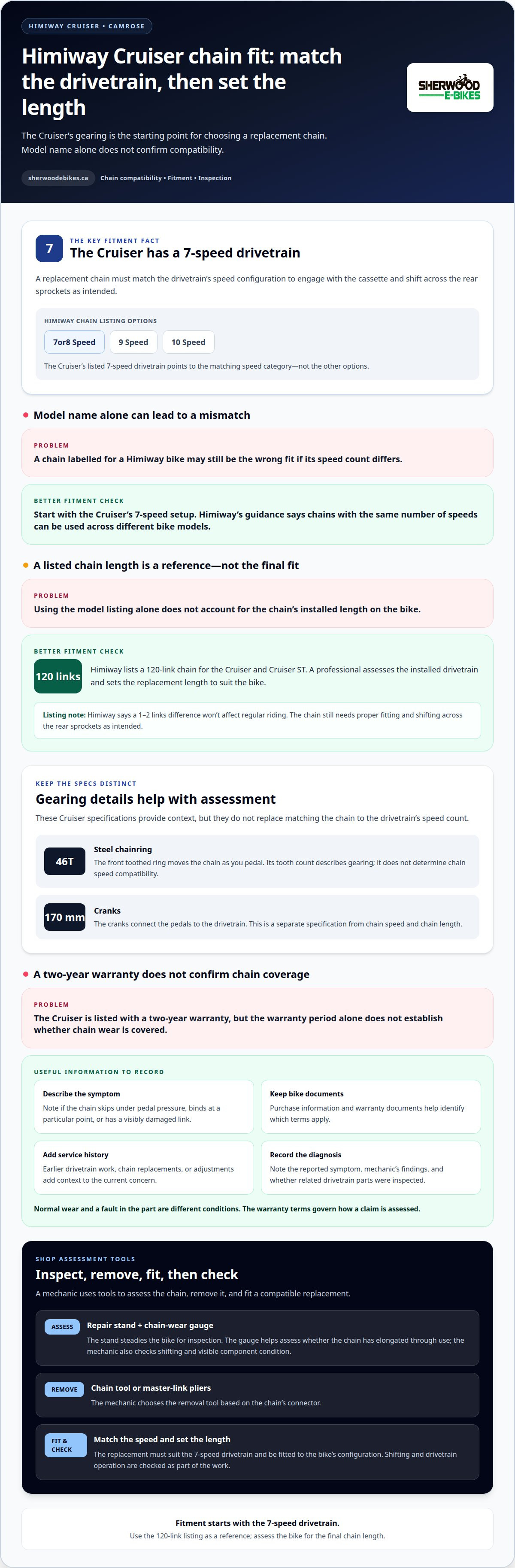
The Himiway Cruiser uses a 7-speed drivetrain, so replacement compatibility starts with the number of rear sprockets. A chain must match the drivetrain’s speed configuration to engage properly and shift across the cassette. A chain selected only because it is labelled for a Himiway bike may still be the wrong fit if its speed count differs. For Himiway Cruiser chain replacement in Camrose, the model and gearing together guide the chain choice.
Himiway chain listings include a 7or8 Speed option, as well as 9 Speed and 10 Speed options. The Cruiser’s listed 7-speed drivetrain points to the matching speed category, not those other options. Himiway’s compatibility guidance says chains with the same number of speeds can be used across different bike models. That means the speed count is the key starting point when identifying a compatible chain; model names alone don’t determine fit.
Length matters too. The Himiway listing specifies a 120-link chain for the Cruiser and Cruiser ST models. A professional assesses the installed drivetrain and sets the replacement length to suit the bike’s configuration. The listing also says a 1-2 links difference won’t affect regular riding. That tolerance doesn’t replace proper fitting: the chain still needs to run through the drivetrain and shift across the rear sprockets as intended.
The Cruiser’s 46-tooth steel chainring is another useful reference during assessment. The chainring is the front toothed ring that moves the chain as you pedal. Its tooth count describes gearing, but it doesn’t change the need to match the replacement chain to the drivetrain’s speed count. The Cruiser’s listed 170 mm cranks connect the pedals to the drivetrain; they’re a separate specification from chain speed and chain length.
- Speed count: Match the replacement chain to the Cruiser’s 7-speed drivetrain.
- Chain length: Use the 120-link listing as a model-specific reference, then fit the chain to the bike.
- Gearing components: Keep the 46-tooth chainring and 170 mm crank specification distinct from chain compatibility.
These details help explain why a chain listing for another Himiway model isn’t enough by itself. A same-speed chain may be cross-compatible between models, while the Cruiser’s gearing and required installed length still guide the final fit. Clear identification of the 7-speed drivetrain, 120-link listing, 46-tooth chainring, and 170 mm cranks gives a professional specific information to assess before replacement.
Warranty coverage
The Himiway Cruiser is listed with a two-year warranty, but the warranty period alone does not determine whether a chain issue qualifies for coverage. The key question is why the chain needs attention. Normal wear from use differs from a fault in the part, and the warranty terms govern how a claim is assessed. Treat the warranty period as a starting point, not an automatic approval for chain replacement.
Start by describing the symptoms precisely. Note whether the chain skips under pedal pressure, binds at a particular point, or has a visibly damaged link. When the problem occurs and what you were doing can help clarify the cause. A mechanic can document the chain’s condition and distinguish wear from a specific defect, giving any warranty review a concrete description of the issue.
Keep the Cruiser’s purchase information and warranty documents together. Records identifying the bike and its purchase date help establish which warranty terms apply. Service records can provide context about previous drivetrain work, too. If the chain has been replaced or adjusted before, those details may help explain its current condition. Keep relevant documents with the bike’s service history.
Before authorizing replacement, ask for the diagnosis and proposed work to be recorded clearly. A useful service record notes the reported symptom, the mechanic’s findings, and whether related drivetrain parts were inspected. If a warranty claim is being considered, the record helps connect the reported problem with the chain’s observed condition. It also separates warranty assessment from routine maintenance decisions.
- Warranty period: The Himiway Cruiser is listed with a two-year warranty.
- Reason for the issue: A defect and ordinary chain wear are different conditions.
- Bike documentation: Purchase details and warranty documents help identify applicable terms.
- Service history: Records of earlier drivetrain work add context to the current concern.
Base the decision on the Cruiser’s documented condition and applicable warranty terms. A clear diagnosis can show whether the chain needs replacement, related parts need attention, or the issue should be reviewed under warranty. Record the findings before work proceeds, especially if the problem appeared soon after purchase or following earlier service. This creates a useful account of the bike’s condition and the reasoning behind the recommended next step.
What tools does a bike shop use to replace a Himiway Cruiser chain?
A mechanic uses measuring and installation tools to assess the chain, remove it, and fit a compatible replacement. For a Himiway Cruiser, the mechanic first secures the bike in a repair stand. This steadies the frame while the drivetrain is inspected and gives access to the pedals and rear wheel during checks.
A chain-wear gauge helps assess whether the chain has elongated through use. The mechanic places it against the chain to judge wear, then considers how the chain engages with the chainring and rear sprocket teeth. The gauge is an assessment tool, not a substitute for checking shifting and visible component condition. Worn teeth can affect the repair plan.
To separate the old chain, a mechanic may use a chain tool or master-link pliers. The right choice depends on the chain’s connector. A chain tool pushes a pin through a link; master-link pliers open a compatible quick link. The mechanic identifies the connection first, rather than forcing it apart with an unsuitable tool.
- Repair stand: Holds the bike steady and allows the mechanic to turn the pedals during inspection.
- Chain-wear gauge: Helps assess elongation in the existing chain.
- Chain tool: Separates chain links when the fitted connection requires it.
- Master-link pliers: Open or close a compatible quick link.
- Cleaning supplies: Remove built-up grime so the chain and drivetrain can be examined.
After removing the chain, the mechanic may clean the drivetrain before installing its replacement. A brush and suitable cleaner can expose chainring and sprocket teeth, where dirt may hide wear. A clean inspection also helps show whether the chain was the only affected part. The mechanic then sizes and joins the replacement using the appropriate tool and connector.
Some repairs require additional tools. If the rear wheel must be removed, the mechanic uses the appropriate tools for its fasteners and checks that the wheel is secure after refitting. A chain whip and cassette tool are relevant only if cassette removal is needed, not for routine chain removal. The setup depends on the bike’s components and the repair findings.
Finally, the mechanic rotates the pedals and shifts through the gears to assess chain movement. This check can reveal a stiff link, poor engagement, or shifting that needs adjustment. The tools support precise work, but correctly identifying the chain connection, fitting the replacement carefully, and checking the shifting complete the job.
How does a bike shop remove and install a Himiway Cruiser chain?
A mechanic starts by securing the Himiway Cruiser in a repair stand and examining its drivetrain. They check the chain connection and routing through the rear derailleur, and look for visible damage to the chainring or sprockets. This inspection guides the removal method and can uncover issues that may affect the replacement. The bike’s shifting provides a baseline for comparison after installation.
Removal depends on the connector design. If the chain has a quick link, the mechanic releases it with compatible pliers. If it uses a joined pin, they separate the link with a chain tool. The old chain comes away from the chainring and derailleur without forcing the connection or bending nearby parts. The mechanic can then check it and the drivetrain for dirt, stiff links, or damaged teeth.
Before installation, the mechanic matches the replacement chain to the bike’s gearing and routing. The chain must pass correctly through the derailleur cage, with the rollers sitting on the intended guides. Incorrect routing can cause poor shifting or contact with the cage. The mechanic also sizes the chain for the bike’s setup instead of relying only on the removed chain’s length.
- Secure and inspect: Stabilize the Himiway Cruiser, identify its chain connector, and check drivetrain condition.
- Remove the old chain: Separate its quick link or joined pin using the matching tool.
- Prepare the replacement: Confirm compatible gearing and route the chain through the derailleur.
- Join and assess: Connect the chain, then check its movement and shifting.
Once sized, the replacement chain is joined with its designated connector. The mechanic checks that the connection closes properly and moves freely through the drivetrain. A stiff link can interrupt smooth movement, so the mechanic rotates the pedals and watches the chain pass through the derailleur cage. Any irregular movement calls for inspection before the bike returns to riding.
The final assessment checks operation across the gears. The mechanic turns the pedals while shifting through the rear sprockets, observing whether the chain tracks cleanly and responds to the shift lever. If shifting is inconsistent, they investigate alignment or adjustment rather than assuming the new chain is the only cause. This operational check can also catch noise, slipping, or poor engagement.
For a Himiway Cruiser, replacement is complete only when the chain is connected, routed, and moving properly as the pedals turn. Inspection and a post-installation shifting check matter because the new chain must work with the rest of the drivetrain. The mechanic records any related wear found so the repair reflects the bike’s actual condition.
What signs indicate a Himiway Cruiser chain needs replacement, and what risks come from riding with a worn chain?
A Himiway Cruiser chain may need attention if shifting becomes inconsistent, pedalling feels rough, or the drivetrain develops new clicking or grinding sounds. These symptoms can indicate chain wear, but they may also result from a stiff link, poor adjustment, or worn sprocket teeth. A mechanic assesses the chain alongside the rear derailleur and chainring before recommending replacement.
Visible changes offer other clues. A chain with stiff or damaged links may not bend smoothly around the chainring. Rust, heavy grime, or binding links can affect movement, though dirt alone does not prove the chain needs replacement. A mechanic can clean and inspect it, then use a chain-wear gauge to assess elongation. This helps distinguish measurable wear from a problem that needs adjustment or cleaning.
Shifting behaviour matters, too. If the Himiway Cruiser skips under pedal pressure or struggles to shift cleanly between rear sprockets, a worn chain is one possible cause. A mechanic checks how the chain engages with the teeth and whether a particular link catches as the pedals turn. This helps distinguish chain wear from derailleur adjustment or another drivetrain fault.
Continuing to ride with a worn chain can accelerate wear on connected drivetrain parts. An elongated chain does not sit on the teeth as intended, which can wear the chainring and rear sprockets. If those parts are worn, replacing only the chain may not restore smooth engagement. A mechanic assesses each contact surface before deciding which components need attention.
- Changing sounds: Clicking or grinding during pedalling calls for an inspection of the chain and surrounding drivetrain.
- Irregular shifting: Skipping or hesitation between sprockets can signal chain wear or an adjustment issue.
- Stiff links: Links that fail to move freely may interrupt chain travel through the derailleur.
- Visible wear or damage: Rust, deformation, or damaged links warrant professional assessment.
A chain failure while riding can interrupt pedalling and stop the bike from transferring pedal force through the drivetrain. A slipping chain can also make pedal input unpredictable, especially during gear changes. New noises, skipping, or binding are reasons to arrange an assessment. A mechanic can determine whether chain replacement is enough or whether the chainring or sprockets also show wear.
If your Himiway Cruiser shows these symptoms in Camrose, arrange a professional drivetrain assessment to identify the cause before further wear affects connected parts.
Sherwood E-Bikes
Sherwood E-Bikes Ltd. provides e-bike maintenance for riders who need help assessing chain wear, drivetrain condition, or replacement fit. Bring your Himiway Cruiser’s model details and describe any skipping, noise, or stiff chain movement. These details help focus the assessment on the symptoms and parts involved. E-bike parts support the repair if replacement is needed, while a drivetrain inspection can identify related wear affecting shifting. For Camrose riders, this is a practical next step when the chain shows signs of wear or the repair scope is unclear.
Contact Sherwood E-Bikes Ltd. to discuss your Himiway Cruiser chain service.
Plan Your Next Ride with Confidence
Use the service conversation to decide what you need for your Himiway Cruiser: a clear diagnosis, a warranty review, or a repair plan. For Himiway Cruiser chain replacement in Camrose, describe the riding symptoms and your preferred next step to keep the conversation focused. Raise any warranty questions before authorizing replacement work.
A professional assessment gives you a practical basis for deciding how to proceed. If you plan to commute regularly, keeping the Cruiser’s drivetrain in good working order can help you stay ready for everyday rides. Understand the recommended work and how it relates to the problem you noticed, then choose the next step that suits your bike.
For help planning that step, contact Sherwood E-Bikes. A clear conversation can put you on the path back to riding with confidence.
Frequently Asked Questions
What chain size and specifications does the Himiway Cruiser use?
The Himiway Cruiser is listed with a 7-speed drivetrain and a 120-link chain specification. Its drivetrain also includes a 46-tooth steel chainring. These details help identify the correct replacement category. Share the Cruiser’s model information with the mechanic, especially if the bike has had drivetrain changes, so the replacement can be assessed against its current setup.
Which replacement chains are compatible with the Himiway Cruiser drivetrain?
A replacement chain needs to match the Cruiser’s drivetrain speed category and connector. Himiway listings include 7or8 Speed, 9 Speed, and 10 Speed options, so the labels shouldn’t be treated as interchangeable. A mechanic can identify the installed setup and confirm the replacement chain’s connection style. This helps avoid selecting a chain based only on a general Himiway product label.
How does a bike shop measure and size a replacement chain for a Himiway Cruiser?
A mechanic assesses the drivetrain, chain routing, and connector before sizing a replacement. The removed chain can offer a reference, but wear may have changed its length. The mechanic checks how the replacement sits through the derailleur and around the chainring, then turns the pedals and tests shifting to confirm that the chain moves cleanly through the gearing.
What should I provide when arranging a compatible Himiway Cruiser replacement chain in Canada?
Provide the bike’s model details and describe any drivetrain changes or recent chain work. Original purchase or service records can help identify its configuration. Mention specific symptoms, such as binding or slipping, and when they occur. These details help the mechanic assess the right replacement and prepare for the service visit.
Where can I buy a Himiway Cruiser replacement chain in or near Camrose, Alberta?
Sherwood E-Bikes offers E-Bike Parts at its Sherwood Park store, at 2008a Sherwood Dr., Sherwood Park, Alberta. Parts are available for in-store pickup. For someone travelling from Camrose, the shop is in Sherwood Park, not Camrose. Confirming the Cruiser’s drivetrain details before pickup helps ensure the selected chain suits the bike’s current gearing and connector.
Which Camrose bike shops service Himiway electric bikes and install replacement chains?
Sherwood E-Bikes provides e-bike maintenance, including drivetrain work, at its Sherwood Park location. The shop is an authorized dealer for AIMA, ENVO, Wolff, and Letrigo. Himiway chain replacement is mechanical work, so describe the symptoms and bike configuration when arranging service. This helps distinguish a drivetrain repair from electrical-system work.
What should a service assessment cover before a Himiway Cruiser chain replacement?
A useful assessment identifies the chain’s condition, checks how it engages with the chainring and rear sprockets, and notes any shifting concerns. It should distinguish chain replacement from related drivetrain work. Ask the mechanic to explain the findings and recommended work clearly before proceeding. That gives you a practical record of what the Cruiser needs and why.
Should the Himiway Cruiser cassette or chainring be replaced along with the chain?
Not necessarily. A mechanic inspects the cassette and chainring for worn or damaged teeth and checks how they engage with the replacement chain. If the chain skips or fails to sit correctly, related wear may be involved. The decision should reflect the condition of those components, not assume that every chain replacement requires additional drivetrain parts.


