

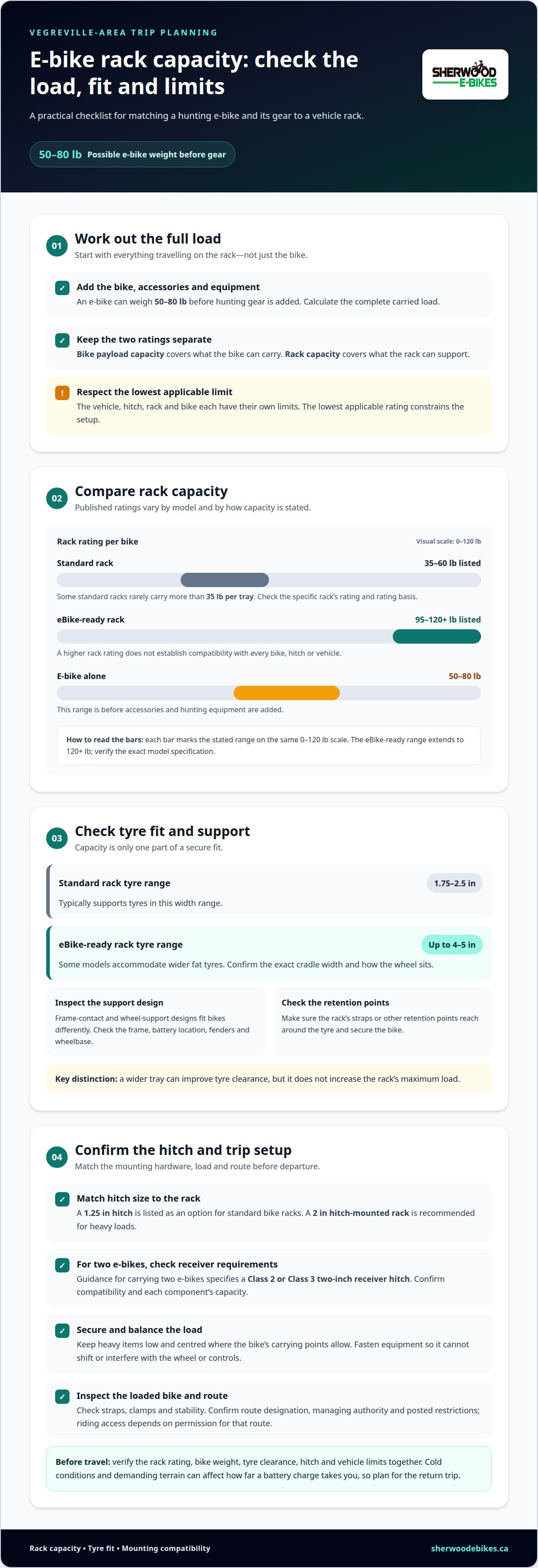
Rack capacity, not the hunting setup’s intended use, determines what you can carry safely. For an electric hunting bike setup and gear racks in Vegreville, compare the loaded e-bike’s weight with the rack’s stated per-bike limit. E-bikes can weigh 50 to 80 pounds each, before you add gear.
That weight makes a standard rack a poor fit for some e-bikes, especially when hunting equipment adds to the load. A rack designed for e-bikes can offer greater capacity and wider tyre support, with some models accommodating tyres up to 4"-5" wide.
This guide explains how to assess the full load, read rack capacity ratings and distinguish standard racks from e-bike-ready options. You’ll also see which fit details matter for fat tyres and how to plan a practical setup for hunting trips around Vegreville. Use the numbers as a starting point, then match the rack, bike and load ratings before you travel.
Key Takeaways
- Work out the complete bike-and-gear load before choosing a rack, and compare it with the rack’s rated capacity.
- Learn why eBike-ready racks can suit heavier bikes and wider tyres better than standard racks.
- Match the rack’s mounting style and tyre cradles to your vehicle and hunting bike.
- Assess motor output, battery capacity and the demands of your route when planning a hunting ride.
- See how cargo placement and suitable accessories can help keep your equipment organized for the trip.
1. E-bike weight and rack load capacity
For a hunting setup, calculate the full carried load before choosing a rack. Add the e-bike’s weight, accessories, and any equipment travelling with it. The e-bike alone can weigh 50 to 80 pounds, so a rack’s rating needs close attention. Standard racks are listed at 35-60 lbs per bike, while eBike-ready racks may support 95-120+ lbs per bike. Those figures describe rack capacity, not the bike’s own payload limit.
Keep these ratings separate. The bike’s payload capacity covers the total load it can carry; the rack rating covers the load the rack can support. A 2" hitch-mounted rack is recommended for heavy loads. The vehicle, hitch, rack, and bike each have their own limits, and the lowest applicable rating constrains the setup.
Compare hunting e-bikes, e-fat bikes and electric cargo bikes by purpose and carrying design. Fat tyres can suit rougher surfaces, while cargo e-bikes are designed around carrying loads. For hunting access, weigh the bike and gear together, then consider how the load attaches and affects balance.
For mud, snow and rough terrain, choose tyres and rack supports that fit the bike, then secure cargo so it cannot shift. Keep heavy items low and centred where the bike’s carrying points allow. Mud or packed snow can affect tyre clearance and handling, so avoid a setup that presses gear against the wheel or obstructs controls.
Alberta rules differ across roads, trails and public land. Access depends on the route’s designation, its managing authority and posted restrictions, so check the conditions for your specific route before riding. An e-bike can provide hunting access on public lands or recreation areas only where its use is permitted. Permission to hunt does not, by itself, mean you can ride every access route.
In rural Alberta, plan for battery range, safe handling and theft prevention. Cold conditions and demanding terrain can affect how far a charge takes you, so leave room for the return trip. Secure the battery and bike when unattended, and fasten essential gear firmly. Before departure, confirm the rack’s load rating, inspect straps and clamps, and make sure the loaded bike remains stable.
2. Differences between standard and eBike-ready racks
Standard racks and eBike-ready racks differ in load capacity, tyre clearance, and support design. A standard rack can rarely carry more than 35 pounds per tray. That limit can fall below an e-bike’s weight before hunting gear is added. By comparison, eBike-ready racks are listed at 95-120+ lbs per bike. Always compare the specific rack rating with the bike’s weight and the way that rating is stated.
Tyre width is another key difference for hunting bikes. Standard racks typically support tyres from 1.75"-2.5" wide. eBike-ready racks may fit fat tyres up to 4"-5" wide, depending on the model. Wider cradles can hold those tyres more securely, but width alone does not establish compatibility. Check how the wheel sits in the cradle and whether the rack’s straps or retention points reach around it.
Check how the rack supports and secures the bike. A frame-contact design may not suit some frames or accessories, while wheel-support designs hold the bike at its tyres. Battery location, fenders, frame shape and wheelbase can all affect fit. For example, a hunting e-bike with wide tyres may exceed a standard rack’s cradle width even if its weight is within the rack rating. A wider tray solves clearance only; it does not increase the rack’s maximum load.
Mounting hardware matters as much as the tray. A 1.25" hitch is listed as an option for standard bike racks. Heavy loads call for a 2" hitch-mounted rack, and guidance for carrying two e-bikes specifies a Class 2 or Class 3 two-inch receiver hitch. These details are not interchangeable: confirm that the rack, receiver, and vehicle are compatible, and follow each component’s stated capacity.
Use this practical comparison before selecting a rack:
- Standard rack: consider it only when the bike and carried load stay within its per-tray rating and tyre-width range.
- eBike-ready rack: compare its stated per-bike capacity, wider tyre cradles, and retention system with the bike’s configuration.
- Two-bike setup: assess the combined load and the rack, hitch, and vehicle limits together.
For an electric hunting bike setup and gear racks in Vegreville, prioritize verified fit over the “eBike-ready” label alone. Ratings and cradle dimensions vary by model, so the rack’s specifications determine whether it suits your bike. A rack rated for 95-120+ lbs per bike still needs compatible mounting hardware and tyre support for the specific e-bike.
3. What electric hunting bikes are available near Vegreville, Alberta?
A useful hunting-bike comparison starts with a named model, not an assumed local stock list. The Birch Grolar AWD Hunting Electric Fat Tire Bike is one hunting-focused model to consider for Vegreville-area trips. Its listed specifications include dual motors producing 1500 watts of power, 160 Nm of torque, and a 1200 Wh battery. These figures describe the bike, but don’t establish local availability or suitability for every rider.
Use those specifications to assess your intended route. Motor output and torque relate to assistance under load, while battery capacity helps with trip planning. No single figure tells you how far a bike will travel on a charge. Terrain, rider and cargo weight, assist level, weather and riding style all affect energy use. Match the bike’s intended use to your route and equipment.
Treat that as a bike payload figure, not a vehicle-rack rating. Account for the rider and carried equipment against the bike’s payload limit, then assess transport equipment separately. A hunting bike’s off-road design does not automatically make it suitable for every cargo setup.
Compare hunting-specific models with other e-bike categories by intended use. A fat tire ebike may suit loose or uneven ground, while a cargo e-bike prioritizes carrying space. A commuter e-bike is intended for everyday transportation rather than a hunting-specific setup. Choose based on the route, riding conditions and equipment you plan to bring.
To compare options around Vegreville, record the model name and assess the same factors for each candidate:
- Power system: note motor output, torque, and battery capacity where listed.
- Load: compare payload capacity with the rider and planned equipment.
- Terrain: consider tyre fit and the surfaces on your intended route.
- Transport: match the bike to your vehicle’s carrying equipment.
Choose by specifications and intended use, not by a hunting label alone. Assess the exact bike configuration and planned equipment together before settling on a setup for your trip.
The Birch Grolar AWD Hunting Electric Fat Tire Bike is one hunting-focused model to consider for Vegreville-area trips. Its listed specifications include dual 1500-watt motors, 160 Nm of torque, a 1200 Wh battery, and a 400-pound payload capacity.
This does not establish whether a Vegreville-area seller has the bike in stock or whether the listed configuration is available locally. Check the current listing and what is included before deciding whether it suits your needs.
Assess the bike’s stated specifications, payload limit and the demands of your route. Consider whether the equipment you intend to carry and the way you plan to transport the bike fit your practical needs. If you’re comparing alternatives, apply the same checks to each model and verify its exact configuration. A listing alone cannot establish suitability, local availability or whether separate transport equipment is required.
4. Which e-bike motor power, battery capacity, and range are suitable for hunting trips?
Choose motor power, battery capacity, and range around your route and carried load. A short ride on firm paths places different demands on a bike than a long trip over rough ground. The Birch Grolar hunting e-bike pairs dual motors producing 1500 watts of power with 160 Nm of torque and a 1200 Wh battery. Those specifications give you concrete comparison points, not a guaranteed distance per charge.
Motor power describes the system’s rated output, while torque describes turning force. Both can matter when a loaded bike climbs or moves across difficult terrain. But a larger power figure alone doesn’t tell you how a bike will handle your route. Consider the bike’s total load, the surface, and how much assistance you expect to use. A forum participant planned a build with a 6,000-watt motor, but that plan doesn’t establish what a hunting trip needs.
Battery capacity, measured in watt-hours, helps compare the energy available between bikes. The Birch Grolar’s 1200 Wh battery is one example. Actual distance depends on conditions and riding choices, including terrain, rider and cargo weight, assist level, speed, and stops. A rough route with a heavy load can draw more energy than a steady ride on firm ground. Treat a stated range as a planning reference, not a promise for every outing.
Plan the return journey before setting out. Map the full route, including the ride back to your starting point, and consider where climbs, soft ground or frequent stops may increase demand. Keep the battery charged and avoid planning a trip that depends on using every bit of its charge. Cold weather can also affect battery performance, so build flexibility into your plan for Alberta conditions.
Use these factors to compare a hunting e-bike’s power system with your trip:
- Route: note surface changes, climbs, and the distance you need to ride both ways.
- Load: account for the rider and all carried hunting equipment.
- Assistance: consider how often you’ll rely on motor support instead of pedalling with less assistance.
- Battery: compare watt-hour capacity, then assess it alongside route and load rather than alone.
A suitable setup balances usable assistance with enough battery capacity for the planned outing. For example, the Birch Grolar’s dual-motor system may be worth comparing for a demanding route, while a less challenging trip may call for different priorities. Select a bike based on the actual journey, then account for load and conditions when estimating range. Don’t treat motor wattage or battery capacity as a substitute for route planning.
5. What cargo racks and panniers fit popular electric hunting bikes?
Start with the bike’s mounting points, tyre width, and intended cargo. Standard racks typically support tyres 1.75"-2.5" wide, while some e-bike racks have wider cradles for tyres up to four inches. eBike-ready racks may accommodate tyres up to 4"-5" wide. These ranges vary by design, so match the rack’s stated fit to the specific wheel and frame.
A rear cargo rack must attach securely to compatible mounting points. Check the bike frame for rack eyelets and note whether fenders, suspension or other fitted parts affect clearance. A fat tire ebike may need a rack with wider stays or a mounting design suited to its frame. Don’t assume a rack fits just because it is marketed for e-bikes.
Panniers need a rack with rails or supports that hold their attachment hooks. Confirm that the bag’s hooks fit the rack tubing, then check that the pannier clears the tyre, wheel, pedals and any rear suspension. For example, a bag that sits too low can interfere with the wheel, while one positioned too far forward can contact the rider’s heels. Secure loose straps before riding.
Choose cargo placement based on the load’s shape and balance. Panniers can keep equipment on either side of the rear wheel, while a top platform can carry items that sit flat and tie down securely. Divide gear between the sides where possible, and keep heavier items low. A long or irregular hunting item may need a different carrying arrangement than compact supplies.
Transport racks are separate from bike-mounted cargo racks. A vehicle rack carries the e-bike during travel; panniers and cargo racks carry equipment while riding. Standard bike racks typically support tyres 1.75"-2.5" wide, and a 1.25" hitch is one listed mounting option. Some e-bike racks offer wider tyre cradles, but tyre fit does not establish load capacity or hitch compatibility.
Use this fit check for a hunting-bike cargo setup:
- Frame: identify compatible rack mounts and check clearance around fenders or suspension.
- Tyres: compare actual tyre width with the rack’s cradle range.
- Panniers: match hooks to rack rails and confirm wheel and pedal clearance.
- Load: secure cargo and keep it balanced without blocking controls or lights.
For a commuter e-bike suited to everyday riding, explore commuter e-bike options and consider how your planned cargo will fit the bike’s carrying points.
Sherwood E-Bikes
Sherwood E-Bikes Ltd. can help match your rack and riding needs with practical e-bike choices. For a hunting setup, E-Bike Parts, Cycling Accessories and E-Bike Maintenance support fit and upkeep. Commuter E-Bikes are another option if your plans include everyday transportation alongside outdoor trips.
Bring your bike model, rack details and intended load to Sherwood E-Bikes Ltd. These specifics help focus the discussion on compatibility, maintenance or accessories suited to your setup. For hunting use, confirm that your chosen route allows e-bike access and that your transport rack meets its own load limits.
Contact Sherwood E-Bikes Ltd. to discuss your e-bike setup.
Plan a Setup That Fits Your Next Trip
Make your electric hunting bike setup and gear-rack plans in Vegreville specific to the trip. Start with the kind of outing you want to take, then choose equipment that supports it without making the bike harder to handle. A compact setup for a short access ride calls for different choices than a longer trip with more supplies. Keep your route and riding conditions central as you decide what belongs on the bike.
A clear plan also makes future adjustments easier. If your season brings different terrain or cargo needs, revisit how your equipment is arranged instead of adding gear without considering fit. Choose a configuration that feels practical for the riding you expect to do, and leave room to adapt as your needs change.
For help exploring your options, contact Sherwood E-Bikes. Take the next step with a setup that suits your plans, and enjoy preparing for the rides ahead.
Frequently Asked Questions
What are the weight limits and load capacities for e-bike racks and trailers?
Use the capacity printed for the exact rack or trailer model, since trailer limits vary. Standard racks are listed at 35-60 lbs per bike, while eBike-ready racks may be rated at 95-120+ lbs per bike. Compare the rating with the loaded bike, then account separately for hitch and vehicle limits. A bike’s payload rating does not set the capacity of a vehicle rack or trailer.
Where can I buy or install hunting bike racks and accessories near Vegreville?
Sherwood E-Bikes in Sherwood Park offers cycling accessories, e-bike parts and maintenance for riders in the local area, including Vegreville. For a rack setup, bring the bike’s make and model, tyre width and rack details to discuss fit, maintenance and accessory options. Visit the shop to talk through your setup.
What are the best ways to carry hunting gear, firearms, and game on an e-bike?
Carry compact gear in panniers or on secured cargo points, keeping it clear of wheels, pedals, lights and controls. Keep firearms and their cases secured separately from loose equipment, using restraints that prevent shifting or snagging. For game, use a suitable trailer or cargo system and secure the load so it stays stable during travel. Arrange items so they do not block the bike’s controls or affect handling.


