

The best electric bike for gravel county roads in Morinville isn’t necessarily the one with the highest torque. Many electric gravel bikes use motors with around 40 or 50 Nm of torque, while models aimed more at mountain-bike terrain may have around 80 Nm. For rural gravel, the right choice depends on how much climbing, loose surface and extra gear your rides involve.
It makes sense to focus on the motor first, but the bike’s overall setup matters just as much. Tire width and tread, frame style, and how the motor delivers assistance all affect comfort, traction, and control on gravel.
This guide compares motor types and bike configurations, then explains how tire choice can shape your ride. You’ll also find a practical way to match those features to routes around Morinville, whether you want a nimble all-road feel or more grip and stability on loose surfaces.
Key Takeaways
- Match motor assistance to your route: consider torque for climbs and loose sections, and compare rated continuous power rather than peak power.
- Choose a bike configuration around how you ride. A lighter all-road setup and a fat tire ebike each suit different terrain and priorities.
- Plan for shorter battery range in cold weather. Allow a reserve beyond your usual riding distance and follow the battery maker’s temperature guidance.
- Look for gravel tyres at least 40 mm wide, then weigh added traction against the feel and handling you want on firmer roads.
- Use the decision guide to narrow your choice by terrain, ride distance, comfort and the gear you carry.
What motor is best for gravel e-bikes?
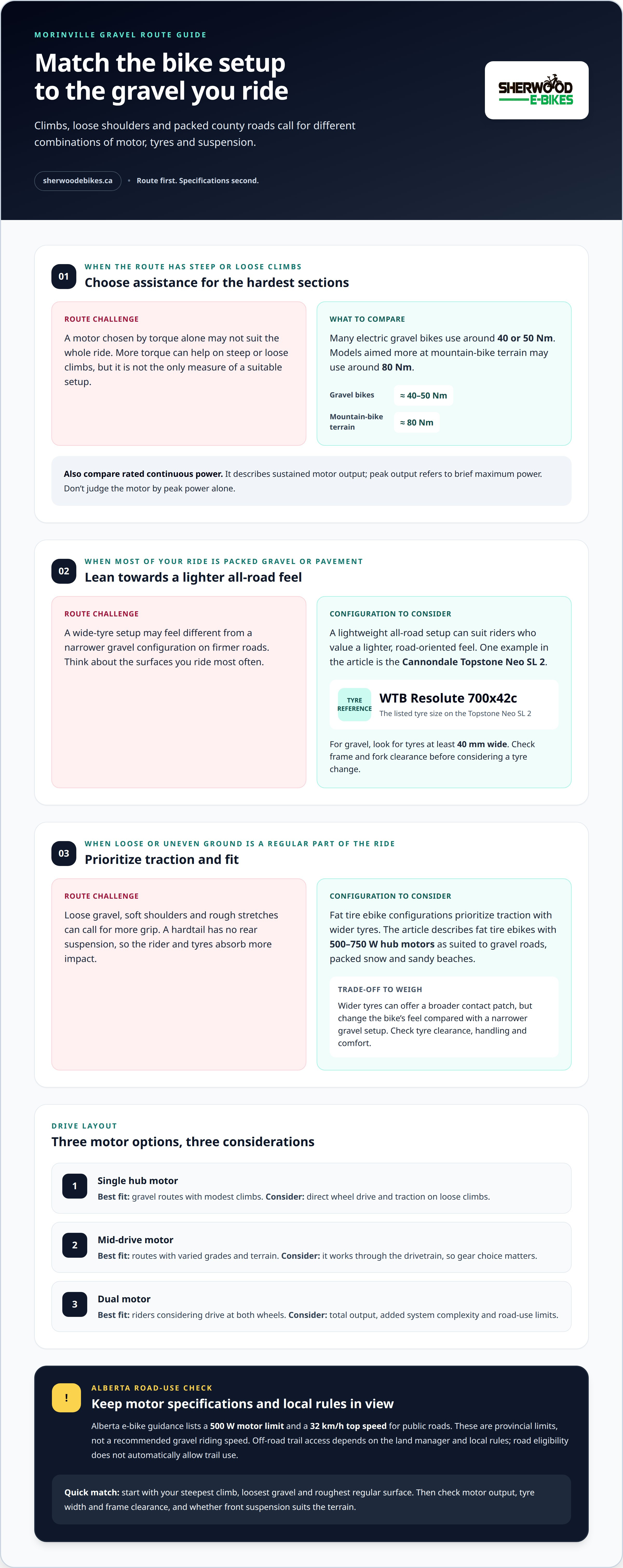
For Morinville gravel, choose a motor for your climbs and loose sections, then pair it with suitable tires and suspension. Many electric gravel bikes use around 40 or 50 Nm of torque; models aimed more at mountain-bike terrain may use around 80 Nm. More torque can help on steep or loose climbs, but it is not the only measure of a suitable setup.
Compare rated continuous motor power, not peak power alone. Continuous output describes the motor’s sustained rating, while peak output refers to brief maximum power. A single-motor e-bike keeps the drive system straightforward. A mid-drive motor works through the bike’s drivetrain, while a hub motor drives a wheel directly. Dual-motor designs drive both wheels, but their combined output and added system complexity deserve consideration for road use.
Tires and suspension shape how that assistance reaches the ground. Gravel tires at least 40 mm wide provide a starting point for loose surfaces. Wider tires can give more contact with uneven gravel, while tread affects grip and rolling feel. Front suspension can soften impacts on rough stretches; a rigid fork keeps the setup simpler for smoother roads. Match tire clearance and suspension travel to the roughest sections you expect to ride.
On Alberta public roads, e-bike guidance lists a 500 W motor limit and a 32 km/h top speed. Those figures describe the provincial e-bike limits, not a recommendation to ride at that speed on gravel. Provincial road-use rules differ across Canada, so a bike used beyond Alberta must meet the rules where it is ridden.
Are e-bikes allowed on county roads and trails near Morinville, Alberta? An e-bike that meets Alberta’s 500 W and 32 km/h limits can be used on public roads as an e-bike. Off-road trail access depends on the land manager and local rules, so road eligibility does not automatically allow trail use.
Which local Morinville or St. Albert bike shops sell and service gravel e-bikes? Choose an e-bike retailer that sells suitable bikes and services their motors, batteries and wheel setups. A shop’s ability to support those systems matters alongside its gravel-bike selection.
| Motor option | Best fit | Key trade-off |
|---|---|---|
| Single hub motor | Gravel routes with modest climbs | Direct wheel drive; assess traction on loose climbs |
| Mid-drive motor | Routes with varied grades and terrain | Works through the drivetrain; consider gear choice |
| Dual motor | Riders considering drive at both wheels | Review total output, system complexity and road-use limits |
Match your route’s steepest climbs, loosest gravel, and roughest surfaces to the motor, tires, and suspension.
All-terrain bike configurations and their trade-offs
For Morinville gravel county roads, lightweight all-road bikes and fat tire ebikes serve different terrain. Gravel tires at least 40 mm wide suit loose surfaces, while frame clearance determines which tires fit.
Cannondale Topstone Neo SL 2
The Cannondale Topstone Neo SL 2 is a mixed-terrain example fitted with WTB Resolute 700x42c tires. That setup gives it a gravel-focused profile, distinct from the wider tires of fat tire ebikes. Consider the surface you ride most: the Topstone’s listed tire size offers a useful comparison point, but the bike’s available clearance sets the limit for any tire change.
On packed county gravel, a gravel-bike format can balance efficient riding with the ability to leave pavement. For rougher trails, compare the frame’s tire clearance, fork design and riding position before choosing. Those details affect comfort, particularly when weather leaves gravel rutted or soft. The Topstone’s 700x42c tires provide a concrete reference for comparing mixed-terrain setups without assuming every gravel bike has identical fit or handling.
All-Terrain and Fat-Tire Options
Fat tire ebikes with 500-750 W hub motors are described as suited to gravel roads, packed snow and sandy beaches. Their wider tires prioritize traction on loose ground, while a hardtail keeps the configuration simpler than a full-suspension bike. Compare that approach with a lightweight all-road bike using a 250-500 W mid-drive motor, a configuration aimed at rail trails and city paths.
These categories involve different trade-offs. A wider tire can provide a broader contact patch, but it changes the bike’s feel compared with a narrower gravel setup. A hardtail lacks rear suspension, so the rider and tires absorb more impact from rough ground. Choose for the roughest surface you ride regularly, rather than occasional trail conditions alone.
For mixed commuting and gravel, an all-road configuration may suit riders who value a lighter, road-oriented feel. For loose or uneven routes, a fat tire ebike puts more emphasis on traction. Check that the tires fit the frame and fork, and consider how tire volume affects clearance, handling, and comfort. A commuter on packed roads has different priorities from a rider crossing soft gravel after wet weather.
Vester’s suitability depends on the specific model’s configuration, not its name alone. Compare its motor type, tire clearance, suspension, and intended use with your route. A setup aimed at smooth commuting may feel different on loose county gravel than one designed around wider tires. Consider the Vester for mixed terrain only if its specifications match the surfaces and riding position you need.
To compare options, first list the surfaces you ride regularly: packed gravel, loose shoulders, trails, or pavement. Match tire fit and suspension to those conditions, then choose the motor configuration around your priorities. The best choice for a Morinville commuter may differ from one for frequent off-road rides, even when both bikes are labelled all-terrain.
What should you look for when buying an electric gravel bike?
For rural rides near Morinville, compare a bike’s stated range with your usual distance, then allow for cold-weather battery loss. The EM-Commuter E-Bike is listed with up to about 120 km of range. That figure is a reference, not a guarantee for every ride: assist level, terrain, rider load and temperature affect how far a battery lasts.
Which e-bikes offer the best range for rural rides near Morinville? Look for a model whose stated range gives you a substantial reserve beyond your regular route. Canadian riders are advised to choose at least 1.5 times their typical range for cold-weather riding, since low temperatures reduce usable battery capacity and shorten range.
Battery capacity is useful for comparison, but it doesn’t determine range by itself. Motor efficiency, route elevation, tire pressure, cargo, and assist settings all affect energy use. A smooth ride on firm gravel may use less assistance than repeated climbs on loose ground. Compare battery capacity with the manufacturer’s range estimate, and consider the conditions behind that estimate rather than treating it as a fixed distance.
Winter riding needs a different setup. Studded tires can provide grip on icy surfaces, while adequate torque helps the motor climb at low speed. Select a low assist level on manageable sections to conserve battery, then use more support when terrain or traction demands it. Hydraulic brakes are another specification riders may assess for predictable control, especially when weather changes road conditions.
- Before and after a ride: Keep the battery indoors at room temperature.
- After cold exposure: Don’t charge a frozen battery.
- Before winter use: Read the manual’s lowest operating temperature.
- During off-season storage: Store the battery partly charged.
These steps help protect battery performance across changing Alberta temperatures. A removable battery can make indoor storage more practical, but check the model’s design and handling instructions. For weather protection, follow the manufacturer’s operating guidance for the battery and electrical system; don’t assume every e-bike has the same exposure limits.
For a Morinville route, estimate your usual distance, then include return distance and any detours. Apply the 1.5-times cold-weather allowance to that typical ride, and compare the result with the bike’s stated range. If your route includes winter climbs, weigh low-speed torque and studded-tire compatibility alongside battery capacity. This approach helps riders compare range claims against real riding conditions, rather than choosing by battery size alone.
Electric bikes for rural roads and gravel
For gravel around Morinville, choose an e-bike for your usual mix of road, trail, and transport needs. A flat-bar gravel bike can offer an upright position and versatile handling, while an electric mountain bike is better suited to rougher off-road routes. Wet gravel and muddy paths call for tread and clearance suited to the surface, not simply higher motor output.
Gravel road conditions around Morinville can change with rain, snowmelt, and freeze-thaw weather, leaving surfaces loose, muddy, or uneven. Adapt your speed and tire choice to the conditions, and account for reduced traction where water or ice is present.
For wet gravel, look for tires with a tread pattern that grips loose material and sheds mud. Confirm that the frame and fork have enough clearance for the tires you plan to use. A fat tire ebike may suit riders who prioritize traction and a more cushioned feel, but its wider setup differs from a narrower gravel bike on firmer roads. Check the bike’s intended use and component limits before riding rough trails.
Flat-bar e-gravel bikes can suit riders who want one bike for county roads and everyday commuting. Their handlebar shape provides a familiar, upright position, while gravel-focused frames and tires support mixed-surface riding. A Shimano drivetrain may appear on some models, but the component name alone doesn’t determine suitability. Compare the complete setup, including gear range, brakes, tire clearance, and motor assistance.
Electric mountain bikes suit rougher terrain, where a trail-focused frame and suspension can help manage bumps. They may feel less nimble than an e-gravel bike on long stretches of smooth gravel. Match the suspension and tire design to your regular route rather than choosing a mountain bike solely for occasional muddy paths. For Morinville riders combining pavement with packed gravel, a versatile commuter or e-gravel format may be easier to live with.
Folding e-bikes address transport needs, such as fitting a bike into a vehicle or storing it in a compact space. A folding frame doesn’t automatically make a bike suitable for loose county roads, so assess tire width, frame stability, and intended riding surface. If the battery is removable, follow the model’s instructions for removing and carrying it. Once unfolded, the bike still needs appropriate tires and handling for gravel.
Use this quick comparison when narrowing your choices:
- Flat-bar e-gravel: mixed pavement and packed gravel, with a practical riding position.
- Electric mountain bike: rougher trails and uneven surfaces, with a more trail-focused setup.
- Fat tire ebike: riders prioritizing tyre volume and traction on loose ground.
- Folding e-bike: transport and compact storage, provided its design suits the route.
Start with the surface you ride most often, then compare tire fit, suspension, transport needs, and seasonal conditions. This helps distinguish an e-bike built for regular gravel riding from one suited only to occasional detours.
Fat tire ebike traction on gravel and other loose surfaces
Tire width affects how an e-bike handles loose gravel, sand, and packed snow. A wider casing can create a broader contact area and soften vibration, while a narrower gravel tire can feel more direct on firm roads. The right balance depends on the surface, riding speed, and bike’s intended use. Width alone doesn’t determine grip: tread pattern, casing, and inflation also affect tire performance.
For gravel riding, electric gravel bike tyres should be at least 40 mm wide. The Schwalbe G-One Comp Gravel Tire, listed as 28x2.00, is one named option to compare. Its size label gives a useful reference, but confirm that the frame and fork have clearance for the actual tyre. Leave space for debris, especially if rides include muddy paths or loose stones.
Fat tire ebikes use a wider format than typical gravel tires, prioritizing surface contact and cushioning on unstable ground. Their ability to absorb small bumps can improve comfort, but a wide casing may feel less quick on smooth pavement. Don’t assume every fat tire ebike accepts the same size. Compare the tire dimensions printed on the sidewall with the frame and fork limits for that model.
For a fair comparison, check the complete wheel setup. Rim width affects how a tire sits, and the bike maker’s limits determine compatible sizes. A tire that’s too wide can rub the frame or fork; one that’s too narrow for the rim may not sit correctly. Check clearance around the fork, stays, and brake area, then confirm the model’s approved tire range.
Brakes also matter when tire size changes. A wider tire can alter how the bike responds on loose ground, so practise smooth braking and steering in a safe area before riding faster. Choose tread suited to the route: a more pronounced pattern can help on loose surfaces, while a less aggressive pattern can roll more smoothly on packed gravel. In Canada, this balance matters when routes shift between pavement, gravel, and snow.
- Mostly firm gravel: compare gravel tyres at least 40 mm wide, including the Schwalbe G-One Comp 28x2.00.
- Loose or soft surfaces: consider a fat tire ebike and confirm its approved tyre dimensions.
- Mixed pavement and gravel: weigh traction against the smoother feel you want on firm roads.
Before changing tire size, match the tire, rim, and frame specifications. Sherwood E-Bikes offers e-bike maintenance to help with fit and setup for your gravel configuration.
Sherwood E-Bikes Ltd.
Sherwood E-Bikes can help connect your Morinville gravel routes with practical e-bike choices and setup considerations. Bring details about your usual surfaces, ride distance, hills, and seasonal conditions. Those priorities help guide decisions about a commuter e-bike, suitable parts and cycling accessories, or maintenance for your current bike.
If your rides combine pavement with packed gravel, consider how tire fit, riding position, and carrying needs affect your setup. If you already own an e-bike, maintenance can address setup concerns before you ride rural routes regularly.
Contact Sherwood E-Bikes Ltd. to discuss your gravel-riding needs.
Plan Your First Gravel Ride
Choosing the best electric bike for gravel county roads in Morinville starts with how you plan to ride. Picture a typical outing: where you’ll start, what you might carry, and how you want the bike to feel when your plans shift from everyday trips to longer rides. These details give your decision a clear purpose.
Use those priorities to narrow your options instead of comparing features in isolation. The best electric bike for gravel county roads around Morinville is one that suits the routes you expect to ride regularly. Think about which roads you’re keen to explore first and what would make riding them practical as part of your routine. Choose a bike that supports the way you want to ride, not just one stretch of gravel.
Ready to take the next step? Start a conversation with Sherwood E-Bikes Ltd. about your riding plans. A thoughtful choice can make gravel riding an easy, rewarding part of your days around Morinville.
Frequently Asked Questions
Is an information display important for an e-gravel bike?
An information display is useful, but it shouldn’t decide your bike choice by itself. It can help you monitor details such as assist level and battery status without stopping. On gravel rides with changing surfaces, clear controls can also make it easier to adjust assistance while keeping your attention on the road. Check that the display is readable from your usual riding position and straightforward to operate with gloves.
What are the best electric bikes for gravel roads in Canada?
The best choice depends on how much pavement, packed gravel and rough ground your rides include. A gravel-style e-bike suits mixed routes, while a fat tire ebike may better match loose or soft surfaces. Models such as the AIMA Big Sur and ENVO X50 are options to compare, but assess each bike’s intended use, tyre fit and riding position. Match those details to your regular routes, not occasional detours.
How can I assess the reliability of a gravel e-bike in Canada?
Reliability isn’t determined by one specification alone. Compare the bike’s motor and battery support, component quality, intended terrain, and access to compatible replacement parts. For a gravel setup, also consider whether the tires, brakes, and frame suit your routes. A clear warranty and practical service support can help you assess long-term reliability. Evaluate the complete setup rather than choosing by one specification or label.
How do mid-drive and hub-drive e-bikes compare on gravel and hills?
Mid-drive motors power the bike through its drivetrain, while hub-drive motors turn a wheel directly. On a hilly route, compare how each model delivers assistance at low speed and how its gearing suits climbs. Hub-drive placement can affect how the bike feels on loose gravel, particularly when traction changes. A test ride on a similar surface can help you assess handling, gear changes and assistance response together.
What should I check before buying a used or new e-bike for gravel riding?
Check the frame, fork, wheels, brakes, and drivetrain for damage or unusual wear. Confirm that the tires fit within the frame’s clearance and suit the gravel you plan to ride. Inspect the battery and charger for visible damage, and ask about the bike’s service history if it’s used. For a new bike, review its intended use, operating guidance, and replacement-parts support before deciding.
Which local Morinville or St. Albert bike shops sell and service gravel e-bikes?
Choose a retailer that sells suitable bikes and services their motors, batteries and wheel setups.


