

What can a change in motor sound tell you about your RadCity 5 Plus? If your RadCity 5 Plus motor is making noise in Wetaskiwin, the sound may reflect normal operation under load or point to a mechanical or electrical issue that needs diagnosis.
The RadCity 5 Plus uses a 500 W rear geared hub motor. Its sound can vary with how the bike is being ridden, but a new, persistent or changing noise is worth having assessed, especially if it comes with reduced assistance or irregular performance. You’ll learn how this motor works and what different noise patterns may indicate. The article also explains what a professional motor assessment can involve, what information helps with diagnosis and when e-bike maintenance is the right next step. That gives you a clearer way to describe the sound and understand what may be affecting your ride.
Key Takeaways
- The RadCity 5 Plus uses a 500 W rear geared hub motor, and understanding its design helps put motor sounds in context.
- A new or changing noise can offer clues about what needs assessment, especially when the bike’s assistance or performance also changes.
- Learn what details about the sound and riding conditions can help a professional narrow down the cause.
- Sherwood E-Bikes Ltd.’s E-Bike Maintenance and E-Bike Parts can support riders seeking help with an e-bike concern.
- Find out how Commuter E-Bikes and Cycling Accessories fit into a practical approach to everyday riding.
Sherwood E-Bikes
Sherwood E-Bikes Ltd. is a practical next step when a motor sound changes and you want professional help understanding what may be behind it. Its E-Bike Maintenance supports riders who need an e-bike assessed, while E-Bike Parts and Cycling Accessories serve related upkeep needs. The goal is to connect the concern you’re noticing with an appropriate maintenance path, rather than assume that every noise means the motor itself has failed.
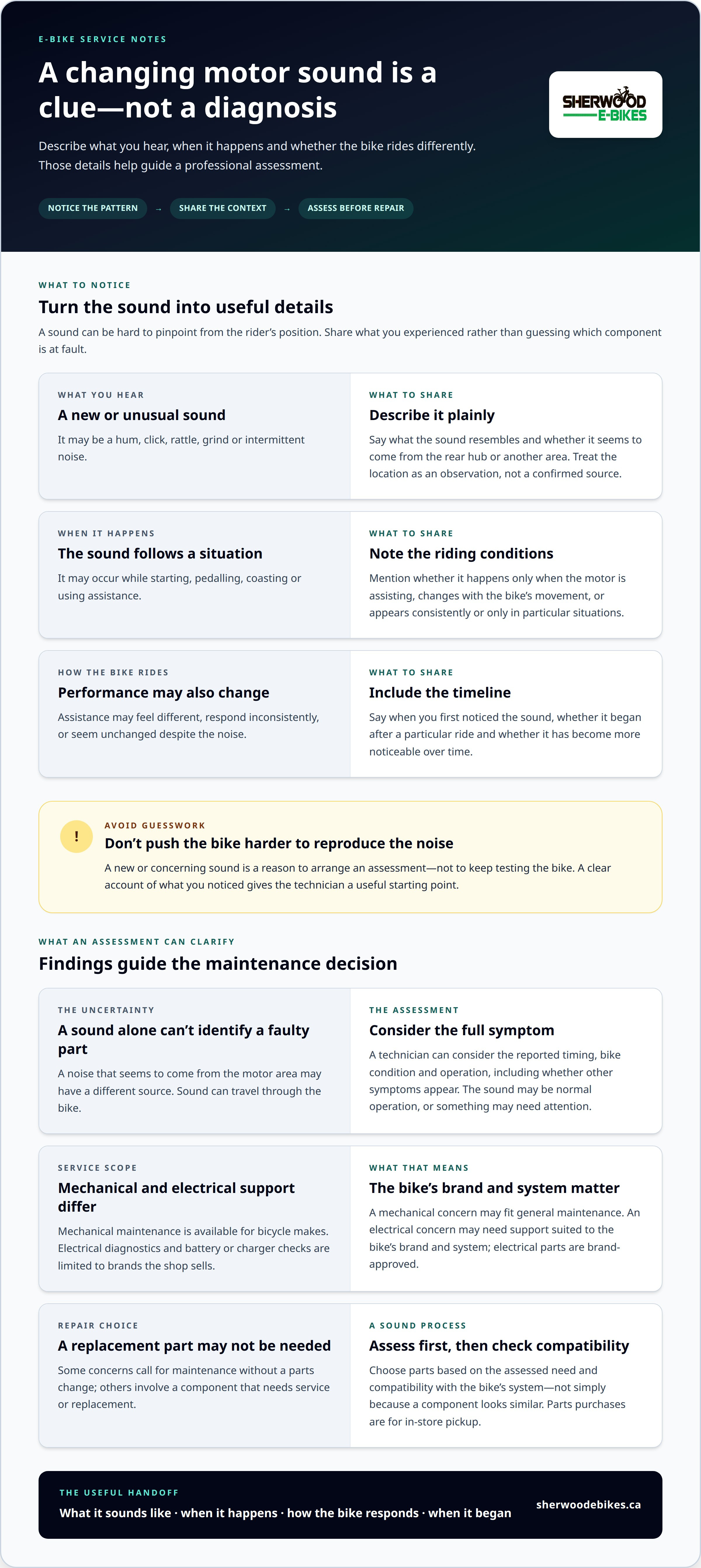
A sound is useful information, but it is only one part of the picture. When did it start? Does it happen consistently, and has the bike’s assistance changed? These details give a technician context for assessing how the bike operates. A sound that seems to come from the rear wheel can be difficult to pinpoint from the rider’s position alone.
For a rider in Wetaskiwin, the first useful step is to describe the change clearly. Note when you first noticed it, what you were doing when it occurred, and whether it happens consistently or only in particular situations. You don’t need to diagnose the cause. A clear description helps direct attention during a professional assessment and provides a starting point for discussing what the bike needs next.
What to share about the sound
Describe the sound in everyday terms: a hum, click, rattle, grind or intermittent noise. Say whether it seems to come from the rear hub or another area, and when you hear it, such as while starting, pedalling, coasting or using assistance. These observations aren’t a diagnosis, but they give the technician a fuller picture of what you’ve experienced.
Mention any change in how the bike rides. Does it feel different under assistance, respond inconsistently, or make the sound without any noticeable performance change? If the noise began after a particular ride or has grown more noticeable over time, include that context. A brief timeline is more useful than guessing which component has failed.
Where possible, give a straightforward account rather than trying to reproduce the sound repeatedly. A new or concerning noise is a reason to arrange an assessment, not an invitation to push the bike harder to see what happens. A technician can consider your description and assess the e-bike’s operation in a professional service process. This keeps the focus on identifying the concern without asking you to carry out mechanical or electrical checks yourself.
For someone describing RadCity 5 Plus motor noise in Wetaskiwin, the specific pattern matters more than guessing at the source. Say whether it occurs only when the motor is assisting, whether it changes with the bike’s movement, and whether the sound is new. These details help separate the noise you hear from assumptions about what might be causing it. The technician can then consider the evidence and explain what kind of assessment is appropriate.
How E-Bike Maintenance can help
E-Bike Maintenance is the relevant offering when your concern is a sound, change in operation or general need for service. During a professional assessment, the technician can consider the reported symptom alongside the bike’s condition and operation. The service page describes e-bike maintenance and service as the place to start for this kind of support. The findings then guide a practical discussion about suitable next steps.
A sound alone doesn’t identify a faulty part. The technician considers what the bike is doing, when the noise occurs and whether other symptoms appear. This helps determine whether the concern involves the motor area or another part of the bike. The aim is to narrow down the issue based on the assessment, not replace components by guesswork.
Sherwood E-Bikes Ltd. provides mechanical maintenance for bicycle makes, while electrical diagnostics and battery or charger checks are limited to the brands it sells, using brand-approved parts. That distinction matters for an e-bike from a different brand. A mechanical concern may still fall within general maintenance, but a motor or other electrical fault may require support that matches the bike’s brand and system. Clear information about the symptom helps establish which type of service applies.
This approach is useful because e-bikes combine mechanical and electrical systems. A rider may describe a noise as coming from the motor, while the sound’s location or timing points the assessment toward a different area. The technician’s role is to evaluate the complete symptom, not simply accept an initial assumption about its source. That keeps the service conversation specific: what was reported, what was observed and which maintenance steps are appropriate.
An assessment sets realistic expectations. The sound may be consistent with normal operation, or it may indicate that something needs attention. The next step depends on the technician’s findings. If maintenance or a part is needed, the recommendation should relate to the condition observed. An assessment is useful even if it shows the noise isn’t coming from the component you suspected.
Parts and repair decisions
E-bike parts are available to support maintenance when an appropriate component is needed. A noise alone isn’t enough to choose a replacement: first, the bike’s condition and the issue need to be assessed. That helps determine whether a part is relevant and how it relates to the sound you reported.
Compatibility matters when selecting a part. E-bikes use different systems and components, so a replacement should suit the bike and the repair need, not just look similar. Sherwood E-Bikes Ltd. provides parts alongside maintenance, keeping the focus on the diagnosed need rather than treating a part as a substitute for inspection.
Some concerns call for maintenance without a parts change; others involve a component that needs service or replacement. The technician’s findings guide that decision. A responsible process explains what was observed and why a proposed step relates to the symptom, while allowing for a cause outside the motor. This is useful when a sound travels through the frame and is hard to pinpoint while riding.
Parts purchases are for in-store pickup. For e-bike electrical components, Sherwood E-Bikes Ltd. installs brand-approved parts rather than off-brand electrical components. That keeps a proposed parts decision tied to the bike’s system and the service work being considered. It is useful to distinguish a mechanical part need from an electrical one, since they can involve different compatibility and service requirements.
The repair path depends on the bike and the assessment. You should come away with a clear explanation of the issue and the maintenance option that fits the findings. Don’t assume a replacement is needed before the source has been evaluated. Ask for an explanation in plain language so you understand what the proposed work addresses and how it relates to the sound.
Keeping the bike suited to your riding
Sherwood E-Bikes Ltd. sells commuter e-bikes for everyday travel, but a noise from your current bike doesn’t automatically mean you should replace it. Start with maintenance for the bike you own and the concern you’ve noticed. If you’re considering another commuter e-bike, make that a separate decision based on your riding needs and the features that matter to you.
An unfamiliar or changing sound can disrupt a commute when you rely on your bike to feel predictable on your route. A professional assessment turns a vague concern into a more specific maintenance discussion. It can help clarify whether the sound affects operation or points to another issue. Whether you ride to work, run errands or ride for recreation, the assessment focuses on the bike’s condition and how you use it.
Commuter e-bikes and maintenance address different needs. One is for riders choosing a bike; the other supports owners with a bike they already ride. Keeping the decisions separate helps avoid turning a service concern into an unnecessary purchase. Start with the symptom and the bike’s condition. Consider another e-bike only if your needs have changed or you’re actively looking for one.
If you’re new to e-bikes, explain how you expect to use one. Your commute, carrying needs and comfort preferences can help guide model selection. But for an existing bike with motor noise, shopping considerations don’t replace an assessment. First find out what the sound may indicate and whether the bike needs maintenance. Sherwood E-Bikes Ltd. offers commuter e-bikes, parts and maintenance, with the appropriate service depending on the bike and concern.
Accessories and routine care
Cycling accessories can support your day-to-day riding, but they don’t diagnose or fix a mechanical or electrical sound. If an assessment identifies a maintenance concern, address it through the service process. Consider accessories separately when they meet a distinct riding or everyday-use need.
Keeping these needs distinct makes it easier to choose the right support. Motor noise calls for an assessment of the bike’s operation. A comfort or carrying need may call for an accessory, while choosing a commuter bike is a separate decision. Parts support maintenance when a component is required. Each offering serves a different purpose, so start with the problem you’re trying to solve.
Paying attention to how your e-bike sounds and feels can help you notice changes, but not every sound signals a fault. The useful distinction is whether a noise is familiar or new, persistent or changing, and concerning to you. When something changes, describe it and arrange professional attention rather than guessing at the cause or relying on an accessory.
The same practical approach applies if you ride in different conditions or use your bike for more than one kind of trip. Describe the circumstances connected to the sound, including when it occurs and whether the bike’s behaviour changes. That context can help the technician assess the concern. You can also raise separate needs, such as parts or accessories, so they are considered as distinct questions rather than mixed into the motor-noise diagnosis.
For Wetaskiwin riders travelling to Sherwood Park, prepare a brief description of the sound and when it occurs before setting out. Include any changes you’ve noticed in the ride. The service discussion can then focus on the reported behaviour and the technician’s assessment, rather than speculation. This is a straightforward way to move from concern to an informed maintenance decision.
A clear service conversation
To make the conversation useful, bring the e-bike in its current condition and describe the concern in simple terms. Share when the sound occurs, whether it has changed, and whether you have noticed anything else about the ride. If the issue is intermittent, say so. This helps the technician understand what you’ve experienced without requiring you to identify the source or perform mechanical checks before seeking service.
Be clear about your main concern. If you want to know whether the sound needs attention, say so. Describe any change in assistance or another riding symptom separately. Clear priorities keep the discussion focused, helping the technician assess the bike, explain the findings and relate any recommended maintenance or part to the issue identified.
Be specific without worrying about technical terms. Explain what you notice while riding; there’s no need to name a component unless you already know it. Saying “a new rattling sound when assistance starts” is more helpful than guessing which part has failed. The assessment provides the technical context, while your observations explain when the symptom occurs.
If several needs are present, separate them. Mention the motor sound first, then raise any unrelated request about accessories, commuting or another maintenance concern. This makes it easier to discuss each item on its own terms. It also avoids treating an accessory need as part of a repair or assuming that one service step will resolve every issue. The aim is a clear understanding of what you brought in and what the assessment indicates.
For riders coming from Wetaskiwin, prepare a brief description of the sound and the circumstances in which it occurs. If you’re concerned about RadCity 5 Plus motor noise in Wetaskiwin, explain whether the sound happens during assistance, while coasting or at another point in the ride. That account helps clarify whether the concern appears mechanical or electrical, without requiring you to diagnose the source. Sherwood E-Bikes Ltd. can then explain the maintenance options that fit the bike and the issue reported.
Sherwood E-Bikes Ltd. brings together E-Bike Maintenance, E-Bike Parts, Commuter E-Bikes and Cycling Accessories for different points in the ownership experience. For motor noise, begin with the maintenance concern. If the assessment identifies a parts need, that can inform the next step; if you have a separate product or accessory question, raise it as its own topic. Contact Sherwood E-Bikes Ltd. to discuss your e-bike concern.
Frequently Asked Questions
What causes clicking, grinding, or humming noises in a RadCity 5 Plus motor?
Clicking, grinding, and humming can have different causes, and the sound alone doesn’t identify a failed part. A repeating click may come from a moving or loose component near the hub; grinding can indicate friction or wear, while a steady hum may be part of motor operation under load. Changes in sound, assistance, or wheel movement help distinguish the concern. For a RadCity 5 Plus in Wetaskiwin, E-Bike Maintenance can assess the source.
How do I fix a noisy RadCity 5 Plus motor at home?
Don’t try to diagnose the cause or repeatedly push the bike to reproduce the sound. Note when and under what conditions it occurs, whether it is new, and whether assistance or performance has changed, then arrange a professional assessment.
When should a RadCity 5 Plus motor be repaired or replaced?
Arrange an assessment for a new, persistent or changing noise, especially if assistance is reduced or performance is irregular. The technician’s findings determine whether maintenance or a suitable part is needed. Don’t assume the motor needs replacement based on sound alone.
Can riding a RadCity 5 Plus with a noisy motor cause damage or safety risks?
A noise alone doesn’t prove the motor is damaged. Have a new or changing sound assessed, especially if assistance is reduced or performance is irregular. Avoid pushing the bike harder to reproduce the sound, and arrange professional service.


