

The bike with the larger battery may not give you the better range for your rides. The Trek Allant vs Giant Explore E+ battery range comparison starts by matching model years and configurations, then looks beyond watt-hours to the route and assist level you actually use.
It’s easy to compare two model names and assume their specifications line up. For example, a 2026 Trek Allant+ 7 Gen 2 has a 500Wh battery, while 2026 Giant Explore E+ configurations vary, with 500Wh, 625Wh, or 800Wh options. Capacity helps you compare stored energy, but it doesn’t tell you exactly how far you’ll travel on a charge.
This guide explains how to read specifications, interpret manufacturer range estimates, and account for factors such as hills, temperature, rider weight, tyre pressure, and motor assistance. Use the steps to compare the exact bikes you’re considering and choose a practical range reserve for commutes or longer rides around Sherwood Park, Edmonton, and nearby communities.
Key Takeaways
- Match the model year and exact configuration before comparing Trek Allant and Giant Explore E+ battery specifications.
- Use watt-hours to compare battery capacity, not to predict exactly how many kilometres you’ll ride.
- Account for assist level, route profile, load, and riding conditions when estimating practical range.
- Use the Trek Allant vs Giant Explore E+ battery range comparison to assess your route and decide how much range reserve you want.
- Apply the same comparison to everyday rides and longer trips around Sherwood Park and the Edmonton area.
Trek Allant vs Giant Explore E+: Why model year matters to battery range
Which exact Trek Allant or Giant Explore E+ can cover your planned ride and leave a useful battery reserve? Start with the complete model year and configuration, not just the name on the frame. Each model family can include different versions, and specifications can change between years. Matching versions keeps the comparison focused on the bikes you’re actually considering.
A fair range comparison starts with matching model years and configurations, because a model name alone doesn’t identify the battery or range specification.
Which Trek Allant and Giant Explore E+ versions are being compared?
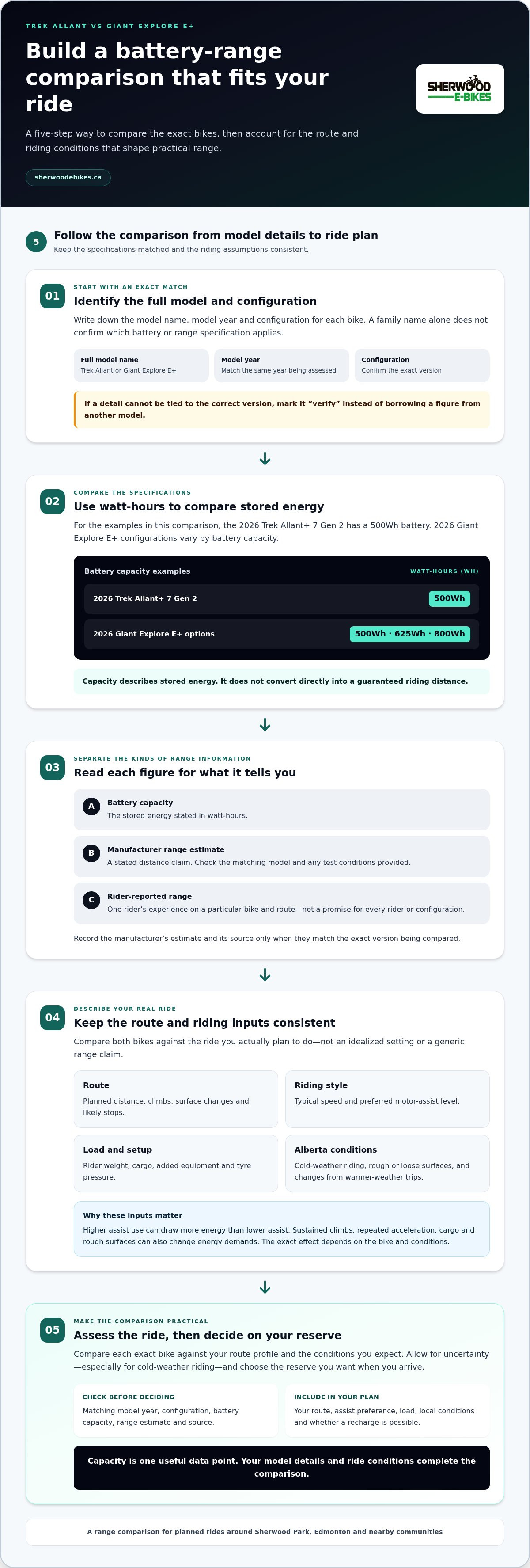
Write down the full model name, model year, and configuration for each bike. Then record every range-related detail against that entry: battery capacity, motor information, and the manufacturer’s stated range. Don’t carry a specification from one year or trim over to another just because the bikes share a family name.
Use a simple comparison record before drawing conclusions:
- Bike: full model name, model year, and configuration.
- Battery: stated capacity in watt-hours for that exact version.
- Range: manufacturer estimate, including any stated test conditions.
- Source: the matching manufacturer specification or product documentation.
If you can’t tie a detail to the correct version, mark it “verify” rather than filling the gap with a figure from another model. This prevents dated, model-specific forum discussions from being mistaken for current specifications. The Understanding Electric Bicycles reference provides general background on e-bike components and operation, but exact Trek and Giant specifications still need to match the model being assessed.
What battery capacity does, and does not, tell you
Battery capacity is commonly expressed in watt-hours (Wh), a measure of stored energy. It helps you compare how much energy the batteries are designed to hold. It does not convert directly into a guaranteed distance: bikes with different systems, setups, and riding demands may use their stored energy differently.
Keep three kinds of information separate. Capacity describes the battery’s stored energy. A manufacturer range estimate is a stated distance claim, which you should read alongside any conditions the maker provides. Rider-reported range describes someone’s experience on a particular bike and route, not a promise for every rider or configuration. These figures answer related but different questions.
A higher Wh figure alone can’t settle which complete bike suits you. Consider your intended ride, the full specification, and the reserve you want at the end. In this Trek Allant vs Giant Explore E+ battery range comparison, use capacity as one useful data point, then judge range claims in context. If the model-year details don’t line up, pause the comparison until they do.
How Trek Allant and Giant Explore E+ range changes on real rides
A range estimate becomes useful when you compare it with the ride you plan to do. The same Trek Allant or Giant Explore E+ can face different energy demands on a steady paved commute and a hilly route with stops, rough sections, and extra cargo. Real-world range depends on both the bike and the ride conditions.
For a practical comparison, describe your normal ride rather than relying on a single distance figure. Include the route profile, surfaces, pace, assist settings, and what you carry. This gives you a clearer basis for comparing the bikes than a generic range claim alone.
How assist use and terrain shape the comparison
Motor assistance is one of the choices you control. Frequent use of higher assist can draw more energy than riding in lower assist. A rider who wants strong support throughout a trip may cover a different distance per charge than someone who uses it selectively. Sustained climbs can also ask more of the system than a flatter route, although the exact effect depends on the bike and conditions.
Compare both models using your usual assist preference, not an idealized setting you rarely choose. Include your typical speed, rider and cargo load, and stopping pattern. Repeated acceleration after stops creates different demands from maintaining a steady pace. Keep those inputs consistent for each bike.
Why Alberta conditions deserve a place in your range estimate
Build local conditions into your plan. Cold-weather riding in Alberta is a reason to allow for uncertainty in battery performance and avoid planning around the maximum range claim. Don’t apply a made-up percentage adjustment. Instead, consider how your winter rides differ from warmer-weather trips and keep a practical reserve.
Route details matter too. Record the planned distance, elevation changes, paved or gravel sections, and likely stops. Check tyre pressure as part of your regular pre-ride routine, following the bike and tyre guidance. Pressure that’s unsuitable for the surface or load can affect rolling resistance and handling, while loose or rough surfaces may demand more effort than smooth pavement.
Use a simple ride profile to keep the Trek Allant vs Giant Explore E+ battery range comparison grounded in your needs:
- Route: distance, climbs, surface changes, and stops.
- Riding style: typical speed and preferred assist level.
- Load: rider, cargo, and any added equipment.
- Plan B: whether a recharge is possible during the ride, plus the reserve you want on arrival.
This approach separates the distance you must cover from the margin you’d prefer for detours or changing conditions. Riders in Sherwood Park and the Edmonton area can bring those route details to an in-person e-bike discussion and use them to talk through their riding needs.
Compare Trek Allant vs Giant Explore E+ battery range side by side
A useful side-by-side table makes version mismatches visible instead of blending specifications from different years or trims. The Trek entries below identify specific model-year configurations. The Giant Explore E+ details available here aren’t tied to exact trims, so their battery and range cells are marked for verification rather than filled with family-level figures.
| Model year | Exact configuration | Battery capacity | Stated range | Source and figure type |
|---|---|---|---|---|
| 2026 | Trek Allant+ 7 Gen 2 | 500 Wh | Approximately 50 km | Trek manufacturer range estimate; conditions vary |
| 2027 | Trek Allant+ FS | 800 Wh | Up to 180 km | Trek manufacturer stated maximum |
| 2026 | Giant Explore E+; exact trim and configuration to verify | Verify against manufacturer specification | Verify against manufacturer specification | Manufacturer source for the exact model-year configuration required |
What to include in a fair range comparison table
Keep the model year and full configuration beside every figure. The Trek entries identify the Allant+ 7 Gen 2 and Allant+ FS. The Giant entry remains incomplete because the exact Explore E+ trim isn’t specified. Treat its missing details as a verification task, not as specifications that apply to every bike in the family.
The source column matters. Use the manufacturer’s specification for the exact model and record any stated test conditions alongside its estimate. Don’t substitute a dealer description, another year’s specification, or an owner’s ride report for that source. This table doesn’t present an independent test or rider report as a like-for-like result.
How to read range figures without overpromising
A stated range is a manufacturer estimate, not a promised ride distance for every rider and route. “Approximately” and “up to” signal that the claim shouldn’t be read as a guaranteed outcome. A rider report can add context, but it describes one setup and set of conditions, not a controlled comparison between these model versions.
Use the Trek Allant vs Giant Explore E+ battery range comparison to shortlist specifications, then match each bike to your planned distance and desired reserve. The Trek battery figures provide a starting point for their named configurations, but they don’t establish which complete bike fits your route. First verify the exact Giant trim and its manufacturer specification, then assess both bikes against your riding needs.
Choose the Trek Allant or Giant Explore E+ for your route
Turn the specifications into a route decision. Rather than asking which bike has the bigger battery, work out which exact configuration can cover your regular ride with the reserve you want. This four-step process keeps your distance requirement, riding habits, and model-year details in view.
- Map your everyday ride. Note the full distance, surface changes, climbs, usual stops, and any cargo. Include the return trip if you’ll ride home without recharging.
- Match model years and configurations. Record the complete Trek Allant and Giant Explore E+ names. Make sure each battery and range specification belongs to that version.
- Compare verified figures. Separate manufacturer estimates from rider reports, then consider how each estimate relates to your route and preferred assist level.
- Set your reserve. Decide what battery margin would feel comfortable at the end of a normal ride, and whether you need extra flexibility for occasional longer trips.
Build a range profile around your everyday ride
Start with the rides you make most often, not the longest trip you might take once a season. Record your usual distance, paved or gravel sections, elevation changes, and rider or cargo load. Then identify where you expect to use higher assist. A steep climb, headwind, or longer stretch may make extra support appealing, which can influence how you weigh range against the feel of the ride.
Separate three needs: the distance you must cover, the reserve that gives you peace of mind, and an occasional longer ride. If your route includes hills or loose gravel and you prefer higher assist, prioritize a comfortable margin rather than treating a published maximum as your target. If you can recharge along the way, note where that fits into your plan.
For broader local shopping context, the guide Finding the Best E-Bikes Near Me: A Sherwood Park & Edmonton Guide for 2026 can complement this route-first approach.
Compare the bike beyond its battery figure
Range is only one part of the choice. Consider the complete bike and the riding it’s intended to support, then assess comfort and handling separately from battery capacity. A model that appears to suit your distance on paper still needs to feel appropriate for your everyday surfaces, pace, and cargo needs. Don’t treat battery size as a stand-in for overall fit.
Plan for care as well as distance. Charging and storage habits are part of owning an e-bike, so follow guidance for the specific battery and system rather than assuming every model has identical requirements. The related article Commuter E-Bike Maintenance in Sherwood Park: The 2026 Reliability Guide can help you consider ongoing upkeep alongside your route choice.
Bring your route, expected load, and preferred reserve to Sherwood E-Bikes Ltd. in Sherwood Park to discuss e-bike fit and range priorities. Arrange an in-person e-bike discussion and make your Trek Allant vs Giant Explore E+ battery range comparison specific to the rides you plan to take.
Plan your next Trek Allant vs Giant Explore E+ comparison in Sherwood Park
A useful comparison ends with the bike that suits your riding, not simply the model with the largest battery figure. Match the Trek Allant and Giant Explore E+ model years, verify the specifications for each exact configuration, and compare those details against your planned routes and preferred reserve. This keeps manufacturer claims in context and highlights what you still need to learn before deciding.
For riders in Sherwood Park and nearby Edmonton communities, local routes can involve different distances, surfaces, climbs, and cargo needs. A commuter’s regular trip and a weekend ride with gravel sections may call for different priorities. Bring those details into the discussion so the comparison reflects how you expect to ride.
What to bring to a local e-bike comparison
Make a short comparison note before your visit. Include the complete model year and configuration for each bike under consideration, along with the source for its battery capacity and any stated range. If a specification doesn’t match the exact version, mark it for verification instead of relying on a figure from a similar model.
Then describe the ride you want the bike to handle. Share the usual distance, route surface, hills, expected cargo, and the assist level you’re likely to prefer. Note whether you need to complete the trip without recharging or have a practical opportunity to recharge along the way. These details help identify which specifications matter most to you and which published claims need careful interpretation.
Be clear about your range priorities. Separate your must-cover distance from the extra margin that would make the ride feel comfortable. Mention occasional longer trips too, but don’t let an infrequent outing outweigh the needs of your regular rides unless it’s a key part of your decision.
Discuss range and riding fit with a local specialist
An in-person conversation at the Sherwood Park showroom can help organize the comparison around your needs. Bring your questions about battery specifications, range estimates, fit, and intended use. The goal is to make the information easier to apply to your riding, not to treat one isolated figure as the final answer.
Sherwood E-Bikes Ltd. offers e-bike rentals for test rides, and a signed waiver is required. A rental can give you a chance to consider general e-bike comfort and fit, but don’t assume it represents either specific Trek Allant or Giant Explore E+ configuration discussed in this comparison.
Start with verified, model-specific specifications, then weigh them against your route, assist preferences, cargo, and desired reserve. To talk through those requirements in person, book an e-bike discussion in Sherwood Park.
Make your next ride the deciding factor
Your best choice is the one that supports the way you want to ride, not simply the one that looks strongest on a specification sheet. Use your planned trips to shape the next step: consider where you want to go, how you want the ride to feel, and what would make you comfortable taking a longer route. That practical perspective can turn the Trek Allant vs Giant Explore E+ battery range comparison into a decision that fits your daily routine and future plans.
Bring your questions and riding priorities to Sherwood E-Bikes Ltd. The team can help you discuss e-bike requirements and fit without treating a single range figure as the whole answer. A clear view of what matters to you makes it easier to move forward with confidence.
Book a visit to discuss your e-bike needs and take the next step toward rides that fit your plans.
For riders in Sherwood Park, Edmonton, Leduc, Camrose, Fort Saskatchewan, Ardrossan, St Albert, Vegriville, Morinville, Wetaskiwin, and Spruce Grove, compare the specifications against the routes and riding conditions you know best.
Frequently Asked Questions
Does a larger battery always give an e-bike more range?
No. A larger battery stores more energy, but that doesn’t guarantee a longer distance on every ride. The bike’s system and how you ride both affect energy use. For example, a rider carrying extra cargo and using high assist on climbs may get a different result from someone riding a lighter load on a flatter route. Compare complete, model-specific specifications, not battery size alone.
Can I rely on a manufacturer’s e-bike range estimate for my commute?
Use it as a reference, not a precise prediction of your commute distance. The estimate may reflect conditions that differ from your route, assist choices, and load. For a round-trip commute, consider both directions, including any climbs, stops, or cargo you usually carry. If you track battery use over familiar rides, those observations can help you judge how much extra distance to allow.
How much range should I leave in reserve on a ride?
There isn’t one reserve amount that suits every rider and route. Think about what could change your plan: a detour, stronger assist on a climb, or fewer opportunities to recharge. For a familiar Sherwood Park route, note the battery level at the end of several rides. For a new trip toward Edmonton, plan more cautiously and identify possible charging stops before setting out.
Can cold weather affect Trek Allant or Giant Explore E+ battery range?
Yes, cold-weather riding can affect battery performance, so don’t assume a range figure from milder conditions will apply unchanged. The size of the effect depends on the battery and riding conditions, and there’s no reliable universal adjustment to apply. If you ride in colder weather, plan conservatively and monitor battery use on your own routes before relying on the bike for a longer trip.
Are Trek Allant and Giant Explore E+ battery specifications the same every year?
No. Battery capacity and other specifications can vary by model year and configuration within both families. That’s why the Trek Allant vs Giant Explore E+ battery range comparison should use each bike’s complete name and matching-year documentation. Don’t carry a battery figure from an older model or another trim into your decision. If the exact version isn’t clear, resolve that before comparing range claims.
Can a Trek Allant battery be used on a Giant Explore E+?
Don’t assume a Trek Allant battery will work with a Giant Explore E+. Battery compatibility depends on the specific bike and battery system, not simply on similar capacity or appearance. Use a battery only when the manufacturer’s documentation identifies it as compatible with that exact model and configuration. If the documentation doesn’t establish compatibility, don’t try to install or charge the battery on the other bike.


