

A mechanical problem shouldn’t leave your e-bike sitting idle. If you’re searching for where to get your bike fixed in Sherwood Park, Sherwood E-Bikes offers local e-bike maintenance and repair to help address mechanical concerns.
It makes sense to want clear answers before arranging service, especially when you need to know what kind of support is available. This guide explains where to turn for e-bike service in Sherwood Park and what an inspection can cover.
You’ll learn about in-house support, inspections, and mechanical adjustments, including how these can help identify issues with key components. The overview also explains what to expect when you bring a bike in for service, so you can better understand the next step for your ride.
Key Takeaways
- Learn what local in-house e-bike support can help with when your bike needs attention.
- See how an inspection can help identify mechanical issues and guide the next repair steps.
- Understand which mechanical adjustments may help address common bike concerns.
- Find out how E-Bike Maintenance and E-Bike Parts can support your service needs.
- Explore how Cycling Accessories and Commuter E-Bikes fit into your riding plans.
Availability of in-house support
In-house e-bike service in Sherwood Park means bringing your bicycle to a local service location for a hands-on assessment. A mechanic can inspect the bike directly, rather than relying only on a description of a noise or change in handling. For example, they can check a rear wheel that rubs against the frame as it turns. That gives the service conversation a specific starting point.
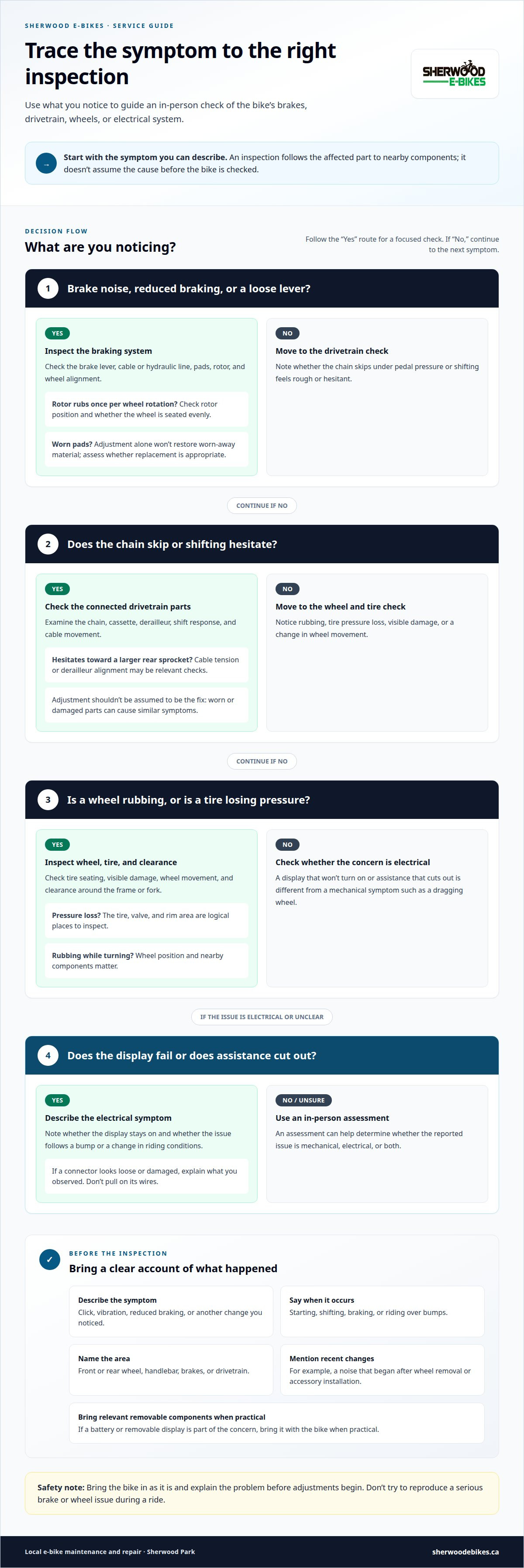
Different symptoms call for different checks. A squealing brake may need its pads and rotor examined, while a handlebar that feels loose calls for attention to its fastening points. A chain that skips under pedal pressure can indicate a need for drivetrain adjustment or worn parts. These are examples of mechanical concerns an in-person inspection can help identify.
For an e-bike, distinguish a mechanical symptom from an electrical one. A wheel that drags is different from a display that won’t turn on. Note what happens, when it happens, and which component is involved. For example, describe whether the chain skips only while climbing or also on level ground. These details help focus the initial assessment.
A clear description gives the service conversation a useful starting point. Include details such as:
- Describe the symptom. Say whether you hear a click, feel vibration, or notice reduced braking.
- Identify when it occurs. Mention whether it happens while starting, shifting, braking, or riding over bumps.
- Name the area. Point out whether the concern comes from the front wheel, rear wheel, handlebar, brakes, or drivetrain.
- Bring relevant components. If a battery or removable display is part of the concern, bring it with the bike when practical.
- Share recent changes. A new noise after a wheel removal or accessory installation gives useful context.
These details don’t replace a hands-on check, but they help connect your experience with what a mechanic can observe. A brake lever that pulls close to the handlebar, for example, is a clear reason to inspect braking function. A tire that repeatedly loses pressure directs attention to the tire, valve, and rim area. Precise symptoms are more useful than saying the bike “feels off.”
In-house service is especially useful when a repair may involve several related parts. If a wheel sits unevenly, a mechanic can assess its position alongside the brake and tire. If gear changes feel rough, the chain, cassette, derailleur, and cable movement can be considered together. Checking connected components helps avoid treating one symptom as an isolated problem.
Some repairs require replacement parts as well as adjustment. A bent brake lever, damaged cable, or worn chain may need a suitable part before the system can function properly. An assessment identifies the affected components and the repair needed. Replacement parts should match the bike’s setup, since e-bikes can use different component arrangements and fittings.
Describe electrical concerns separately and carefully. If assistance cuts out, note whether the display stays on and whether the issue follows a bump or a change in riding conditions. If a connector looks loose or damaged, don’t pull on its wires. Explain what you observed instead. This can help distinguish a visible connection concern from a mechanical fault, such as a dragging brake.
Local service also lets you explain how a repair relates to everyday riding. A commuter may mention repeated braking in stop-and-go traffic. A cargo-bike rider may notice a noise when carrying a load. These examples help frame the inspection around actual riding conditions without assuming the cause before the bike is examined.
Bring the bike in as it is and explain the problem before adjustments begin. Don’t try to reproduce a serious brake or wheel issue during a ride. A clear account, such as “the rear brake rubs after the wheel was removed,” is more useful than an uncertain diagnosis. The mechanic can assess the affected area and explain the next mechanical step.
Inspection and mechanical adjustments
A useful inspection follows a symptom from the affected part to nearby components. A rubbing sound at the rear wheel, for example, may come from brake contact, wheel position, or tire clearance. A mechanic can rotate the wheel and observe where the sound begins. This initial check helps narrow down the work before adjustments start.
Brakes deserve close attention because several parts work together. An inspection can include the brake lever, cable or hydraulic line, pads, rotor, and wheel alignment. If the lever feels loose, a mechanic can assess its movement and braking response. If the rotor rubs once per wheel rotation, its position and the wheel’s seating are relevant checks.
Brake adjustments should address the cause, not just the noise. An off-centre caliper may create constant rubbing, while a wheel that isn’t seated evenly can affect the rotor’s path. Pad condition matters too: adjustment alone won’t restore worn-away material. A mechanic assesses how the parts interact before deciding whether repositioning or replacement is appropriate.
The drivetrain offers another clear inspection path. If the chain skips while pedalling, a mechanic can examine the chain, cassette, derailleur, and shifting response. A poorly indexed derailleur may stop the chain settling cleanly on the selected gear. Worn or damaged parts can cause similar symptoms, so adjustment shouldn’t automatically be assumed to be the solution.
Shifting checks can include the response of the shift lever, the chain’s movement across the gears, and the derailleur’s tracking. For example, hesitation when shifting to a larger rear sprocket may point to cable tension or derailleur alignment. A mechanic can make an incremental adjustment, then test shifting across the gear range. This connects the adjustment to the original complaint.
Wheel and tire checks can reveal problems that feel like drivetrain or handling issues. A mechanic can inspect tire seating, visible damage, wheel movement, and clearance around the frame or fork. If a tire seems to rub only when turning, the wheel’s position and nearby components matter. If the issue is pressure loss, the tire, valve, and rim area are logical places to inspect.
An e-bike assessment can also help determine whether a reported issue is mechanical, electrical, or both. A display that stays on while pedal assistance changes is different from a chain that slips under load. A mechanic can visually inspect accessible connections and the battery mount while keeping the reported behaviour separate from mechanical checks. Don’t pull wires or open electrical components during a basic visual review.
A practical inspection can proceed in a clear sequence:
- Recreate the symptom safely. The mechanic checks the reported noise or shifting concern while the bike is stationary.
- Inspect related parts. A shifting issue directs attention to the drivetrain components that affect gear changes.
- Make a targeted adjustment. The mechanic corrects a specific issue, such as derailleur indexing or caliper position.
- Test the result. The original symptom is checked again to see whether the adjustment addressed it.
- Identify remaining concerns. If a damaged part still affects operation, the next step may involve a suitable replacement.
Suspension and steering checks can matter on an electric mountain bike used on uneven trails. A loose headset may create movement near the handlebar, while a fork issue can affect how the front end responds. A mechanic can check for play, visible damage, and changes in movement. These checks differ from routine drivetrain adjustments, so describe the sensation to help direct the inspection.
Good adjustments depend on how parts work together, not simply on tightening or moving one component. A wheel, for example, must sit properly for brake alignment to be assessed accurately. A derailleur adjustment should also be tested across the gears, not judged from one shift. Checking components in relation to one another helps connect the repair to how the bike operates.
After an adjustment, the mechanic can compare the bike’s operation with your original complaint. If shifting improves in some gears but remains hesitant in others, that pattern can guide further assessment. The same applies to braking or steering: note what changed and what remains. A specific result gives the next service step a clear direction.
Sherwood E-Bikes
Sherwood E-Bikes provides e-bike maintenance in Sherwood Park, along with E-Bike Parts and Cycling Accessories. These services and products can help address mechanical concerns and upkeep needs for riders in Sherwood Park and nearby communities, including Edmonton, Leduc, Camrose, Fort Saskatchewan, Ardrossan, St Albert, Vegriville, Morinville, Wetaskiwin, and Spruce Grove.
Start with the symptom you’ve noticed. A rubbing brake, skipping chain, or loose-feeling wheel gives the service conversation a useful focus. Explain when it happens and which part seems involved. For example, mention whether the chain slips while shifting or under pedal pressure. Clear details help connect the concern to a maintenance assessment.
E-bike maintenance is relevant when a mechanical issue affects how your bike rides or functions. A mechanic can assess the concern and determine which parts or adjustments relate to it. Persistent brake noise calls for attention to the braking system, while hesitant gear changes point toward the drivetrain. The next step depends on the condition of the connected components.
Bring useful context with the bike. Tell the service team what changed, such as a new sound after removing a wheel or fitting an accessory. If the problem appears only during part of a ride, describe that pattern. A commuter might report that a noise starts after frequent stops, while a cargo-bike rider might notice a change under load. These details help frame the issue without guessing at its cause.
E-Bike Parts are useful when an inspection identifies a component that needs replacement. The part must suit the bike’s setup and its function. A chain, brake component, or other replacement part has to work with the existing system. Maintenance and parts go hand in hand: an assessment identifies the concern, and a suitable part can address it when replacement is needed.
Not every issue calls for a replacement. A component may need adjustment, while another may show damage or wear. Describing the symptom and having the bike assessed helps distinguish between these situations. A rubbing brake, for example, may need repositioning, while a damaged component may require a different repair. The aim is to address the identified issue, not assume one solution fits every bike.
Cycling Accessories meet a different but related need. You may want to carry everyday items, improve comfort, or add practical equipment to a commuter setup. An accessory should suit the bike and how you use it. For example, a bag needs a stable mounting position that doesn’t interfere with steering or moving components. Discussing your bike’s layout and intended use can help narrow down the choice.
Sherwood E-Bikes also offers Commuter E-Bikes, but maintenance is the relevant service when your current bike needs attention. If you’re considering a commuter setup as well, think about how you travel, what you carry, and where you ride. Keeping those decisions separate helps you focus first on the repair your bike needs.
Keep the service conversation practical. Share the bike’s make and model, describe the issue plainly, and note any recent changes. If the concern involves a removable display or battery, explain what you observed without opening electrical components yourself. This gives the service team useful context while keeping the symptom distinct from a confirmed diagnosis.
For a mechanical concern, a replacement part, or an accessory question, Sherwood E-Bikes Ltd. brings relevant local options together. Its e-bike maintenance service is a natural starting point for a bike that needs attention. Contact Sherwood E-Bikes Ltd. to discuss your e-bike maintenance needs.
Get your next ride back on track
Choosing where to get your bike fixed in Sherwood Park is a practical step toward getting it back into your routine. Focus the service conversation on the ride, sound, or component that needs attention. A clear starting point helps keep the next step focused on your bike and how you use it.
Ready to arrange service? Contact Sherwood E-Bikes and describe the symptom you’ve noticed and what you’d like addressed. That gives the conversation a clear starting point for your bike.
Contact Sherwood E-Bikes Ltd. about service and plan your next ride with confidence.
Frequently Asked Questions
Which bike shops in Sherwood Park provide e-bike repair?
Sherwood E-Bikes offers e-bike maintenance in Sherwood Park. Bring in your bike and describe the issue, such as uneven braking or gears that don’t shift smoothly. Share the make and model so the service discussion can focus on the bike’s setup and the specific mechanical concern. The shop also offers E-Bike Parts for maintenance needs.
Can Edmonton bike shops service this type of e-bike, and which are closest to Sherwood Park?
Edmonton-area shops that provide e-bike maintenance may be an option for mechanical service, but Sherwood E-Bikes offers a local maintenance option in Sherwood Park. Its location makes it a practical starting point for riders based in the community who want to discuss a service need without first travelling into Edmonton. Describe the issue and bike model when arranging the next step.
Which repairs can local shops perform on this bike, including motor, battery, and electrical work?
Local in-house service can inspect and adjust mechanical components such as brakes, wheels, and drivetrains, and identify parts that may need replacement. For electrical concerns, the mechanic can visually inspect accessible connections and the battery mount; the article does not describe motor or internal battery repairs.


