

Alberta's legendary "hero dirt" is largely a myth. In reality, our local routes are a punishing mix of loose sand, slick roots, and steep mountain descents that often push a stock factory build to its breaking point. You've likely felt that unsettling slide on a sandy corner or smelled your brakes cooking halfway down a long Rocky Mountain ridge. Finding the right e-bike upgrades for Alberta trails is the difference between a white-knuckle struggle and a confident, planted ride.
We understand the frustration of battery anxiety during a remote ride or the lack of traction when you need it most. This 2026 performance guide shows you how to transform your e-bike into a rugged machine capable of conquering our province's diverse terrain. We'll cover the essential components you need to increase your confidence on technical sections and improve comfort on those all-day adventures. You'll discover the best tire setups for our unique soil, cooling solutions for your brakes, and the latest battery modifications to keep you moving through the backcountry.
Key Takeaways
- Identify the specific tire tread patterns and widths required to maintain traction on Alberta’s unique mix of loose river valley sand and slick spruce roots.
- Learn why upgrading to 203mm hydraulic disc brake rotors is the gold standard for safety and heat management during long mountain descents.
- Discover how to shield your investment from rocky terrain and sticky mud using specialized skid plates, frame wraps, and full-coverage fenders.
- Understand why professional installation of e-bike upgrades for alberta trails is critical for maintaining your warranty and ensuring electrical safety.
- Explore how testing different component configurations through a local rental fleet can help you find the perfect setup before you commit to a purchase.
The Alberta Trail Challenge: Why Stock E-Bikes Struggle
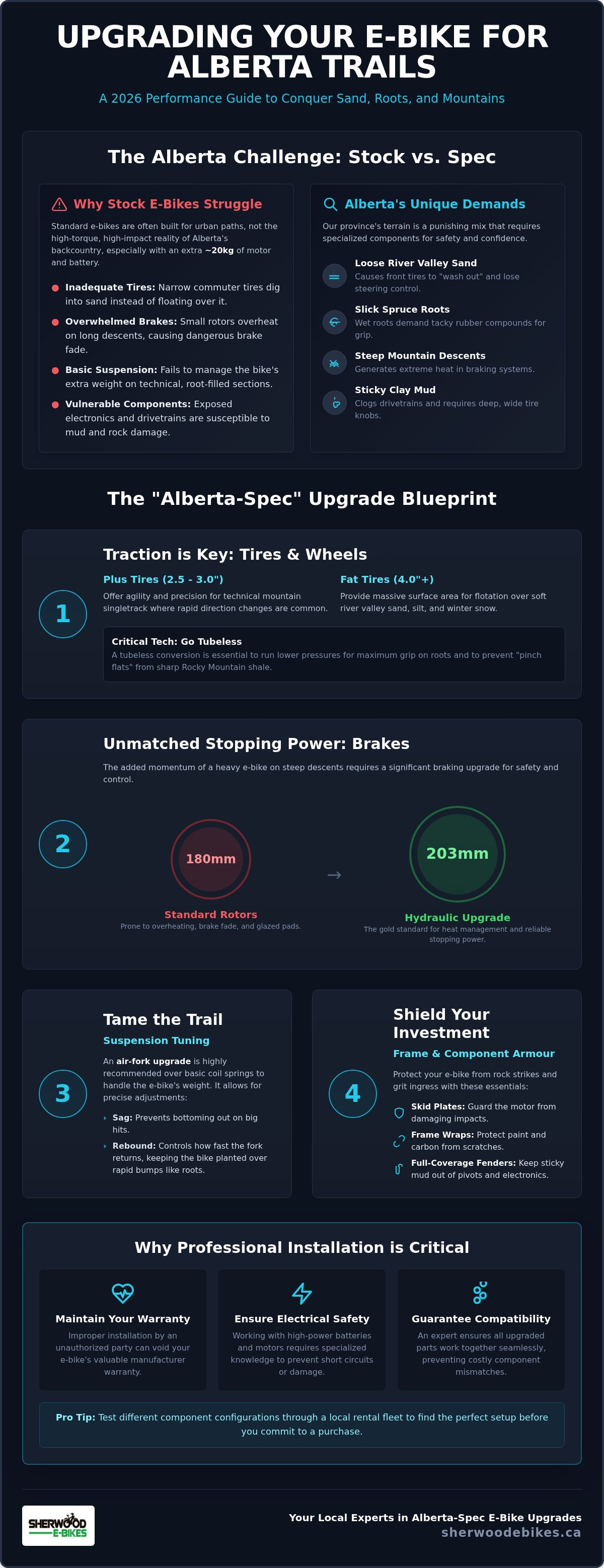
Alberta’s terrain is diverse and notoriously demanding. While a stock build might handle a paved commuter path or a flat gravel road, it often falters on the loose silt of the Edmonton river valley or the steep, root-choked descents in Kananaskis. Most entry-level models use components designed for urban environments, not the high-torque, high-heat reality of mountain riding. This is exactly why e-bike upgrades for alberta trails are essential for safety and performance.
The term "Alberta-Spec" refers to a specific set of modifications focused on traction, heat management, and physical protection. Standard electric bicycle technology provides a reliable baseline, but the added weight of a motor and battery means your bike carries more momentum than a traditional bicycle. Without specialized parts, that momentum quickly overcomes the limits of stock tires and brakes. Our variable weather also plays a role, as rapid temperature shifts and "sticky" clay mud can wreak havoc on exposed electrical connections and moving parts.
Loose Sand and the Edmonton River Valley
The North Saskatchewan riverbanks are notorious for soft silt and loose sand. Narrow commuter tires lack the surface area to stay on top of this material. Instead of floating, they dig in and cause the bike to lose its line. To fix this, riders need higher tire volume and the ability to run lower pressures, which creates a larger contact patch for stability. In the context of Alberta trail riding, washing out occurs when the front tire loses grip and slides out from under the rider during a turn.
The Rocky Mountain Descent: Braking Heat
Heading west to the Rockies introduces a different problem: heat. A heavy e-bike descending a long trail in Banff generates incredible friction. Small 160mm or 180mm rotors can't dissipate this heat fast enough. This leads to glazed pads, where the friction material becomes smooth and useless, or "brake fade," which is the unsettling sensation of your brake levers pulling all the way to the bar without stopping the bike. The extra weight of an e-bike system significantly accelerates this wear on steep grades.
If you're serious about exploring the backcountry, your maintenance routine must include checking seals and moving parts for grit ingress. Upgrading to trail-ready components ensures your bike remains a reliable tool rather than a liability in the wilderness. At Sherwood E-Bikes Ltd., we focus on these core areas to build a machine that feels planted and secure on any Alberta trail.
Traction and Stability: Tires and Suspension Upgrades
Your connection to the trail starts where the rubber meets the dirt. For many riders, e-bike upgrades for alberta trails begin with a critical choice: fat tires or plus tires. Fat tires, typically 4.0 inches or wider, provide massive surface area. This is a game-changer for the soft silt and sand of the North Saskatchewan riverbanks. Plus tires, usually around 2.5 to 3.0 inches, offer more agility and precision for technical mountain singletrack where rapid direction changes are common.
Tread pattern is equally vital for local performance. Deep, widely spaced knobs are necessary to shed the "sticky" clay mud common in central Alberta during the shoulder seasons. Conversely, a denser tread pattern provides the surface area needed to stay on top of loose sand. To avoid "pinch flats" on the jagged shale of the Rocky Mountains, we recommend converting to a tubeless system. This modification allows you to run lower pressures for better grip without risking a tube failure when you hit a sharp rock edge.
Selecting the Right Rubber for Alberta Soil
Choosing between a 2.5-inch mountain tire and a 4.0-inch fat tire depends on your year-round goals. If you plan to ride through the winter or spend most of your time in the river valley, the fat tire is superior for flotation. For spring riding, a softer rubber compound is essential. It provides the "tackiness" required to grip wet spruce roots that would otherwise cause a slide. Local specialists like Sherwood E-Bikes Ltd. carry trail-ready brands like Envo and Rize, which offer tread patterns specifically suited for these varied conditions.
Suspension Tuning for Heavy E-Bikes
E-bikes carry significant weight from the motor and battery, often weighing 20kg more than a standard mountain bike. This means your suspension needs to work harder to maintain steering control. You must adjust your "sag," the amount the fork compresses under your weight, to ensure the bike doesn't bottom out on technical sections. We often suggest an air-fork upgrade over basic coil springs. Air forks allow for precise "rebound" adjustments, which prevents the bike from feeling unsettled after hitting a series of roots.
For those focused on long-distance touring through provincial parks, a seat-post suspension is a high-value addition. It smooths out the chatter of gravel trails and reduces fatigue during long rides. If you aren't sure which setup fits your style, you can test different tire and suspension configurations through our rental fleet before making a final decision on your permanent build.
Power and Control: Drivetrain and Braking Systems
Once you have the traction to stay on the trail, you need the mechanical precision to control your speed and power. Standard mechanical brakes often fall short when faced with the weight and velocity of a modern e-bike. For those prioritizing safety, hydraulic disc brakes are the gold standard. They offer superior stopping power and heat dissipation, which is vital when descending thousands of feet in the Rockies. Integrating these e-bike upgrades for alberta trails ensures you have consistent braking performance, regardless of how steep the terrain becomes.
Upgrading to larger 203mm rotors is one of the most effective ways to increase stopping power. Larger rotors provide a greater surface area for cooling, which prevents the "glazing" of pads during long descents. Beyond braking, the drivetrain must handle the immense torque produced by mid-drive motors. High-output motors can easily snap a standard bicycle chain under load. Switching to a heavy-duty, e-bike specific chain and cassette is a proactive step that prevents mid-trail failures and keeps you moving through the backcountry.
Hydraulic Brake Conversions
The primary benefit of a hydraulic system is the improved lever feel and modulation. When you're navigating tight switchbacks in the river valley, you need to feel exactly how much pressure is being applied to the pads. Mechanical cables tend to stretch over time and can become fouled by the fine dust found on Alberta trails. This leads to a "mushy" feeling and reduced reliability. For a safe transition, consider Professional E-Bike Maintenance in Sherwood Park to ensure your new hydraulic lines are properly bled and pressurized.
Trail-Ready Drivetrains
Technical hill climbing requires more than just motor power; it requires a drivetrain that can handle the stress. A wider gear range is a significant upgrade that helps you maintain an efficient cadence, which in turn preserves your battery life on steep Alberta inclines. We also recommend installing a rear derailleur with a "clutch" mechanism. This feature keeps the chain under tension, preventing "chain slap" on bumpy sections and reducing the risk of the chain falling off the chainring. This setup is especially useful for those using torque-sensing upgrades, which provide a more natural power delivery during technical climbs.
- E-Bike Specific Chains: Built with reinforced pins to handle high-torque motor output.
- Hardened Steel Cassettes: Resist the premature wear caused by 500W motor systems.
- Clutch Derailleurs: Minimize noise and prevent chain drops on rough terrain.
By focusing on these mechanical systems, you transform your bike from a commuter into a reliable trail machine. These upgrades don't just improve performance; they provide the peace of mind needed to explore remote areas without fear of a mechanical breakdown.
Trail Comfort and Protection Essentials
Alberta’s backcountry routes are notoriously hard on equipment. Loose shale in the Rockies and flying debris in the river valley can quickly damage a sensitive motor housing or scratch a high-end frame. Investing in a heavy-duty skid plate is one of the smartest e-bike upgrades for alberta trails. These plates act as a shield for your mid-drive motor, preventing expensive damage from rock strikes. We also recommend clear frame wraps or "armour" tape. This protection preserves your bike's finish and resale value against the abrasive sand and grit common in our province.
Ergonomics play a massive role in how "planted" your bike feels. Stock handlebars are often too narrow for the weight of an e-bike. Switching to wider bars provides the leverage needed to wrestle a heavy machine through tight spruce roots or deep ruts. Pair these with locking grips. Unlike standard slide-on versions, locking grips use a metal collar to stay secure. They won't rotate when they get wet, which is a vital safety feature during a sudden Alberta downpour.
Dropper Posts: A Game Changer for Alberta Riders
If you only make one performance modification, make it a dropper post. This component allows you to lower your seat instantly with a handlebar-mounted lever. By dropping the saddle, you lower your centre of gravity and gain the ability to move your body freely over the bike. This is essential for navigating the steep, technical descents found in the Edmonton River Valley. It provides a massive boost in confidence, allowing you to tackle features that previously felt too intimidating. Before purchasing, verify your frame’s seat tube diameter and internal cable routing compatibility.
Fenders and Mud Management
Alberta has a "sticky" mud season that can bring a ride to a grinding halt. Standard plastic fenders often rattle loose or shatter when they hit a bump. We suggest switching to "moto-style" fenders. These are built from flexible, high-impact plastics and sit further away from the tire. This extra clearance prevents mud from packing into your fork arch or frame, which can lock up your wheels. You can find these and other essentials in our Must-Have E-Bike Accessories in Sherwood Park guide.
Protecting your bike and improving your comfort ensures you can stay out on the trails longer. If you need help selecting the right armour or installing a complex dropper post, visit our shop for professional maintenance and installation to get your ride trail-ready.
Professional Installation and Local Expertise
Modern e-bikes are sophisticated pieces of machinery that require more than just a set of Allen keys for proper maintenance. While the appeal of a DIY project is strong, attempting complex electrical e-bike upgrades for alberta trails without professional training carries serious risks. Incorrect wiring or improper battery handling can lead to permanent component failure, voided warranties, or even fire hazards. The technicians at Sherwood E-Bikes Ltd. use specialized diagnostic software to optimize motor output and ensure your battery remains healthy through Alberta's extreme temperature swings.
Mechanical precision is just as vital for off-road reliability. High-stress trail components, such as the larger rotors and heavy-duty drivetrains mentioned in previous sections, must be installed to exact torque specifications. Standard hand-tightening often fails under the constant vibration of a rocky descent. Professional installation ensures every bolt is secure, keeping you safe in remote areas where a mechanical failure isn't just an inconvenience; it's a safety risk. We prioritize reliability so you can focus on the ride.
Why Choose Professional Service?
Our service centre offers the diagnostic tools needed to fine-tune your motor's performance for technical climbing. We also ensure that all modifications comply with Alberta's "power bicycle" regulations, which limit motor output to 500 watts and assisted speeds to 32 km/h. Keeping your bike legal ensures you maintain access to provincial park trails and avoid classification as a motor vehicle. You can easily book your next tune-up or performance modification at the Sherwood E-Bikes Ltd. Service Centre.
Try Before You Buy in Sherwood Park
Choosing the right parts is easier when you've felt how they perform on the trail. We encourage riders to use our rental fleet to experience different tire widths and motor setups before committing to a purchase. This "try-before-you-buy" approach takes the guesswork out of customizing your ride. You can visit our showroom to see the latest offerings from Envo and Rize in person.
Our team consists of local experts who ride the same Edmonton and area trails as you do. We provide personalized advice based on real-world experience, helping you build a machine that feels planted and secure. Whether you're looking for a rugged trail conversion or a reliable commuter, Sherwood E-Bikes Ltd. is here to support the Alberta riding community with expert service and honest guidance.
Ready for Your Next Alberta Adventure?
Transforming your ride from a city commuter into a rugged trail machine allows you to explore our province with total confidence. By focusing on traction for sandy river valleys and upgrading to hydraulic brakes for steep mountain descents, you ensure every journey is safe and predictable. These essential e-bike upgrades for alberta trails turn technical challenges into effortless adventures while protecting your investment from the elements.
Our team in Sherwood Park understands the unique demands of local terrain. As an authorized service centre for Envo, Rize, and Wolff, we specialize in the complex electrical systems and high-torque drivetrains that keep you moving. Our expert mechanics serve the greater Edmonton area with specialized knowledge and hands-on support to ensure your bike performs at its peak. We pride ourselves on being a reliable local guide for both new riders and seasoned enthusiasts.
Don't let stock components limit your reach in the backcountry. Book Your Alberta Trail Upgrade Consultation at Sherwood E-Bikes and discover how a customized setup can change your riding experience. It's time to ride further and climb higher than ever before.
Frequently Asked Questions
What is the best tire width for riding the Edmonton River Valley trails?
For the soft silt of the North Saskatchewan riverbanks, a tire width of 4.0 inches is ideal for flotation. If you prefer technical singletrack with more roots, a 2.8-inch plus tire offers better agility. Choosing the right width is one of the most effective e-bike upgrades for alberta trails. This modification ensures your bike stays on top of the sand rather than digging in and washing out during tight turns.
Can I install hydraulic brakes on my mechanical-brake e-bike?
You can certainly upgrade to hydraulic brakes, but it involves replacing the entire system, including levers, lines, and calipers. This conversion provides much better modulation and stopping power compared to mechanical cables. Since mechanical cables stretch and attract dust, hydraulic systems are far more reliable for rugged backcountry use. We recommend professional installation to ensure the lines are correctly bled and pressurized for maximum safety on steep descents.
Do I need a more powerful motor to handle Alberta's mountain trails?
You don't necessarily need more raw wattage, as Alberta law limits "power bicycles" to 500 watts. Instead of looking for a bigger motor, focus on torque and gear range. A mid-drive motor with a wide-range cassette will handle mountain inclines much better than a high-wattage hub motor. This approach keeps your bike legal for provincial park use while providing the climbing power you need for technical Rocky Mountain trails.
Will upgrading my e-bike components void my manufacturer warranty?
Upgrading non-electrical components like tires, pedals, or handlebars typically won't void your manufacturer warranty. However, modifying the motor, controller, or battery system often results in a voided warranty. It's always best to have e-bike upgrades for alberta trails performed by an authorized service centre. This ensures that all components are compatible and installed according to factory specifications, protecting both your safety and your long-term investment.
What is a dropper post, and why do trail riders in Alberta recommend them?
A dropper post is a height-adjustable seat post controlled by a handlebar lever. It allows you to lower your saddle instantly, which lowers your centre of gravity for steep descents. Trail riders in Alberta recommend them because they provide the freedom to move your body over the bike. This is especially helpful when navigating the sudden elevation changes and technical root sections found throughout the Edmonton river valley trail system.
How do I protect my e-bike battery from Alberta's dusty trail conditions?
Protecting your battery starts with using frame wraps or specialized covers to block fine silt and grit. After a dusty ride, wipe down the battery casing and check the connection terminals for any debris. Avoid using high-pressure water near the electrical housing. Applying a dry-style lubricant to your drivetrain also helps, as it won't attract the abrasive dust that can wear down your mechanical components over time.
Are e-bikes allowed on all mountain bike trails in Alberta provincial parks?
E-bikes are permitted on many trails, but regulations vary by location. In Alberta provincial parks, pedal-assist e-bikes that meet the 500-watt limit are generally allowed on designated mountain bike trails. However, some municipalities prohibit throttles on certain pathways. Always check the specific bylaws for the park or trail system you plan to visit. Staying informed helps maintain trail access for the entire e-bike community.
How much should I expect to spend on a basic trail-ready upgrade kit?
The cost of a trail-ready upgrade kit depends entirely on your chosen components. High-quality trail tires typically range from $80 to $150 each, while hydraulic brake kits can cost between $150 and $400. Professional installation and a specialized e-bike tune-up will add to the total. While prices vary, investing in reliable parts ensures your machine can handle the unique stresses of Alberta's diverse and often punishing off-road terrain.


