

Imagine cruising down a lush Edmonton river valley trail, only to have a piercing metallic squeal announce your arrival to everyone within earshot. It's an embarrassing moment that many local riders face, especially when navigating the steep descents that define our city's landscape. When your stopping power starts to fade or your levers feel spongy, finding reliable e-bike brake repair edmonton becomes your top priority. You need a system that responds instantly, whether you're dodging traffic downtown or enjoying a weekend ride through the park.
We know that e-bikes are not just heavy bicycles. They are high-performance machines that put unique thermal stress on every component. This guide helps you realize why specialized care is essential for your safety and how to distinguish between mechanical and hydraulic systems. We'll show you how to restore that factory-fresh stopping power with expert advice from our specialized service centre. From maximizing pad longevity to understanding professional maintenance, we provide the clarity you need to get back to your commute with confidence and quiet, responsive brakes.
Key Takeaways
- Understand why the increased weight and speed of electric bikes require specialized thermal management and calibration.
- Learn to diagnose common issues like squealing or spongy levers to determine when you need professional e-bike brake repair edmonton.
- Compare the performance and maintenance requirements of mechanical versus hydraulic disc systems for your specific riding style.
- Protect your investment with maintenance tips tailored to Edmonton’s climate, from winter road salt to summer river valley dust.
- Discover how authorized service for premium brands like Wolff ensures your stopping power remains responsive and reliable.
Why E-Bike Brake Repair in Edmonton Requires a Specialist Approach
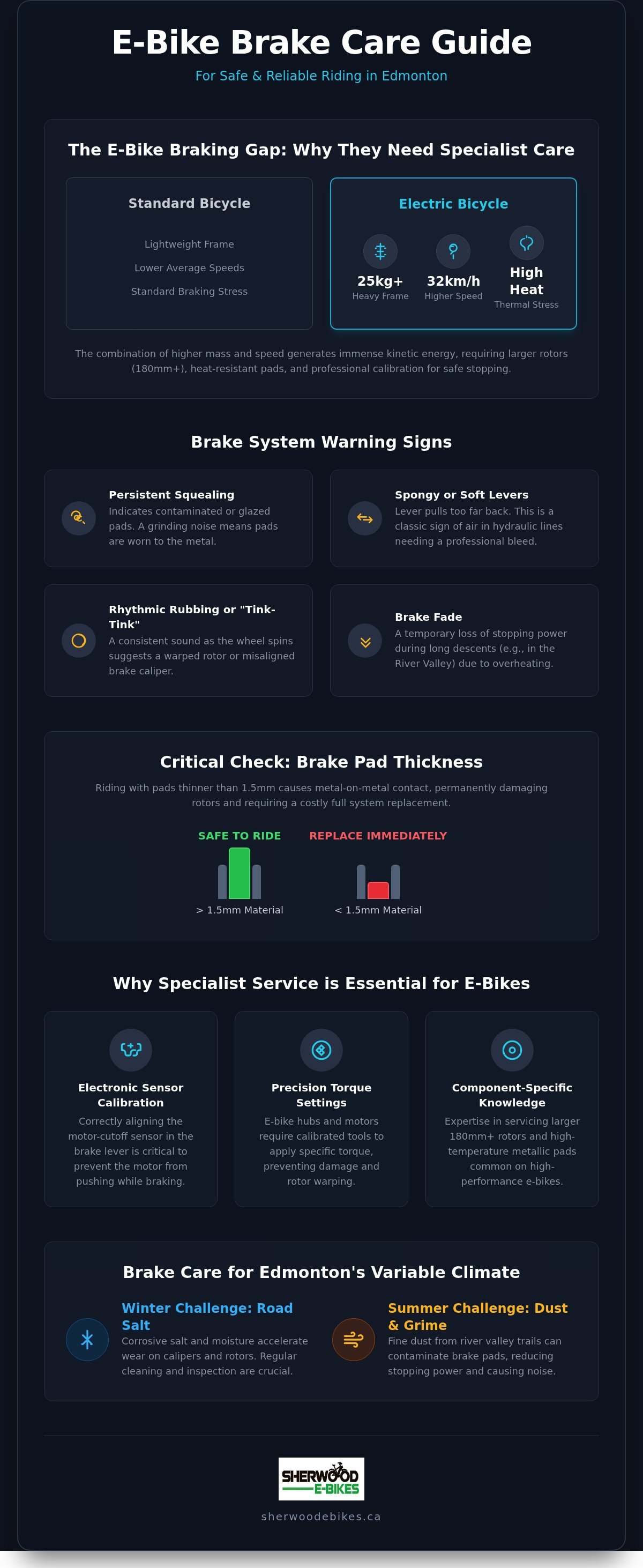
Electric bikes have transformed how we move through the city, but they've also changed the requirements for stopping. Standard bicycles are lightweight, but a modern electric bike often weighs upwards of 25kg. When you factor in a rider and gear, the kinetic energy produced at the legal limit of 32km/h is immense. This creates what technicians call the "E-Bike Braking Gap." Standard components often fail to meet these high-stress demands, which is why specialized e-bike brake repair edmonton is a necessity for safe, predictable riding.
The Physics of Stopping a Heavy Electric Bicycle
Stopping a heavy machine requires more than just a firm grip; it requires superior heat management. Because e-bikes carry more mass at higher average speeds, they generate significantly more friction heat during deceleration. This is why many electric bikes utilize rotors that are 180mm or larger, providing a greater surface area for cooling. You can learn more about various Bicycle brake systems to understand these mechanical differences. Heat dissipation isn't just about the rotor size, as the composition of the brake pads matters too. Many e-bikes use metallic or semi-metallic pads because they handle high temperatures better than standard organic pads. In our local geography, brake fade is a concern; it's the temporary loss of stopping power caused by overheating components during a long descent into the Edmonton River Valley.
Electronic Integration: More Than Just a Cable
Modern e-bikes feature a critical safety component: the motor-cutoff sensor. This sensor is built into the brake lever and tells the drive system to stop providing power the moment you squeeze the handle. If this sensor is misaligned or faulty, you might experience "ghosting," where the motor continues to push you forward even while you're trying to stop. A comprehensive service includes checking these electrical connections alongside the mechanical pads and rotors. General bike shops often overlook these electronic nuances or the specific torque requirements needed for heavy-duty e-bike hubs. Choosing a specialist for e-bike brake repair edmonton ensures your machine is handled with the precision it deserves.
Specialized e-bike hubs and mid-drive motors require specific torque settings that differ from standard bikes. Using the wrong settings can damage the motor housing or lead to rotor warping. Our technicians use calibrated tools designed for high-torque applications. This precision ensures your bike remains reliable under the heavy stress of daily commuting. We focus on the unique needs of electric systems to keep your ride quiet and your stopping power consistent.
Identifying Common E-Bike Brake Problems: Squeals, Rubbing, and Fading
Your e-bike communicates through its components. When your brakes begin to make noise or lose their responsiveness, they are signaling a need for attention. Ignoring these early warning signs often leads to more expensive repairs or compromised safety. Identifying the specific symptom is the first step toward effective e-bike brake repair edmonton.
Perform a "Squeal Test" to determine the cause of noise. A high-pitched screech that disappears after a few stops usually indicates simple moisture or morning dew. However, a persistent squeal often points to pad contamination from chain lube or road grime. If the sound is a harsh, grinding metallic noise, your pads are likely worn through completely. You should also check for "glazing," which happens when pads become smooth and shiny due to excessive heat or improper bed-in. Glazed pads lose their "bite," making it harder to stop on steep river valley descents.
If your brake levers feel spongy or pull all the way to the handlebar, you likely have air trapped in your hydraulic lines. This requires a professional bleed to restore a firm, responsive feel. Alternatively, a rhythmic "tink-tink" sound while riding suggests a warped rotor or a misaligned caliper. You can check for a warped disc by spinning the wheel and looking for a wobble as it passes through the brake pads.
When to Replace Your Brake Pads
Monitoring your pad thickness is the easiest way to prevent rotor damage. As a general rule, replace your pads when the friction material is less than 1.5mm thick. Riding with thinner pads leads to metal-on-metal contact, which creates deep grooves in your rotors and necessitates a full system replacement. If you can see the metal spring between the pads, it's time for a change. If you aren't comfortable measuring this yourself, bring your bike to the Sherwood E-Bikes Ltd. Service centre for a professional inspection.
Hydraulic Fluid Issues and Leak Detection
Edmonton’s climate presents unique challenges for hydraulic systems. Our -30°C winters can cause rubber seals to shrink, potentially leading to fluid leaks at the lever reservoir or the caliper piston. It's vital to know whether your system uses Mineral Oil or DOT fluid. These fluids have different boiling points and chemical properties; they must never be mixed, as doing so will destroy the internal seals. Look for oily residue around the hose connections or a sudden loss of pressure as indicators of a leak. For reliable e-bike brake repair edmonton, ensure your fluid is fresh and your seals are intact before the riding season begins.
Mechanical vs. Hydraulic Disc Brakes: Which System Does Your E-Bike Use?
Most electric bikes in Edmonton utilize one of two braking technologies: mechanical or hydraulic disc brakes. While both systems use calipers to squeeze pads against a rotor, the way they transfer your hand's force differs significantly. Mechanical brakes rely on a traditional steel cable. They are appreciated for their simplicity, lower initial cost, and the ease of roadside repairs. If a cable stretches or snaps, a cyclist can often perform a quick fix with basic tools. However, they require frequent manual adjustments to keep the pads close to the rotor as they wear down.
Hydraulic brakes represent the gold standard for modern electric mobility. Instead of a cable, these systems use a sealed line filled with fluid to actuate the pistons. This design offers superior modulation, allowing you to apply precise stopping power with minimal finger effort. Because hydraulic systems feature automatic pad adjustment, the lever feel remains consistent even as the pads thin out. This is why almost all high-speed Class 2 and Class 3 e-bikes have transitioned to hydraulic systems. While mechanical maintenance involves cable tensioning, hydraulic systems require periodic bleeding to remove air bubbles. Both services are essential components of professional e-bike brake repair edmonton to ensure your system remains responsive.
Brake Pad Materials: Sintered vs. Organic (Resin)
The material of your brake pads dictates how your bike handles heat and noise. Organic pads, also known as resin pads, are made from fibres and high-temperature resins. They are remarkably quiet and offer a strong "bite" the moment you touch the levers, even when cold. However, they tend to wear out quickly under the 25kg+ weight of a typical e-bike. Sintered, or metallic, pads are composed of fused metal particles. They are the preferred choice for Edmonton riders because they offer exceptional durability and heat management. Sintered pads perform reliably in the slush and grit of a prairie spring, making them our top recommendation for year-round commuters who want to maximize the time between service appointments.
Upgrading Your System for Better Performance
If your current ride feels underpowered, you don't necessarily need a new bike. Many riders choose to upgrade from mechanical to hydraulic calipers to reduce hand fatigue during long commutes. This is a popular modification for owners of brands like Envo or Rize who find themselves carrying heavy cargo or navigating steep river valley trails. For those riding cargo e-bikes, moving to a 4-piston caliper system provides even more surface area and clamping force. Upgrading your braking hardware is a smart way to customize your bike for Edmonton's unique terrain while increasing your overall safety on the road.
Maintaining Your Stopping Power: Brake Care for Edmonton’s Variable Climate
Edmonton's climate is notoriously hard on machinery. Your e-bike's braking system is on the front lines of this battle. During our long winters, road salt and sand create a corrosive "grit" that can quickly degrade brake finishes and compromise rubber seals. This isn't just a cosmetic issue; it can lead to seized pistons and fluid leaks. In the summer, the fine silt found along River Valley multi-use paths acts like sandpaper, accelerating pad wear and causing irritating noise. Consistent care is the only way to avoid frequent e-bike brake repair edmonton.
Proper maintenance starts with the "Bed-In" process. When you install new pads or rotors, they need a specific heat cycle to transfer a thin layer of pad material onto the disc. Perform 10 to 20 controlled stops from a moderate speed without coming to a full halt. This ensures your brakes stop quietly and effectively. For daily safety, use the "Squeeze and Hold" method. Squeeze your brake levers firmly before every ride. If the lever feels mushy or slowly sinks toward the grip, you likely need a professional to address a leak or air in the lines.
Cleaning Rotors Without Contamination
Keeping your rotors clean is vital, but using the wrong chemicals is a common mistake. Never use WD-40, standard degreasers, or silicone sprays near your braking system. These products leave an oily residue that ruins brake pads instantly. Instead, use high-percentage Isopropyl Alcohol and a lint-free cloth to wipe down your rotors. When cleaning the rest of your bike, cover your discs with a clean rag to prevent accidental overspray from chain lubricants or frame polish. This simple step saves you from the cost of replacing contaminated pads.
Winter Storage and Spring Tune-ups
If you store your bike for the winter, your hydraulic system needs occasional attention. Pump the brake levers a few times every month to keep the internal seals lubricated and prevent them from drying out or shrinking in the cold. For a deeper look at seasonal care, read our guide on Commuter E-Bike Maintenance in Sherwood Park. A professional spring inspection is the best way to ensure your bike is safe after a salty Alberta winter. Our technicians can check for hidden corrosion and ensure your stopping power is fully restored. Book your spring brake service today to stay ahead of the riding season and ensure your commute remains safe.
Professional E-Bike Brake Service at Sherwood E-Bikes Ltd.
Choosing a general bike shop for specialized electric components often leads to frustration. At Sherwood E-Bikes Ltd., we provide a specialized diagnostic process designed specifically for high-performance electric systems. Our technicians understand that your safety depends on more than just a simple cable adjustment. We evaluate the entire braking ecosystem, including electronic motor-cutoff sensors, hydraulic seal integrity, and rotor wear. This comprehensive approach is why we are the preferred choice for e-bike brake repair edmonton.
We are authorized dealers for premium brands like Wolff, Envo, and Rize. This means we have direct access to authentic manufacturer parts and the specific technical data required for precise calibration. For daily commuters, we prioritize quick turnaround times. We realize that your bike is your primary mode of transportation. Our team works efficiently to get you back on the road. Our pricing is transparent, ensuring you know exactly what your maintenance involves before the work begins.
Book Your Service Appointment Online
Managing your maintenance shouldn't be a hassle. We've integrated a streamlined booking system to allow you to secure a time slot that fits your schedule. Simply schedule your e-bike brake repair now to skip the queue and plan your week. When you arrive for your appointment, please remember to bring your keys and ensure your battery is included. This allows our technicians to perform full system diagnostics and test the motor-cutoff sensors under real-world power conditions. Most minor brake adjustments and pad replacements are completed quickly to minimize your downtime.
Visit Our Sherwood Park Showroom
Sometimes you need more than just a repair; you need expert advice. Our showroom at Sherwood E-Bikes Ltd. is designed for personalized interaction. You can browse our curated selection of high-performance parts and accessories while discussing potential upgrades with our knowledgeable team. Whether you're looking for better heat dissipation or more ergonomic levers, we help you find the right fit for your riding style. Our convenient location serves the greater Edmonton area, including St. Albert and Fort Saskatchewan. We pride ourselves on being a reliable local guide for both newcomers and seasoned enthusiasts. Visit us today to experience a modern, professional approach to electric mobility and e-bike brake repair edmonton.
Restore Your Stopping Power and Ride with Confidence
Navigating the unique geography of the capital region requires a braking system you can trust implicitly. As we've explored, the specific demands of electric mobility mean that standard bicycle maintenance often falls short. From managing the thermal stress of long descents to protecting delicate seals from seasonal road salt, your machine needs a dedicated approach to remain safe and quiet. Ensuring your stopping power is restored through professional e-bike brake repair edmonton is the best way to protect your investment and your peace of mind.
Sherwood E-Bikes Ltd. is your locally owned and operated specialist, deeply rooted in the Sherwood Park community. As an authorized service centre for Envo, Rize, and Wolff, we utilize specialized hydraulic bleeding equipment and diagnostic tools tailored for modern electric bikes. We are committed to helping you transition to a more efficient lifestyle with expert advice and reliable support. Book your e-bike brake service appointment today to experience the difference of professional, specialized care. Let's keep your journey forward-looking, responsive, and entirely safe.
Frequently Asked Questions
How much does e-bike brake repair cost in Edmonton?
The cost of e-bike brake repair in Edmonton depends on several factors, including whether you have mechanical or hydraulic systems. Simple cable adjustments or pad replacements are generally affordable, while full hydraulic bleeds or rotor replacements require more time and specialized equipment. Parts availability for specific brands also influences the final price. We recommend a professional evaluation to get an accurate quote based on your bike's specific needs and the current condition of your components.
Why are my e-bike brakes squeaking even though they are new?
New brakes often squeak because the bed-in process isn't complete. This critical step transfers a layer of pad material to the rotor for a smooth grip. If you skipped this, your pads might glaze over from excessive heat. Contamination from oils or cleaners during assembly can also cause noise. A specialist can often deglaze the pads or clean the rotors with isopropyl alcohol to restore quiet operation and improve your overall stopping power.
Can I use regular bicycle brake pads on my electric bike?
While some pads might physically fit, standard bicycle pads aren't designed for the 25kg weight of an e-bike. They wear out significantly faster and can fail under high heat. E-bike specific pads, usually sintered or metallic, offer the durability needed for higher speeds and heavier loads. Using the wrong material compromises your safety and leads to more frequent e-bike brake repair edmonton. Always choose pads rated for the extra kinetic energy of electric systems.
How often should I bleed my hydraulic e-bike brakes?
Most riders should have their hydraulic lines bled once per year to maintain performance. However, if you're a daily commuter in Edmonton, you might need it sooner. Air bubbles or moisture can enter the system over time, especially during our extreme temperature swings. If you notice a change in lever resistance or travel, it's time for service. Regular bleeding prevents internal corrosion and ensures your stopping power remains consistent and responsive throughout the riding season.
Why do my brakes feel "soft" or "mushy" when I pull the lever?
A soft or mushy feel usually indicates air is trapped inside your hydraulic lines. Unlike fluid, air compresses when you squeeze the lever, resulting in a spongy sensation. This can also be a sign of a slow leak at the seals or a loose connection. You should address this immediately to avoid total brake failure. A professional diagnostic check will identify whether you need a simple bleed or a component replacement to restore your safety and confidence.
Do I need a special mechanic for e-bike brakes or can any bike shop do it?
You should choose a mechanic who specializes in electric systems for your repairs. E-bikes have integrated motor-cutoff sensors and higher torque requirements that standard bike shops might overlook. Specialists have the specific tools and training to handle heavy-duty hubs and electronic integration. Professional e-bike brake repair edmonton ensures your motor and brakes work together perfectly. This specialized care maintains your warranty and provides long-term reliability for your modern, high-performance electric transit machine.
How long do e-bike brake pads typically last for a daily commuter?
Pad life varies based on your riding style and the terrain. Daily commuters in Edmonton often see pads last between 800 and 1,500 kilometres. If you frequently navigate the River Valley's hills or carry heavy cargo, they'll wear out faster. Check your pad thickness monthly to stay safe. Replacing them before they reach 1.5mm prevents permanent damage to your rotors and keeps your maintenance costs lower by avoiding a full system replacement later.
Can cold Edmonton winters damage my e-bike’s hydraulic braking system?
Extreme cold can cause rubber seals in your braking system to shrink or become brittle. This often leads to fluid leaks or allows air to enter the lines. Road salt used on Edmonton streets also corrodes metal components and degrades the finish on your calipers. Storing your bike in a climate-controlled area and pumping the levers regularly helps. A spring inspection is essential to catch any seal damage caused by our -30°C winter temperatures after the snow melts.


