

What if putting on one more layer makes you colder halfway through a winter ride? In Alberta, a hard-working climb or brisk commute can warm you quickly, while wind and a stop can leave damp clothing feeling uncomfortable. Choosing what to wear for winter e-biking in Alberta means dressing for effort and exposure, not just the number on the forecast.
If you're unsure how many layers to wear, or tired of cold fingers, feet, and cheeks, you're not alone. Too much insulation can lead to sweat; too little protection can make changing conditions around Sherwood Park and Edmonton tough to manage. A useful starting point is to feel slightly cool before you set off, then adjust for your route and pace.
This guide explains how to choose a moisture-wicking base layer, an insulating mid-layer, and a windproof outer shell suited to the forecast. You'll also find practical checks for your hands, feet, and face, plus ways to improve visibility and adjust clothing as your effort changes. Whether you ride in Sherwood Park, Edmonton, Leduc, Camrose, Fort Saskatchewan, Ardrossan, St Albert, Vegriville, Morinville, Wetaskiwin, or Spruce Grove, use these tips to prepare for your route and conditions.
Key Takeaways
- Choose what to wear for winter e-biking in Alberta by weighing wind, ride length, effort, and planned stops, not temperature alone.
- Build your outfit around three jobs: move moisture away from your skin, add insulation, and block wind or wet weather.
- Adjust clothing for the ride ahead, from a quick errand to a longer outing or a lower-effort trip.
- Protect your hands, feet, ears, and face while keeping a secure grip and easy access to your e-bike’s controls.
- Before you leave, check your layers, movement, exposed skin, and visibility. Reassess once you warm up.
What Makes Winter E-Biking in Alberta Hard on Your Clothing?
A winter ride can start in cold air, expose you to wind along an open stretch, then shift to a slower pace through turns or crossings. Around Sherwood Park and Edmonton, your route, the day’s forecast, and your riding effort all affect how your clothing feels. There isn’t one outfit that suits every trip.
Plan for the whole ride, not only the moment you leave home. Consider how long you’ll be outside, how exposed the route is, how steadily you expect to pedal, and whether you’ll stop outdoors. A short trip with frequent stops creates different clothing needs from a continuous commute, even if the forecast is similar.
Feeling warm when you set off isn’t the only measure of comfort. Too much insulation for your pace can leave you damp with sweat; when you slow down or stop, that moisture can make you feel chilled. Your clothing also needs to allow comfortable pedalling and easy movement on the bike. General guidance on winter cycling clothing can provide useful background, but let your ride plan and current conditions guide your choices.
How Alberta wind and changing conditions affect comfort
Wind can make exposed skin feel colder and carry heat away from clothing, especially when you’re moving. A route with sheltered sections followed by open roads or pathways may feel different from end to end. Snow or slush can also affect how dry you stay. Check the current forecast before choosing layers, and think about conditions along your route, not just at your starting point.
Why e-bike effort changes what you wear
Your pedal-assist setting and pace affect how much effort you supply, which can change how much body heat you generate. A steady stretch of pedalling may warm you up, while a lower-effort pace may leave you cooler. Assistance doesn’t remove your exposure to cold air or wind.
Build stops into your plan, too. Waiting at a crossing or pausing outside reduces your movement, so clothing that feels comfortable while pedalling may feel less warm when you’re stationary. The reverse can also happen: dressing heavily for a stop may feel excessive once you’re riding steadily. Account for the balance between moving and waiting, and leave room to adjust where it’s safe and practical.
The goal is warmth without trapped sweat or restricted movement. To decide what to wear for winter e-biking in Alberta, consider how your clothing will work across the full ride: forecast, wind exposure, duration, pace, and planned stops. That approach helps you stay more comfortable without assuming the cold will feel the same from departure to destination.
Build a Winter E-Biking Layer System for Alberta
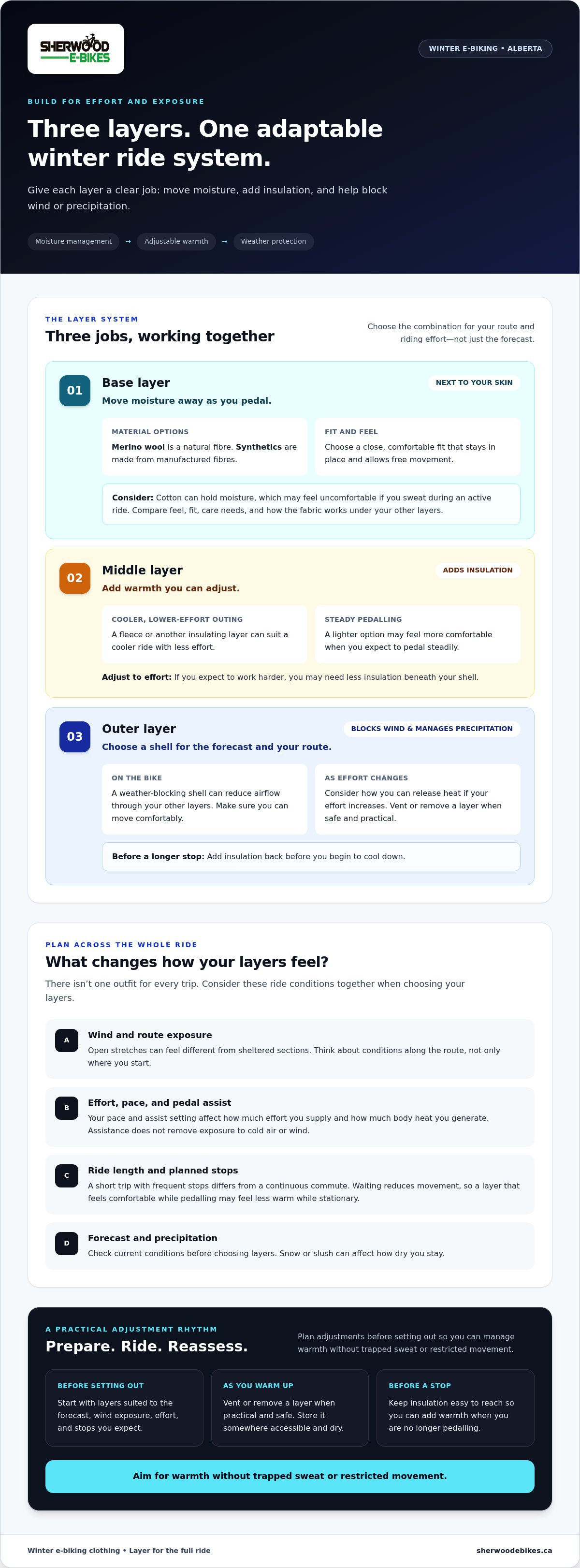
A useful layering system has three parts: a base layer that manages moisture next to your skin, a middle layer that adds insulation, and an outer layer that helps block wind and precipitation. Each part has a different job. Together, they let you adjust your clothing to the ride instead of relying on one thick garment for every condition.
Start with what each layer needs to do, then choose fabrics and pieces that suit your comfort and route. The right combination for a steady commute may feel too warm for a more active ride. Aim for layers you can move in and adjust without disrupting your ride.
Choose a base layer that manages moisture
A close-fitting base layer sits next to your skin and helps move moisture away as you pedal. Merino wool and synthetic fabrics are common options: wool is a natural fibre, while synthetics are made from manufactured fibres. Compare the garment’s feel, fit, care needs, and how it works beneath your other layers. Cotton can hold moisture, so consider how it may feel if you sweat during an active ride.
Choose a fit that stays comfortably in place without pulling across your shoulders, chest, or arms. You should be able to reach the handlebars and move freely. A base layer that fits well also makes it easier to add or remove insulation without bunching.
Add insulation and an outer layer for the conditions
Your middle layer adds warmth. A fleece or other insulating layer can suit a cooler, lower-effort outing, while a lighter option may be more comfortable if you expect to pedal steadily. Think in terms of adjustable warmth rather than adding insulation automatically. If you’ll be working harder, you may need less beneath your shell.
The outer layer helps block wind and manage precipitation. Choose one that suits the forecast and lets you move comfortably on the bike. A weather-blocking shell can also reduce airflow through your other layers, but consider how you’ll release heat if your effort increases. Vent or remove a layer when practical and safe; add it back before a longer stop if you begin to cool down.
Plan adjustments before setting out. Think about which layer you can open or take off without stopping in an exposed place. Store a removed layer somewhere accessible and dry. If your route includes pauses, keep the insulating layer easy to reach so you can add warmth when you’re no longer pedalling.
For related ride equipment, explore the local e-bike accessories guide from Sherwood E-Bikes Ltd. Clothing and accessories serve different needs, but both can help you prepare for the ride you have planned.
Choose Winter E-Biking Clothes for Your Ride, Not Just the Temperature
The same forecast can call for different clothing choices depending on how far you’re riding, how exposed your route is, and how hard you expect to pedal. A short trip with frequent stops has different demands from a longer, steady ride. Heavier clothing isn’t automatically better: if you overheat while riding, sweat can dampen your layers and leave you uncomfortable as your pace drops.
Choose layers for the whole trip, including stops. Use the forecast as a starting point, then consider wind exposure, effort, and how long you’ll be outdoors. The guide below offers starting points, not fixed outfits. Adjust the combination to your comfort and conditions.
| Ride type | Clothing adjustments | What to consider |
|---|---|---|
| Short errands | Keep the base layer comfortable and add insulation suited to the forecast. Choose an outer layer that helps block wind or manage expected precipitation. | Short rides may include more time stopped than pedalling. Consider exposed sections and whether you’ll wait outdoors between destinations. |
| Longer rides | Use layers you can vent or remove, and carry a removable insulating layer if effort or conditions may change. | Steady pedalling can build warmth, while a longer route means more time exposed to wind and changing conditions. Plan for pauses as well as riding. |
| Lower-effort outings | Consider an additional insulating layer beneath a wind-blocking outer layer, while keeping your clothing comfortable and easy to move in. | A relaxed pace may generate less body heat. Factor in the forecast, route exposure, precipitation, and any planned stops before choosing how much insulation to wear. |
Adjust layers for commute length and riding effort
A quick errand and an extended commute don’t give your clothing the same job. On a short trip, you may not pedal long enough to warm up much, particularly if the route includes waiting. On a longer ride, sustained effort can make a heavy mid-layer feel excessive. Bring a removable layer when your pace, route, or conditions could change.
Adapt your setup for wind, precipitation, and stops
A wind-blocking outer layer helps limit direct exposure while you ride. If precipitation is in the forecast, choose an outer layer intended to manage those conditions, and consider how it will work with your other layers. Before a prolonged stop, add insulation if practical rather than waiting until you feel chilled. Reassess as the ride changes.
When deciding what to wear for winter e-biking in Alberta, match your clothing to the trip rather than dressing only for the coldest moment. A commuter crossing open stretches, a rider making several brief stops, and someone pedalling steadily for longer will each need to balance warmth, wind protection, and heat from exertion differently.
Protect Your Hands, Feet, Head, and Visibility on Alberta Winter Rides
Cold-weather clothing needs extra attention at your hands, feet, ears, and face. These areas can be exposed to moving air, and bulky gear can interfere with riding if it limits your grip or movement. Choose coverage that keeps you comfortable while letting you brake, steer, and operate your e-bike’s controls with confidence.
Visibility also belongs in your clothing plan. Winter rides may include darker conditions, so consider reflective details on clothing or gear and suitable lights on your bike. For more on visibility and other ride equipment, see the Edmonton-area e-bike accessories guide.
Keep hands and feet warm without losing control
Gloves should provide coverage without making it difficult to use the brake levers, shift, or reach other controls. A glove that feels warm but limits finger movement may make bike handling less comfortable. Before riding, put on your chosen gloves and check that you can operate each control smoothly. If you add liners or another layer, test the fit again.
For your feet, consider warmth alongside fit. Footwear that feels tight can restrict comfortable movement, while a fit that leaves room to move your toes may feel more comfortable. Check that you can place your feet securely on the pedals and walk as needed. If your route includes outdoor stops, account for the time you’ll be standing as well as riding.
Cover your head and stay visible
Use head and face coverage that suits the conditions and doesn’t obstruct your vision or interfere with a secure helmet fit. A neck warmer or face covering can help protect exposed areas; adjust it if it shifts or makes it harder to see clearly. Pay attention to your ears, too, especially on an exposed route.
Reflective details can help make you more noticeable when light is limited. Position them where they can be seen, and check that outer layers or bags don’t cover them. Suitable front and rear lights provide another visibility measure in darker conditions. Before setting off, make sure they’re attached securely and working.
- Check your grip: Can you hold the handlebars securely with your gloves on?
- Check control access: Can you reach and operate the brakes and other controls easily?
- Check coverage: Are your hands, feet, ears, and face protected without restricting movement or vision?
- Check visibility: Are reflective details visible, and are your lights working?
Use this check to fine-tune what to wear for winter e-biking in Alberta. Prioritize warmth, but don’t trade away control or clear vision.
Use This Pre-Ride Clothing Check Before Winter E-Biking in Alberta
A quick clothing check can catch gaps before you leave, while there’s still time to adjust. Use this routine for a commute, an errand, or a recreational ride around Sherwood Park and nearby communities. Match your clothing to the outing you’ve planned, then reassess once you’re moving and have warmed up.
Run through a simple before-you-ride checklist
Check the forecast and route exposure first. Then review your layers, control access, and visibility. If a layer needs changing, do it before setting off rather than trying to adjust clothing while riding.
- Check the forecast and wind. Consider expected precipitation and exposed parts of your route. Choose layers for the full outing, including time outdoors before or after riding.
- Review your layers. Make sure your base, insulation, and outer layer suit your planned pace and stops. Carry a removable layer if your effort or conditions may change.
- Cover exposed areas. Check that your hands, feet, ears, and face have suitable coverage without clothing obstructing your vision or movement.
- Test movement and control access. With your gloves and outerwear on, reach the handlebars, operate the brakes and other controls, and move your arms and legs comfortably.
- Check visibility. Make sure reflective details are visible and your lights are ready for the conditions and time of your ride.
The checklist is a starting point, not a one-time decision. After you’ve warmed up, notice whether you’re becoming too warm or still feel underdressed. If you need to adjust, stop somewhere safe first. Open or remove a layer if practical, and add it back before a prolonged stop or when you begin to cool down. Keep any spare layer accessible, so you don’t have to unpack everything to reach it.
Get local help with your e-bike setup
Clothing comfort is one part of feeling prepared; your e-bike’s condition matters to the ride as well. For practical bike-readiness context, see this guide to e-bike maintenance in Sherwood Park. Sherwood E-Bikes Ltd. provides maintenance and repair services through its service team. You can also get personalized advice at the Sherwood Park showroom when you’re thinking through a riding setup that fits your needs and route.
Use these checks to decide what to wear for winter e-biking in Alberta before each outing. Forecasts, routes, and effort can vary from ride to ride, so reassess your clothing whenever those factors change.
What to Wear for Winter E-Biking in Alberta: Make Your Winter Ride Setup Your Own
Use your next outing to learn what works for your route and riding style. After the ride, note what you’d change for a similar trip: a layer to pack, a glove choice to rethink, or a piece of gear that made your ride feel easier to manage. Those small observations can help you prepare for changing conditions through the season.
Clothing is only one part of getting ready to ride. If you’re considering what to wear for winter e-biking in Alberta alongside other useful ride equipment, explore options that suit how you travel, carry essentials, and use your e-bike. Sherwood E-Bikes Ltd. is a locally owned and operated independent retailer serving riders in the region, with e-bike parts and accessories.
Explore e-bike parts and accessories at Sherwood E-Bikes Ltd. to build a winter setup that fits your needs.
Frequently Asked Questions
What should I wear for a winter e-bike ride in Alberta?
Wear clothing that suits your route, effort, and forecast, with comfortable coverage for your hands, feet, head, and face. For what to wear for winter e-biking in Alberta, check how each piece fits together: a scarf or hood shouldn’t obstruct your vision, and sleeves shouldn’t catch or bunch when you reach for the handlebars. Try your full outfit indoors before riding to spot awkward fits early.
How many layers should I wear when winter e-biking?
Start with three functional layers, then adjust their weight and combination to suit your ride. Your base layer sits next to your skin, insulation adds warmth, and the outer layer helps shield you from wind and precipitation. You may not need all three in the same weight for every outing. Try the combination in your riding position, since clothing can fit differently when you lean forward or reach for the bars.
Can I wear ski clothing while riding an e-bike in winter?
Yes, ski clothing can be an option if it allows you to pedal, steer, brake, and see clearly. Check whether a bulky jacket restricts your shoulders or snow pants bunch at the knees as you pedal. Some ski pieces may feel warm during active riding, so consider how easy they are to vent. Test your range of motion while wearing the full outfit before setting out.
Is cotton a good base layer for winter cycling?
Cotton may feel comfortable at the start, but it can hold moisture if you sweat, leaving the fabric feeling damp against your skin. For an active ride, consider a base layer made from merino wool or synthetic fabric instead. If cotton is what you have, keep the outing and effort in mind, and pay attention to whether the fabric feels clammy once you begin pedalling.
How do I keep my hands warm while still using e-bike controls?
Choose gloves that cover your hands while allowing your fingers to move freely. Before riding, practise pulling each brake lever and operating the display, assist controls, and gear shifter with the gloves on. Check that the material doesn’t bunch in your palm or make your grip feel uncertain. If you add a liner, test control access again, since extra fabric can change the fit and feel.
What should I wear if I sweat while riding in cold weather?
If you start sweating, reduce heat build-up before your layers become damp. Ease your pace or open a vent when it’s safe, then remove an insulating layer at a suitable stopping place if needed. On a route with a long climb, adjust before the harder effort begins rather than waiting until you feel overheated. Keep any removed layer accessible so you can put it back on when you slow down.
Do I need different clothing for a short winter commute and a longer ride?
Often, yes. A short commute may involve brief bursts of pedalling and waiting outdoors, while a longer ride can mean more sustained effort and time exposed to wind or precipitation. For the longer outing, consider carrying a removable layer and planning where you can adjust comfortably. For a quick trip, avoid dressing so heavily that a short active stretch leaves you overheated before you arrive.


