

A clean belt drive still needs regular inspection. For belt drive electric commuter bike maintenance in St. Albert, check for dirt, debris, cracks and missing teeth. Belt drives do not need lubrication. Remove debris by wiping the belt with a clean rag or using a toothbrush.
A belt may seem maintenance-free because it does not need chain oil, but it still needs attention. Belt tension adjustments and rear-wheel work can require a mechanic, especially if the belt slips, makes noise or breaks.
This guide explains what a professional checks, how belt tension is assessed and adjusted, and when removing the belt is part of rear-wheel maintenance. It also covers what to expect during service and when to bring your commuter e-bike in for inspection.
Key Takeaways
- Learn when a technician removes the belt to service the rear wheel and how it is guided back onto the sprockets.
- See what a professional assesses before adjusting belt tension, including the factors that affect a proper fit.
- Understand how routine inspection and cleaning can help identify dirt, damage or missing belt teeth.
- Find out why belt drives don’t need lubrication and which signs, such as slipping, noise or a broken belt, call for professional attention.
- Explore how Sherwood E-Bikes Ltd.’s commuter e-bikes and maintenance services can support your daily rides.
Professional belt removal for rear-wheel maintenance
A technician identifies a compatible belt and assesses the rear-wheel service before estimating the job. The work may involve more than removing the belt, particularly when a hub motor or other components are near the axle.
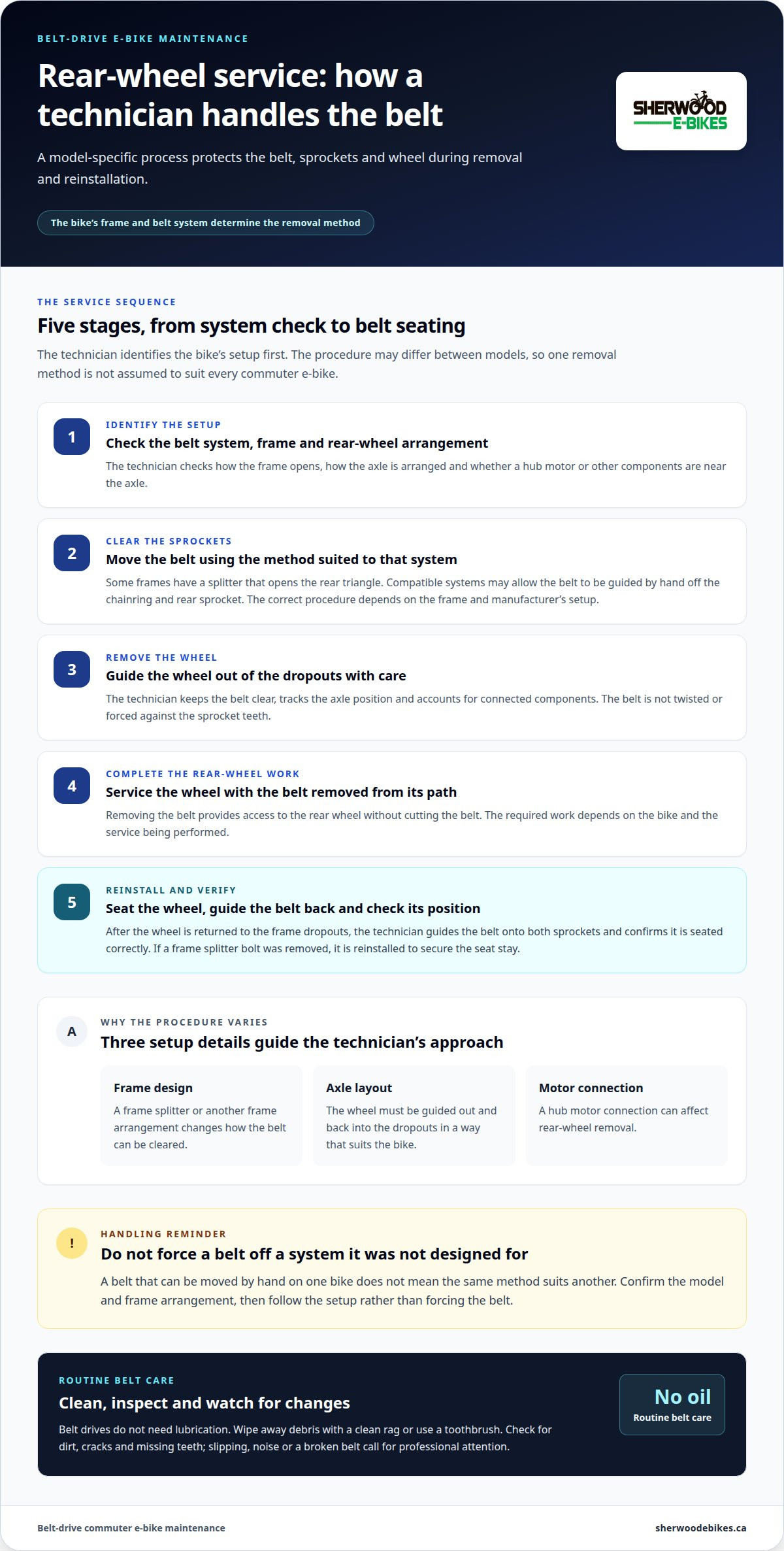
Removing the belt gives a technician access to the rear wheel without cutting it. First, the technician identifies the bike’s belt system and frame design. Some frames have a splitter that opens the rear triangle; compatible systems may let the belt move off the sprockets. The correct method depends on the frame and manufacturer’s setup.
On a system designed for hand removal, the technician guides the belt off the chainring and rear sprocket. The belt may need to be moved clear of the sprockets before the rear wheel can be removed, depending on the bike’s design. Other frame designs require a different procedure, so the technician follows the bike’s setup rather than assuming one method works for every commuter.
During service, the technician avoids twisting the belt or forcing it against the sprocket teeth. They guide the wheel out of the dropouts while keeping track of axle position and connected components. This controlled sequence helps protect the belt, sprockets and wheel. If there is a hub motor, its connection also affects wheel removal.
- The technician identifies the belt system, frame opening and rear-wheel configuration.
- The belt is moved clear of the chainring and rear sprocket using the method suited to that system.
- The technician removes the wheel from the dropouts and completes the required maintenance.
- The wheel is seated back into the dropouts after the rear-wheel work.
- The belt is guided onto both sprockets, then checked for correct seating.
After the rear-wheel work, the technician returns the wheel to the frame dropouts and guides the belt onto the chainring and rear sprocket. If the frame has a splitter and its bolt was removed, the technician reinstalls the bolt to secure the seat stay. A final check confirms the belt is seated correctly.
These steps depend on the model. A belt that can be moved off its sprockets by hand does not make that method suitable for every commuter e-bike. Frame splitters, axle layouts and motor connections vary. Professional belt drive electric commuter bike maintenance in St. Albert starts by identifying the bike’s design before removing and reinstalling the rear wheel.
On a system designed for hand removal, the belt can be guided off the chainring and rear sprocket to allow rear-wheel removal. That method does not automatically apply to other systems. Before service, the technician confirms the bike’s model and frame arrangement, then keeps the belt clear while moving the wheel from the dropouts. After the work, the belt is guided onto both sprockets and checked for proper seating. If the setup differs, the method must suit that bike rather than force the belt.
Professional belt tension inspection and adjustment
A technician begins by identifying the belt system and the e-bike’s adjustment method. Because belt tension is model-specific, a universal “tight enough” feel is not a reliable measure. The technician follows the manufacturer’s service information for the correct measurement method and tension range, basing the inspection on the bike’s design rather than guesswork.
Next, the technician checks the belt’s condition and position for cracks, damaged or missing teeth, uneven wear, and contact with nearby parts. The belt should track correctly across the chainring and rear sprocket. If it sits off-centre, the technician checks wheel alignment and sprocket position before adjusting tension. Tightening a misaligned belt alone may leave the underlying issue unresolved.
To measure tension, a technician may use a belt tension tool or the method specified for that system. Some systems use belt vibration frequency; others require a different procedure. The target depends on the belt and bike model. A reading is useful only when measured using the correct method and reference for that setup.
The bike’s design determines how the technician adjusts tension. Some frames allow changes by repositioning the rear wheel at the dropouts; others use a different mechanism. The technician makes controlled adjustments, keeping the wheel aligned with the frame and the belt centred on both sprockets. They then measure tension again to confirm the result.
- Too little tension: The belt may move or slip during pedalling, particularly under load.
- Too much tension: Excess force can place unnecessary strain on the belt and drivetrain components.
- Poor alignment: A belt that tracks unevenly may rub or wear abnormally.
Visual signs help guide an inspection, but they cannot replace a model-specific measurement. A belt that looks straight on its sprockets may still need a tension reading, and one that feels firm by hand may still be outside its prescribed range. The technician checks both setup and condition before deciding whether adjustment will address the concern.
After adjustment, the technician rotates the drivetrain and rechecks belt tracking and tension. If the belt still slips, makes noise or will not stay in position, the cause may be wear, misalignment or another drivetrain issue. Professional belt tension service in St. Albert focuses on diagnosing the cause and confirming the final setup against the bike’s service requirements.
Belt-drive commuter bikes
A belt drivetrain suits commuters who want a clean system without chain lubrication. Compared with a chain, a belt needs no lubricant and can reduce routine drivetrain cleaning. Chains are more widely used and fit conventional drivetrain designs, while belts require compatible frames and sprockets and model-specific service procedures. As a result, replacement parts and rear-wheel work can depend more on the bike’s design.
For Alberta street-legal e-bikes, the motor must be under 500W, and assistance must stop at 32 km/h. These limits apply to motor power and assisted speed. They don’t determine whether a particular belt-driven model suits your route.
For belt-drive e-bike maintenance in St. Albert, choose a service that includes the belt and its connected drivetrain. A technician can assess belt condition, tension, alignment and rear-wheel access. The bike’s make, model and frame design determine the procedure and compatible parts.
Belt service and electrical system diagnostics address different parts of an e-bike. Belt inspection is mechanical, while motor or battery diagnostics concern electrical components. The e-bike’s model and reported problem help determine what the service involves.
The belt alone does not determine whether an e-bike is suitable for year-round riding in St. Albert. Winter riding involves changing traction and road conditions, so tire choice, bike setup and route all matter. Snow, slush and grit can also leave debris around the drivetrain, making inspection and cleaning useful after exposure.
Commuter-bike choice also depends on gearing and route demands. A belt paired with an internal gear hub differs from other drivetrain setups, and those components affect rear-wheel service. A technician assesses the complete configuration rather than treating the belt as an isolated part.
Some belt systems let a technician move the belt off the chainring and rear sprocket by hand for rear-wheel maintenance. This procedure depends on the bike’s frame and belt arrangement. After service, correct belt seating and wheel position are important for drivetrain operation.
Compare the practical considerations before choosing a commuter:
- Routine care: A belt needs no chain lubricant, but still requires inspection.
- Service fit: Frame design, belt type and e-bike system shape maintenance.
- Local conditions: Winter surfaces and road debris affect riding conditions and cleaning needs.
When matching a drivetrain to your commute, consider service requirements as well as route conditions. A professional assessment can address the belt, rear-wheel setup and e-bike system as connected parts of your commuter configuration.
Professional belt-drive inspection and cleaning
A technician examines the belt along its full length. This includes checking for dirt, debris, cracks and missing teeth. The technician rotates the drivetrain to expose each section and checks how the belt sits across the chainring and rear sprocket. A quick look at one visible section can miss damage elsewhere.
Inspect the belt periodically, and pay closer attention if it looks dirty or its condition changes. Clean it when debris is visible. Replacement depends on the belt’s condition, not a calendar interval: cracks, missing teeth or a break call for assessment and may mean the belt needs replacing.
To clean the belt, remove loose dirt with a clean rag. A toothbrush can dislodge debris caught between the teeth. Work carefully along the belt, turning the drivetrain as needed to reach its full circumference. These methods can help remove dirt and debris.
After cleaning, the technician inspects the belt again to distinguish surface dirt from cracks, damaged teeth or other visible wear. They also check that it tracks properly on both sprockets. If it sits unevenly, the inspection should include belt alignment and the surrounding drivetrain, rather than treating dirt as the only possible cause.
- Dirt or grit: The technician wipes the belt or uses a toothbrush to clear debris.
- Cracks: The technician assesses whether the belt remains fit for service.
- Missing teeth: The technician checks the damage and its effect on belt engagement.
- Breakage: The bike needs professional attention before it returns to regular use.
Have a mechanic assess a belt that breaks, makes noise or slips off the rear sprocket. These symptoms may point to a belt problem or another issue affecting operation. The technician examines the belt and drivetrain before deciding whether cleaning, adjustment or replacement is appropriate.
Cleaning will not repair a cracked belt or restore missing teeth. A belt that looks clean still needs inspection for damage. For daily commuters, the distinction is practical: debris calls for cleaning, while physical damage needs a closer service assessment. The technician explains what they find and the next step in clear terms.
For belt-drive commuter bikes in St. Albert, professional inspection combines regular condition checks with cleaning when needed. The technician uses the belt’s condition and symptoms to guide replacement decisions. Rather than relying on a universal replacement schedule, this approach focuses on the belt fitted to the e-bike.
Wipe a dirty belt with a clean rag or use a toothbrush to remove debris. Once the debris is cleared, a technician can inspect the exposed belt and decide whether further assessment is needed. These tools remove debris; they do not prove the belt is undamaged. Keeping cleaning and assessment distinct makes the inspection more useful: cleaning clears debris, while assessment determines what the belt’s condition requires.
What maintenance does a belt-drive electric commuter bike require?
A belt-drive commuter needs drivetrain checks, but not chain lubrication. Belt drives do not need lubricant, so chain oil is not part of their maintenance routine. Instead, a technician checks belt condition, tracking, tension and the sprockets it engages.
Inspection frequency depends on the bike’s use and condition. A technician can assess the belt during scheduled e-bike maintenance or when a rider notices a new sound, slipping or visible damage. There is no universal replacement interval in the available guidance. The belt’s condition, wear and manufacturer’s service instructions inform the decision.
During a service visit, the technician checks the drivetrain as a system. They inspect the belt’s teeth and surfaces, confirm that it tracks across both sprockets, and assess tension using the method for that bike. They also look for alignment issues that could cause uneven tracking. If the wheel has been removed, they check that the belt is seated correctly after reinstalling it.
A mechanic should assess a belt that breaks, makes noise or slips off the rear sprocket. These signs can affect reliable engagement. A broken belt needs replacement; noise or slipping calls for diagnosis before parts are changed. The technician determines whether the belt, tension, alignment or another drivetrain component needs attention.
Replacement involves more than fitting a belt. The technician follows the procedure specified for the bike’s frame and drivetrain, then confirms that the belt sits on the chainring and rear sprocket. Because the correct procedure depends on the frame and drivetrain, details should not be assumed across different models.
Electric-assist components also matter during maintenance. The motor, battery connections and controls are separate from the belt, but they affect how the e-bike operates. A professional assessment distinguishes drivetrain concerns from electrical issues. For example, a slipping belt calls for drivetrain inspection, while an assist problem needs attention to the relevant electrical system.
- Routine attention: Inspect belt condition, tracking and tension.
- Cleaning: Remove visible debris without adding lubricant to the belt.
- Prompt assessment: Arrange service for breakage, noise or belt slippage.
- After replacement: Follow the frame and drivetrain manufacturer’s installation instructions.
For belt-drive concerns on a commuter e-bike, book professional maintenance for a model-specific inspection and service.
Sherwood E-Bikes Ltd.: Commuter E-Bikes
Sherwood E-Bikes Ltd. offers commuter e-bikes and e-bike maintenance for riders choosing a daily ride or addressing a belt-drive concern. Use its maintenance service when a technician needs to assess belt condition, tension, tracking or rear-wheel work. The inspection depends on your bike’s drivetrain and frame design.
Choosing a commuter e-bike means matching it to your route and service needs. E-bike parts and cycling accessories can support your setup. If a belt is slipping, noisy or damaged, a professional assessment can help identify the issue and the appropriate next step.
Contact Sherwood E-Bikes Ltd. to discuss your commuter e-bike or maintenance needs.
Plan your next commuter ride with confidence
Start by matching the bike and its service needs to the way you ride. For belt drive electric commuter bike maintenance in St. Albert, choose a professional assessment when the belt needs attention or rear-wheel work involves the drivetrain. If you are selecting a commuter e-bike, consider how its belt system suits your route and maintenance preferences.
Sherwood E-Bikes Ltd. offers Commuter E-Bikes, E-Bike Maintenance and E-Bike Parts to support those decisions. The right parts and service depend on your bike’s model and the work required. Discuss a maintenance concern or explore a commuter option suited to your everyday travel.
Take the next step at a pace that works for you. Contact Sherwood E-Bikes Ltd. to talk about your commuter bike or belt-drive service, and move forward with a clear plan for your rides.


