

A motor that cuts out isn’t always the part that has failed. On an electric bike, sudden power loss can also involve the battery, display, controller or wiring connections. The pattern of the problem matters before you assume the motor needs repair.
It’s frustrating when an e-bike loses assistance, especially when you’re trying to understand what other riders have experienced and what a repair might involve. This article covers common reports of power loss, cut-outs and battery-connection problems, along with practical ways to describe the symptoms. You’ll also learn what to expect when seeking repair support around Edmonton, so you can choose a useful next step.
Key Takeaways
- Power interruptions can stem from battery, display, controller or wiring connections, so the motor may not be the only part to investigate.
- Battery fit and terminal condition can affect electrical contact; signs of damage at the interface call for careful attention.
- Notice when power cuts out and whether the display or battery connection changes, as those details can help narrow down the issue.
- Sherwood E-Bikes offers E-Bike Maintenance and E-Bike Parts for owners looking for service or replacement components.
- Commuter E-Bikes and Cycling Accessories are also available through Sherwood E-Bikes for riders considering other e-bike options or useful add-ons.
Sherwood E-Bikes
Sherwood E-Bikes Ltd. can help when an e-bike problem needs attention beyond basic troubleshooting. If assistance cuts out, a warning appears or the bike behaves differently, our E-Bike Maintenance service is a practical next step. For an e-bike motor concern in Edmonton, describe the symptoms, when they occur and what changed before they began. This keeps the discussion focused on the bike’s behaviour rather than assuming a particular component is at fault.
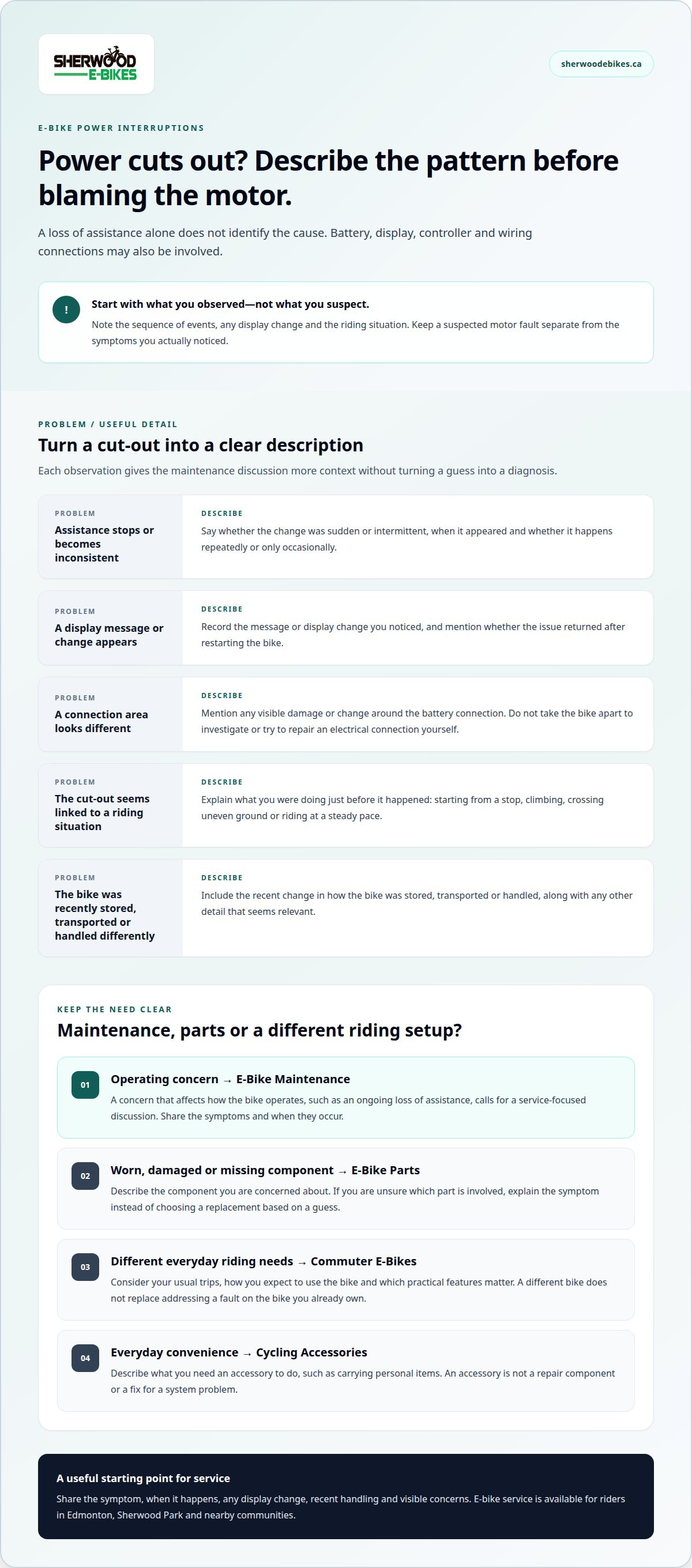
An e-bike’s drive system works alongside electrical and mechanical components. A rider may notice a loss of power, but that feeling alone doesn’t identify the cause. Separate what you observed from what you suspect. For example, note whether assistance stopped suddenly or became inconsistent, whether the display changed and whether the issue returned after restarting the bike. These details help frame a maintenance discussion without turning a guess into a diagnosis.
When describing the issue, be factual and specific. Note the riding conditions, when the symptom appeared and whether it happens repeatedly or only occasionally. If you see visible damage, mention it rather than trying to repair an electrical connection yourself. A clear description gives the maintenance discussion a useful starting point and helps distinguish an operating problem from a parts or accessory need.
Explain what you were doing just before the change. Were you starting from a stop, climbing, crossing uneven ground or riding at a steady pace? Did the bike continue moving normally while the assistance changed, or did something else feel different? You don’t need to work out the cause. Describe the sequence in plain language so the issue can be considered in context.
Useful information to share includes:
- The main symptom, described in your own words.
- Whether it is constant, intermittent, or tied to a particular riding situation.
- Any display message or change you noticed.
- Whether the bike has recently been stored, transported, or handled differently.
- Any visible condition that seems relevant, without taking the bike apart to investigate it.
Describing symptoms isn’t a substitute for service, but it can make the initial discussion more precise. If you’re unsure how to describe a sound or change in assistance, use everyday terms and explain what you felt at the pedals or saw on the display. Avoid presenting a suspected motor fault as fact. A symptom-led description leaves room to consider the whole bike and avoids narrowing the problem too soon.
E-Bike Maintenance is relevant when a concern affects how the bike operates or when you need a service-focused next step for an ongoing problem. Regular maintenance also helps address the bike’s overall condition, not just the component that first caught your attention. Sherwood E-Bikes provides e-bike service for riders in Edmonton, Sherwood Park and nearby communities.
Some situations are more clearly about parts. A component may be worn, damaged, missing or no longer performing as expected. Sherwood E-Bikes offers E-Bike Parts for these needs. Sharing the bike details and the component you’re concerned about helps define the parts discussion. If you’re unsure which component is involved, describe the symptom instead of choosing a replacement based on a guess.
Replacing a part and assessing a maintenance concern are different decisions. A visible problem may make a component seem like the obvious answer, but what caused it to change can affect what needs attention. And an irregular ride doesn’t always mean a part needs replacing. Describe what happened first to keep the discussion focused on the right need: parts, maintenance or both.
For example, you might notice inconsistent assistance and a change in the appearance of a connection area. Report both observations clearly. Don’t assume one explains the other, and mention visible concerns even if they seem unrelated. Sharing the full picture gives the service discussion useful context and avoids treating a component in isolation from the rest of the bike.
A repair concern is also different from a riding-setup concern. If your bicycle no longer feels suited to your daily trips, a broader conversation about commuter e-bikes may be useful. Sherwood E-Bikes offers Commuter E-Bikes for riders considering an e-bike for regular transportation. This can help you reassess how a bike fits your routine, but it doesn’t replace addressing a fault on the bike you already own.
Start a commuter-bike decision with how you actually ride. Consider your usual trips, how you expect to use the bike and which practical features matter most. You might prioritize a comfortable riding position, everyday function or a setup suited to regular travel. Keep those needs separate from the cause of an existing mechanical or electrical concern. A different bike might suit a future routine, while maintenance addresses the current problem.
These are separate questions, but both can inform your decision. If your current bike has developed a problem and you’re reconsidering your transportation needs, explain both. First, consider how to address the existing concern. Then consider whether another type of e-bike better fits your use. Keeping the questions distinct helps avoid expecting a new bike to solve a maintenance issue or a replacement part to resolve a mismatch with your riding needs.
Cycling Accessories are another distinct category. They can make everyday e-bike use more functional, but an accessory isn’t a repair component. If your main concern is loss of assistance or another change in operation, describe that first. If you want to make daily riding more convenient, explain what you need the accessory to do. Clarifying the purpose keeps the discussion focused on the right kind of solution.
For example, you might need an accessory to carry personal items or make a regular ride more convenient. A maintenance issue, by contrast, concerns how the bicycle is functioning. You may have both needs, but it’s easier to address them separately. Start with any concern affecting the bike’s operation, then describe the accessory need as a separate requirement. This avoids treating an accessory as a fix for a system problem.
A useful way to prepare for a service conversation is to organize the concern into three parts:
- What changed: Describe the behaviour, sound, display change, or visible condition you noticed.
- When it happens: Explain whether it appears in a particular riding situation or without a clear pattern.
- What you need next: Identify whether you’re seeking maintenance, a parts discussion, or advice about a different e-bike or accessory need.
This simple structure helps you communicate without needing technical terms and keeps the discussion grounded in what you observed. If you have several concerns, start with the one that most affects your confidence in riding. Mention the others afterwards so the main issue doesn’t get lost among unrelated questions.
Leave any parts or accessories connected to the issue in their current condition unless there’s an immediate reason to handle them. Don’t force a battery, connector or other component into place if it resists or appears damaged. Describe what you saw and discuss the next step with a service technician. That’s more useful than trial-and-error changes that could make the original symptom harder to understand.
If you do some maintenance yourself, distinguish routine tasks from electrical-system concerns. Basic bicycle knowledge can help you notice changes, but it won’t identify which electrical component is responsible. If assistance changes suddenly or repeatedly, describe the symptoms before attempting adjustments. Also share anything you’ve already done, including changes made, so the service discussion has an accurate starting point.
Parts questions benefit from the same clarity. If a component is visibly damaged or missing, describe its location and condition. If your concern is based on how the bike rides, explain the symptom without naming a replacement unless you know exactly which part is involved. This keeps a parts enquiry focused on a specific component, while an uncertain fault can be addressed as a maintenance concern rather than an assumed order.
Think about accessories in terms of what they do, rather than starting with a product name. What do you need to carry, organize or make more convenient during a ride? A clear purpose is more useful than a general request for something that “fits” the bike. If you’re considering a commuter e-bike instead, describe the routine it needs to support. These details help distinguish an accessory choice from choosing another bike or servicing your current one.
Sherwood E-Bikes brings together practical options for e-bike ownership: E-Bike Maintenance for service needs, E-Bike Parts for component needs, Commuter E-Bikes for transportation and Cycling Accessories for functional additions. The right option depends on what you’re trying to solve. An ongoing operating concern belongs in a maintenance discussion; a clearly identified component need belongs in a parts discussion. Accessories or a different bike are relevant when your goal is to change how you ride.
Making that distinction can save time and reduce confusion. It also helps you explain what you need. If your priority is understanding why the bike is behaving differently, lead with that concern. If you’re planning a new commuting setup, explain that separately. You don’t need a technical diagnosis or a specific replacement part. Start with what you observed and the outcome you want, then use those details to guide the next discussion.
For riders in Edmonton and surrounding communities, a clear account of the issue helps bridge the gap between noticing a problem and deciding what support is appropriate. Describe how the bike behaves, mention relevant changes or visible concerns, and distinguish maintenance from parts, accessories or a different e-bike. A clear description of an e-bike motor concern in Edmonton helps frame the service discussion without assuming the motor has failed. Sherwood E-Bikes offers e-bike services and products suited to these practical needs.
If you’re ready to discuss an e-bike concern or the next step that fits your riding needs, contact Sherwood E-Bikes Ltd.
Frequently Asked Questions
Where can I get an e-bike motor repaired near Edmonton?
Sherwood E-Bikes in Sherwood Park offers E-Bike Maintenance, including electrical diagnostics, for Edmonton-area riders. Describe the bike’s model and the symptoms you’ve noticed so the service discussion can focus on the specific concern. Electrical parts are limited to brand-approved components for the brands Sherwood E-Bikes carries, so this doesn’t establish that a motor replacement is available for every e-bike model.
What symptoms should I mention when booking e-bike repair in Sherwood Park?
Describe issues such as power loss, assistance cutting out or battery-connection problems. These symptoms can also involve the battery, display, controller or wiring, so they don’t by themselves confirm a motor fault.


