
A fat tire e-bike isn’t automatically the better choice. It’s a better fit when your rides include loose or uneven surfaces, where wider tires can add traction. If you’re looking for a fat tire electric bike for sale in Morinville, the main trade-off is stability on varied terrain versus a lighter, more streamlined ride on smoother routes.
You may expect wider tires to make every ride more capable, but the right choice depends on where you ride, what you carry and how much motor assistance you need. In Canada, street-legal e-bikes are limited to 32 km/h of motor-assisted speed, so compare a bike’s usable power and handling as well as its top assisted speed.
This guide compares fat tire and regular e-bikes and explains what to consider when assessing speed, motor power and payload. Use these practical points to match a bike to your routes and budget, whether you’re commuting, riding in winter, carrying cargo or exploring moderate trails around Morinville.
Key Takeaways
- Choose wider tyres when traction on loose or uneven surfaces matters more than a lighter, streamlined feel on smooth roads.
- Compare motor-assisted speed and motor rating: Canadian e-bike rules commonly centre on a 32 km/h assist limit and 500W nominal power.
- Match the bike’s rated payload to the combined weight of you and your cargo before choosing a model.
- Plan for shorter battery range in cold weather, and keep the battery indoors until you’re ready to ride.
- Use your main riding conditions, cargo needs and budget to narrow the options before comparing individual models.
How fast do fat tire e-bikes go?
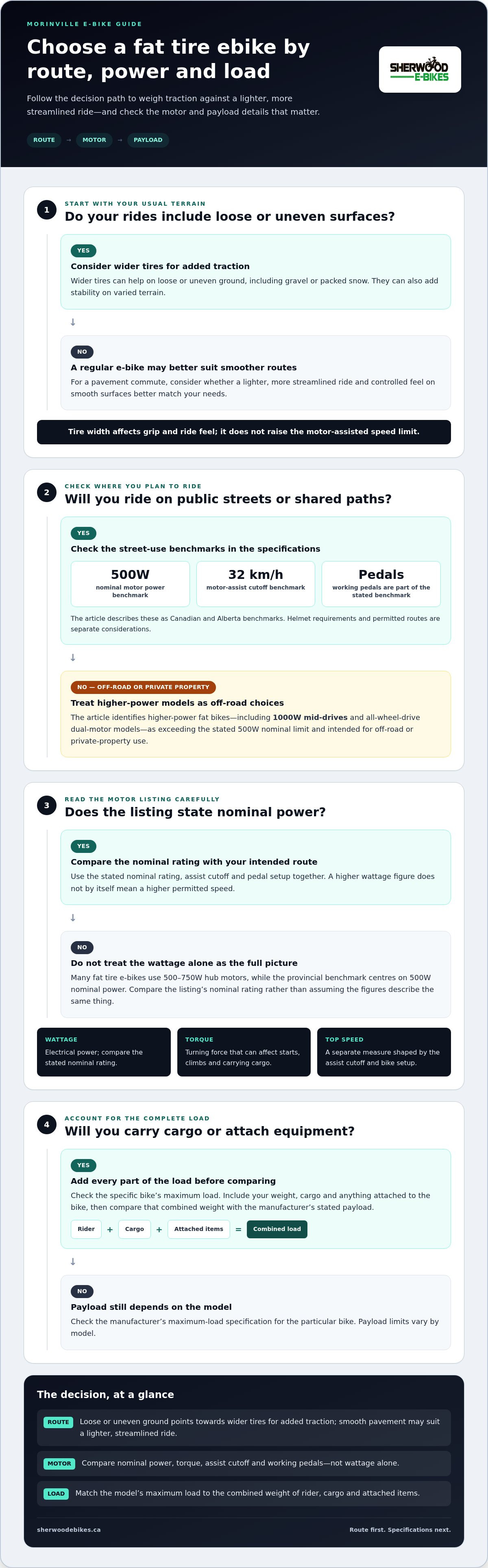
For Canadian riders, the key speed figure is 32 km/h: the motor-assisted speed limit stated for street-legal e-bikes. A fat tire ebike isn’t automatically faster than a regular e-bike. Tire width affects grip and ride feel, while the motor’s assistance setting determines how quickly it helps you reach that limit. Pedalling, wind, terrain, rider weight and cargo also affect your actual pace.
Before comparing speed claims, consider where you’ll ride around Morinville. Wider tires can help on loose terrain, but they don’t raise the assisted-speed limit. A pavement commute may favour a bike that feels controlled and efficient on smooth surfaces, while gravel or packed snow makes traction and handling more important. Compare the manufacturer’s stated assisted speed, and consider how the bike responds at lower speeds, especially when starting and turning.
Sale listings should show prices in Canadian dollars and identify what the listed amount covers. Compare the bike, battery, included accessories, delivery terms and warranty details as separate items. Don’t treat an advertised discount as the whole ownership cost: a replacement battery or service may affect your budget later. When evaluating specific models like the D50 or ST50, compare the exact wheel or replacement-part listing, not a complete-bike price. The same distinction matters when looking for an ENVO Flex Overland price.
Which Edmonton-area stores deliver fat tire e-bikes to Morinville? Delivery depends on each retailer’s service area and the terms attached to its sale listing. For a Morinville address, compare the stated delivery coverage, fees and whether the bike arrives assembled or requires setup.
What warranty, service, and replacement battery support is available for e-bikes near Morinville? Coverage depends on the bike’s brand and the warranty terms, while servicing and replacement-battery support depend on the model and available compatible parts. Read the battery and drivetrain coverage separately; they may have different terms.
A used listing may not reveal battery wear, hidden frame damage or an inconsistent service history. With an online purchase, it can also be harder to assess fit, setup and access to local repairs before paying. Review the bike’s condition, component compatibility, warranty terms and return conditions in writing before deciding.
- Compare assisted speed, not just a seller’s headline claim, and keep the 32 km/h limit in view.
- Match tire choice and handling to your usual terrain, from pavement to loose surfaces.
- Read sale listings in C$ and separate the bike price from delivery, accessories and future parts.
- Check delivery terms for Morinville, then compare warranty coverage for the battery and drivetrain.
- For a used or online model, assess its condition, service history and local repair options before buying.
Motor power
In Canada, provincial e-bike rules converge on 500W nominal motor power, a 32 km/h assist cutoff and working pedals. Alberta’s motor rules centre on those benchmarks. Helmet requirements and where you may ride are separate considerations, so assess the rules for the rider and route as well as the bike’s motor.
Motor wattage describes electrical power, but it doesn’t tell the whole performance story. Most fat tire e-bikes use 500-750W hub motors, while provincial rules centre on 500W nominal power. A listing’s power figure needs context: compare the stated nominal rating with the bike’s intended use and assisted-speed limit. Don’t assume a larger wattage figure means a higher permitted speed.
Torque is the turning force that helps move the wheel. It can affect how a bike responds when starting, climbing or carrying cargo; wattage describes motor power. Top speed is a separate measure, shaped by the assist cutoff and the bike’s setup. Compare nominal motor power, torque information and assisted top speed together. A strong launch or hill response doesn’t necessarily mean a higher top speed.
A rider commuting on paved roads may prioritize smooth, predictable assistance and a motor rating suited to their needs. Someone riding moderate trails may care more about controlled power delivery over uneven ground. Fat tires affect traction and handling, but don’t change the motor’s legal power rating. Consider how the assistance feels when starting and climbing, rather than choosing by wattage alone.
Higher-power fat bikes, including 1000W mid-drives and all-wheel-drive dual-motor models, exceed the 500W nominal limit and are intended for off-road or private-property use. That distinction matters if your regular route includes public streets or shared paths. A dual-motor layout can drive both wheels, but it doesn’t make the bike street-legal under the stated provincial benchmark. Match the bike’s intended riding area to your actual routes.
Before buying, compare the motor label, rated nominal power, assist cutoff and pedal setup in the model specifications. Then consider whether the motor’s response suits your terrain, rider load and usual stops or climbs. For a road-focused setup, compare ENVO e-bike models by their listed motor specifications and intended use. This keeps the decision grounded in the figures that affect both riding feel and where you plan to ride.
Alberta’s stated benchmark is a 500W nominal motor, pedal assist that cuts off at 32 km/h, and working pedals. Bikes exceeding the 500W limit are intended for off-road or private-property use; helmet requirements and permitted routes are separate considerations to assess for the rider and route.
What is the max payload capacity for heavy riders or cargo?
Payload limits vary by model. Check the specific bike’s maximum load, then account for the rider, cargo and anything attached to the bike. The frame, wheels, tires and brakes all work under this combined weight. Staying within the manufacturer’s rating helps preserve the bike’s intended handling and stability.
For cargo trips, include bags, locks, child seats and other accessories in the total load. Secure and balance cargo instead of letting it hang heavily on one side. Extra weight can affect acceleration, turning and stopping, and increase energy use. A suitable payload rating is a practical starting point, not the only factor in choosing a bike.
Battery capacity affects how far you can ride between charges, but advertised range is an estimate, not a fixed distance. Rider and cargo weight, terrain, assist level, stops and weather all affect energy use. Before relying on a range claim for a Morinville commute, compare it with your route and riding conditions. A heavier load or frequent climbs can reduce the distance available per charge.
Battery labels may show voltage and capacity. Voltage describes the battery system’s electrical potential, while capacity indicates how much energy it can store. Compare the full battery specification across models, not voltage alone, and use the manufacturer’s range estimate as a planning guide. Cold weather can also shorten a ride: electric-bike battery range drops by about 30% below 0°C and can drop by up to 50% near −18°C.
Prepare for Alberta winter conditions by storing the battery indoors and installing it just before riding. Keeping it warm before a cold-weather trip helps account for lithium batteries losing some capacity below 0°C. Plan a shorter route or leave more charge in reserve when the temperature approaches −18°C. These steps help you avoid treating a mild-weather range estimate as a winter guarantee.
For technical trails with roots and drops, a full-suspension electric mountain bike is the recommended type. Suspension can help manage uneven terrain, but it doesn’t increase the bike’s rated payload. Consider the model’s maximum load, battery capacity and intended riding conditions together. For cargo, prioritize a suitable load rating and balanced carrying setup; for rough trails, consider suspension and handling.
Use this sequence to narrow your options: estimate your usual rider-and-cargo load, compare it with each model’s payload rating, then assess battery capacity against your route and seasonal conditions. If your regular trip approaches the bike’s stated limit, choose a model with a more suitable rating rather than relying on range estimates or tire width to compensate.
Choosing a bike by riding use and budget
Start with your usual terrain, then compare tire dimensions, fit and useful features. A clear priority list helps you weigh a bike’s capabilities against the overall purchase and ownership budget.
Snow, Sand, Gravel, and Off-Road Riding
Fat tires can suit packed snow, sand and gravel by providing a wider contact area than narrow tyres. For loose surfaces, adjust tire pressure to the conditions, with softer snow generally calling for lower pressure. Packed snow and groomed trails use 8-12 psi as a guide, while ploughed roads with ice call for 12-18 psi. Follow the tyre and rim maker’s pressure limits.
For a Morinville winter commute, consider fenders and a rear hub motor alongside tire traction. For gravel paths and forest service roads, choose a model suited to moderate trails rather than assuming fat tires make every bike appropriate for aggressive downhill riding. Sand, snow depth and surface firmness all affect grip, so match the setup to the conditions you expect most often.
Tire Sizes and Riding Performance
A fat-tire bicycle typically uses tyres at least 3.8 inches, or 97 mm, wide, on rims at least 2.16 inches, or 55 mm, wide. Fat tire e-bike tyres commonly measure 4 to 5 inches. Wider tyres can offer more surface contact, but their size also affects steering feel, rolling resistance and how the bike fits your storage space.
Check the complete wheel specification, not just tire width. Rim compatibility, frame clearance and replacement tire availability all matter for maintenance. If your rides combine pavement and gravel, look for a setup that feels manageable on both surfaces instead of choosing the widest tire by default.
Budget for the complete riding setup, not just the bike. Include practical items such as a lock, lights, fenders or a cargo bag, then account for future maintenance and replacement parts. A model with the features you need may offer better value than a lower-priced option that requires several changes for your routes.
Use this quick selection process:
- List your main route surfaces, such as pavement, gravel or packed snow.
- Compare tyre width, rim compatibility and the bike’s intended riding conditions.
- Prioritize needed accessories and maintenance costs within your budget.
- Choose a tyre-pressure starting point for the surface, then stay within component limits.
If most of your trips are paved commutes, prioritize predictable handling and a practical daily-use setup. If you often ride on snow or loose gravel, give more weight to traction and suitable pressure adjustment. The best match is the bike that suits your regular terrain, budget and storage needs, not simply the one with the widest tires.
Fat-tire electric bike models
Compare models by frame style, intended terrain, suspension and total weight. Most fat tire e-bikes weigh between 25-35 kg, so consider storage and lifting alongside riding performance. Many use rigid forks and adventure-focused geometry, which suit moderate routes better than aggressive downhill riding. A full-suspension electric mountain bike is a better match for technical trails with roots and drops.
Frame style affects everyday handling. A folding frame can make storage or transport easier, but check how the folded bike fits your home, vehicle or storage area. A step-through frame has a lower opening for mounting and dismounting. If possible, compare both styles in person and consider your riding clothes, balance and regular stops when choosing a frame.
For Morinville riders, the surface matters as much as the model name. A rigid fork and adventure geometry can suit gravel paths or forest service roads, while technical trails call for different suspension priorities. Fat tires can help on packed snow and ice compared with narrow tires, but don’t make every bike suitable for every winter condition. Match the bike’s stated purpose to your regular routes.
When comparing Aima, Rize Bolt and Letrigo models, check each bike’s listed specifications rather than assuming similar names mean similar equipment. Compare frame design, tire dimensions, motor rating, battery details and stated payload, then assess how the bike suits your routes and storage needs. This makes the comparison more useful than choosing by appearance alone.
Also account for the complete setup. A bike that fits your budget may still need accessories for commuting, cargo or winter use. Include the cost of the items you expect to add, plus the space needed to store a bike weighing 25-35 kg. For daily trips, test mounting, turning and parking. For off-road riding, assess control on the surfaces you plan to ride.
Use a short comparison list before choosing:
- Match frame style to storage, transport and ease of mounting.
- Compare suspension and geometry with your intended terrain.
- Review motor, battery, tyre and payload specifications for each model.
- Factor the bike’s 25-35 kg weight into storage and lifting decisions.
- Include required accessories in your planned budget.
Start with the routes you ride most, then compare the features that affect comfort and control. Explore Aima e-bike model details as one reference point, and weigh its listed specifications against your own riding priorities.
Sherwood E-Bikes: E-Bike Parts
Sherwood E-Bikes Ltd. offers E-Bike Parts, E-Bike Maintenance and Cycling Accessories to help keep an e-bike suited to your routes. These options are useful when a component needs replacing, routine upkeep is due or your setup needs practical additions. If daily travel is your priority, compare the available Commuter E-Bikes with your route, fit and carrying needs. Matching parts and accessories to your bike helps keep your setup functional and makes maintenance easier to plan.
Before choosing, consider your terrain, expected cargo and how you’ll use the bike day to day. For help with e-bike parts, maintenance, accessories or commuter models, contact Sherwood E-Bikes Ltd. or visit sherwoodebikes.ca.
Choose your next ride with confidence
Turn your priorities into a practical shortlist: note where you’ll ride, what you expect to carry and where you’ll store the bike. This gives you a clear basis for comparing suitable models and deciding which features matter most. If you’re considering a fat tire electric bike for sale in Morinville, let your everyday needs guide the choice rather than focusing on one specification alone.
Sherwood E-Bikes Ltd. offers E-Bike Parts, Commuter E-Bikes and E-Bike Maintenance for different stages of e-bike ownership. Parts and maintenance support upkeep, while commuter models suit riders looking for an e-bike for regular travel. The right next step depends on whether you’re choosing a bike or maintaining one you already own.
Contact Sherwood E-Bikes Ltd. for help choosing a practical option for your riding plans. Your next ride can start with a well-matched choice.
Frequently Asked Questions
Why choose a fat tire eBike instead of a regular eBike?
Choose fat tires if your routes include loose or uneven surfaces where extra tire contact can help with traction. A regular e-bike may be a better fit for mostly smooth pavement, especially if you prefer a less bulky setup. For Morinville rides that mix streets with gravel or packed snow, compare handling, storage needs and the surfaces you ride most. Wider tires don’t replace careful control or suitable riding skills.
Can you ride a fat tire e-bike in snow?
Fat tire e-bikes can be ridden on packed snow, but conditions matter. Fresh, deep snow, polished ice and changing winter surfaces can affect steering and braking in different ways. Start on a familiar, low-traffic route and adjust tire pressure within the tire and rim limits. For Morinville winter trips, account for cold-weather battery performance and choose routes suited to your experience and the day’s conditions.
Which fat tire eBike is best for all-terrain and off-road riding?
The best choice depends on what “all-terrain” means for your rides. Gravel paths and forest service roads call for a bike designed for moderate trail use; technical trails with roots and drops favour a full-suspension electric mountain bike. Compare frame geometry, suspension, brakes, tire clearance and intended use. Don’t assume a fat-tire model is built for aggressive downhill riding just because it has wide tires.
What fat tire electric bikes are currently for sale near Morinville?
If you’re looking for a fat tire electric bike for sale in Morinville, Sherwood E-Bikes Ltd. lists Fat Tire and Cargo categories, along with brands including Aima, Envo, Letrigo, Rize and Wolff. These can help you start comparing options, but specifications differ by model. Focus on each bike’s frame, motor, battery and intended terrain. A category or brand name alone doesn’t tell you what equipment a particular model includes.
What are the prices of fat tire electric bikes at Morinville-area bike shops and retailers?
When comparing a fat tire electric bike for sale in Morinville, compare each listed Canadian-dollar price with the components and equipment included. Prices vary by model and package. Note whether accessories or delivery are included, then review warranty terms and the cost of any parts you may need. For a fair comparison, weigh the complete setup and support options, not just the headline prices.
What are the best fat tire electric bikes under C$2,000 in Canada?
For a C$2,000 budget, shortlist models only after checking their current Canadian-dollar listings and specifications. Compare payload rating, battery details, motor rating, frame fit and the parts included. A lower listed price may not cover accessories you need for commuting or cargo. Avoid choosing by price alone: a bike that doesn’t suit your terrain or load may be a poor fit, even within budget.
What battery range, motor power, and top speed do popular fat tire e-bikes offer?
Specifications vary by model, so compare the manufacturer’s battery capacity and range estimate with your route, cargo and riding conditions. In Canada, the stated benchmarks for street-legal e-bikes are 500W nominal motor power and a 32 km/h motor-assist cutoff. For a Morinville commute, look beyond headline range: temperature, assist level, terrain and stopping frequency affect how much battery charge your ride uses.
What should I compare when choosing a fat tire electric bike for Alberta roads and trails?
Compare intended use, motor and battery specifications, payload, frame fit, tire and rim compatibility, braking components and storage needs. Then match them to your actual route: pavement, gravel, packed snow and technical trails each place different demands on a bike. For Alberta trips, consider winter temperatures and where you’ll store the battery. Read each model’s specifications as a complete set, not as isolated selling points.


