

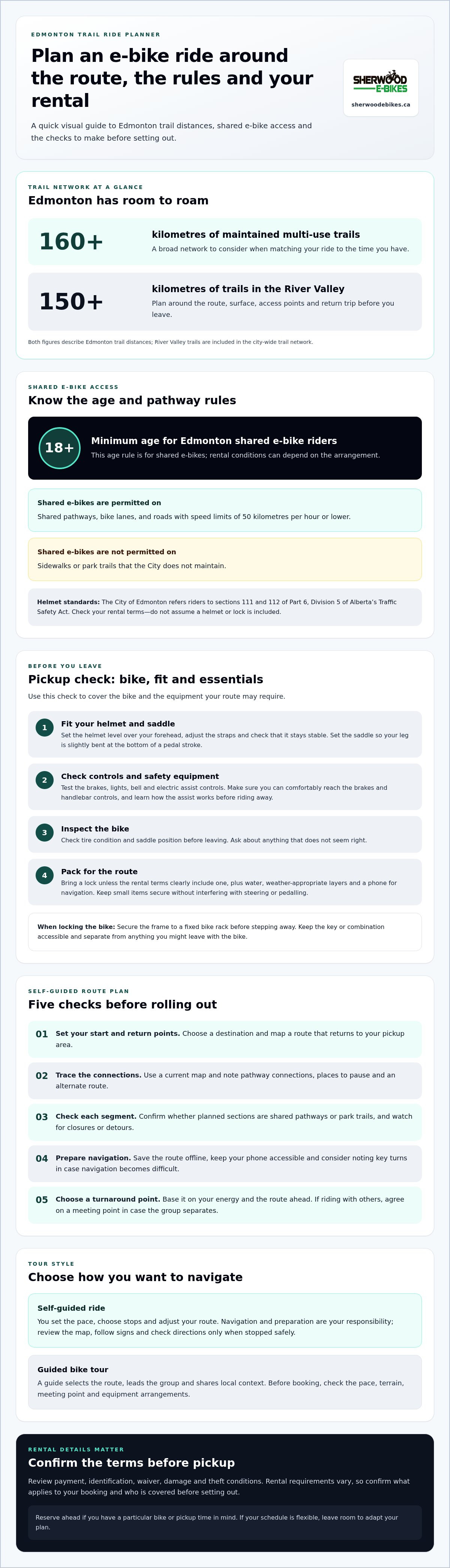
An Edmonton trail ride is easier to plan when the bike fits your route and schedule. For an electric bike rental on Edmonton trails, reserve ahead if you have a particular bike or pickup time in mind; a flexible plan leaves more room to adapt. Edmonton has more than 160 kilometres of maintained multi-use trails, including more than 150 kilometres of trails in the River Valley.
It’s natural to want the right equipment and a clear picture of the rental process before setting out. This guide explains what to consider when choosing a bike and gear, how pickup and rental policies fit into your plans, and which Edmonton trails and parkland can shape your route.
Match your ride to the terrain and the time you have. Consider the route, equipment, helmet and rental terms before you go, so you can plan the outing and avoid relying on assumptions about what the rental includes.
Key Takeaways
- Reserve ahead when you have a particular bike or pickup time in mind, and plan for flexibility if your schedule is open.
- Before setting out, understand what equipment is provided and how helmet availability and fit factor into your ride.
- Review the rental terms for pickup, payment, identification, waivers and responsibility for damage or theft.
- Choose a route to suit your plans: Edmonton has more than 160 kilometres of maintained multi-use trails, including more than 150 kilometres in the River Valley.
- Plan your ride around the route and rental conditions so you can spend more time enjoying Edmonton’s trails and parkland.
Rental equipment and helmet availability
For Edmonton shared e-bikes, riders must be at least 18 years old. Licence terms depend on the rental arrangement. For helmet specifications meeting Canadian safety standards, the City of Edmonton refers riders to sections 111 and 112 of Part 6, Division 5 of Alberta’s Traffic Safety Act.
Shared-bike rules don’t automatically describe every rental. Treat a helmet and a lock as separate equipment needs, and don’t assume either comes with the bike unless the rental terms say so.
For a visual preview of Edmonton’s River Valley routes and terrain, watch this trail-system overview.
Start with fit. A helmet should sit level, cover your forehead and stay stable when you move your head. Adjust the straps before riding, and pack your helmet where it won’t be crushed if you bring it with you.
The rental bike should suit your body and route. At pickup, adjust the saddle so your leg remains slightly bent at the bottom of a pedal stroke. Check that you can comfortably reach the brakes and handlebar controls, and learn how the assist controls work before riding away.
Plan your equipment around the route, not just the bike. A River Valley ride may involve changing surfaces and longer stretches between stops. Pack water, weather-appropriate layers and a phone for navigation. Keep small items secure in a bag that won’t interfere with steering or pedalling.
A lock matters whenever you leave the bike unattended. Bring one unless the rental terms clearly include it. Stop where you can secure the frame to a fixed bike rack, and lock the bike before stepping away. Keep the key or combination accessible, but separate from anything you might leave with the bike.
Use this pickup checklist before starting your ride:
- Confirm the helmet fits securely and its straps are adjusted.
- Test the brakes, lights, bell, and electric assist controls.
- Check tyre condition and saddle position before leaving.
- Pack a lock, water, and essentials for your planned route.
A quick equipment check can prevent an interruption on the trail. If the rental doesn’t include a helmet or lock, bring your own instead of assuming it will be provided. That way, you can focus on the ride with your equipment needs covered.
Self-guided Edmonton e-bike tour
A self-guided e-bike tour lets you set the pace, choose stops and adjust your route as you ride. For an electric bike rental on Edmonton trails, plan around the path type, surface, access points and return route before setting out.
Choose a destination, then map a route that returns to your pickup area. Mark places to pause, such as a viewpoint or trail junction, and keep an alternate route in mind. A note with key turns can help if your phone battery runs low or navigation becomes difficult.
For shared e-bikes, Edmonton permits riding on shared pathways, bike lanes, and roads with speed limits of 50 kilometres per hour or lower. Shared e-bikes aren’t permitted on sidewalks or on park trails that the City doesn’t maintain. Check that your planned path fits these rules before riding.
Build your tour around the terrain and your experience. Choose a maintained pathway for a straightforward ride, or include more varied surfaces only if you’re comfortable riding them. Follow posted signs at intersections, slow down near pedestrians and leave room for other trail users to pass.
Use this planning sequence before leaving:
- Choose a start point and a clear return destination.
- Trace the route on a current map and note pathway connections.
- Check whether each planned segment is a shared pathway or park trail.
- Save your route offline and keep your phone accessible.
- Set a turnaround point based on your energy and the route ahead.
A guided bike tour offers a different experience: a guide chooses the route, leads the group and shares local context. This may suit riders who prefer guidance at junctions or want to focus on the scenery instead of navigation. Before booking, find out what the tour covers, including pace, terrain, meeting point and equipment arrangements.
Self-guided cycling gives you more control over breaks and route changes, but preparation is your responsibility. Review your map before riding, watch for trail closures or detours, and don’t assume every park path allows shared e-bikes. If you’re riding with others, agree on a meeting point in case the group separates.
For an electric bike rental on Edmonton trails, match the route to the bike’s handling and your comfort level. Keep assist settings manageable around other trail users, and use caution when moving between pavement and loose surfaces. Check directions at a safe stopping place, not while riding.
Before choosing a route, review the e-bike rental details alongside your tour plan. A route that begins and ends near your pickup point can make the day simpler, especially when you’re planning several stops in Edmonton’s valley.
Rental payment, ID, waiver, damage and theft policies
Before riding an e-bike toward Edmonton’s River Valley, understand the booking terms. Payment, identification, waiver, damage and theft conditions shape your responsibilities during the rental.
Rental Payment and Identification
Read the payment terms before completing a booking. Check when payment is due, which methods are accepted, and whether a deposit or hold applies. Make sure the total payable is clear before you commit. Keep your booking confirmation available at pickup, on your phone or in print.
Identification requirements depend on the rental arrangement. Check which document the named renter must present and whether the booking name must match it, then bring the required ID. If others in your group will ride, make sure their eligibility and role are covered by the rental agreement rather than assuming one booking covers every rider.
Review return instructions alongside payment details. Note the agreed return time and location, plus the steps for handing back the bike. These details matter if your River Valley route changes or takes longer than planned. Keep the rental contact and booking information accessible during the ride.
Waivers, Damage, and Theft
A waiver explains the risks and responsibilities accepted for the rental. Read it before signing, including any terms about bike damage, theft and reporting a problem. Don’t treat a signature as a formality. Understand what the agreement requires if the bike is damaged or goes missing.
At pickup, inspect the frame, wheels, brakes, display and accessories. Photograph any visible damage before riding, tell the rental staff and follow their process for recording it. This creates a clear record of the bike’s condition at handover. Secure the bike whenever you leave it unattended during your Edmonton ride.
Keep the key, lock and bike together in your plan. Choose a suitable place to secure the frame during a stop. If a problem occurs, contact the rental provider using the instructions in your agreement. Report damage or theft promptly, and keep any relevant photos or messages.
Prices and Rental Durations
Rental prices and durations in Edmonton depend on the bike, booking period and what the rental includes. Compare the total cost for your planned ride with the return deadline, rather than choosing by the starting price alone. There isn’t one price or rental period that applies to every e-bike rental.
Check whether the booking is priced by time, a set rental period or another stated option. Review the cost of extending the booking, late-return terms and included equipment. A longer River Valley outing may call for a different booking period than a short ride near your pickup point.
Before paying, review the final total and rental duration together. Make sure the pickup and return window allows for your route, planned stops and travel back. Clear terms help you budget and avoid building an Edmonton trail plan around an unsuitable return time.
Advance booking and pickup arrangements
Reserve when your ride depends on a particular date, bike or pickup plan. A reservation can help organize your Edmonton itinerary, while a flexible schedule leaves more room to adjust. Choose based on how fixed your plans are, rather than assuming there’s one booking rule for everyone.
Match the rental period to your route. A short ride near your starting point needs a different plan from an outing through several River Valley areas. Allow time for stops, navigation and returning the bike. Choose a pickup time that gives you room to get comfortable before joining busy pathways.
Before booking, gather the details you’ll need: intended date, number of riders, preferred bike type and planned ride length. Use them to choose a suitable rental option. If your plans include a particular route or terrain, factor that into your bike choice instead of deciding by appearance alone.
In Alberta, rental arrangements can differ, so read the booking terms for the specific service. Pay attention to the stated pickup point, return point, rental period, and instructions for changes. Keep the confirmation accessible on your phone. A saved confirmation can help you find the booking details without searching through email at pickup.
Prepare for pickup before leaving home. Bring the identification required by the booking terms, wear clothing suited to the forecast and be ready to review the bike. If you’re travelling with a group, share the pickup details and meeting point with everyone to avoid delays.
Use this sequence to organize the day:
- Choose your ride date and outline a route.
- Select a rental period that allows for stops and return travel.
- Review the pickup instructions and required documents.
- Save the booking confirmation and share key details with riders.
- At pickup, allow time to adjust the bike and learn its controls.
At handover, check that the bike matches your booking and suits your needs. Adjust the saddle, test the brakes, and practise starting and stopping before joining traffic or a shared pathway. Ask about the return procedure while you’re still at pickup, including where to leave the bike and how to report a problem.
Plan the end of the ride as carefully as the start. Set a route back that reaches the return point before your rental period ends. If the weather changes or a trail detour affects your plans, use your saved map to shorten the ride. A clear booking, prepared documents and a return route make an Edmonton trail day easier to manage.
Edmonton bike trails and parkland
Edmonton’s parkland rewards riders who choose a route for its character, not just its distance. In the River Valley, plan around access points, changes in trail type and places to pause. Choosing a clear route makes the ride more manageable than trying to cover every connected path in one outing.
For shared e-bikes, follow the pathway and park-trail permissions explained in the self-guided tour section. Check the route designation before setting out to determine which Edmonton paths suit your ride.
Range and charging depend on the bike and itinerary. Read the battery guidance for the specific model, and plan a route that doesn’t rely on finding an outlet mid-ride. If charging is permitted during your rental, identify a suitable stop before leaving. Keep enough charge in reserve for the return.
Study the route map before choosing a River Valley access point. A pathway connection may lead to a different surface or steeper section than expected. Use map details and posted trail information to judge whether each segment suits your experience. If a section seems unsuitable, choose another connection instead of pressing ahead.
Parkland routes also vary in how often they meet roads, bridges and busy shared spaces. A scenic ride may work better with fewer crossings, while a route with several destinations needs clear connection points. Mark places where you can pause safely without blocking the path.
Use this route-selection checklist:
- Choose a River Valley access point that suits your starting location.
- Review the mapped route for surface changes, grades, and crossings.
- Pick a turnaround point before entering an unfamiliar section.
- Plan battery use around the full outing and return journey.
- Keep an alternate path in mind if a segment doesn’t suit your ride.
Trail conditions can change how a familiar route feels. Look for current notices before riding, and pay attention to signs at entrances and junctions. After rainfall, a section may be softer or less predictable than the map suggests. Slow down when visibility narrows or other users gather near a crossing.
Choose assist settings to suit the conditions rather than using the same level throughout. Lower assistance can help conserve battery on straightforward sections, while a more demanding incline may call for a different approach. Let the bike’s controls and your comfort guide your pace.
For an Edmonton parkland ride, choose a route that fits both the bike and your plans. Treat the River Valley as a network of distinct segments, not one uniform trail. This leaves room to adjust your outing while keeping the route, battery and riding conditions in view.
Sherwood E-Bikes: E-Bike Parts
Sherwood E-Bikes Ltd. can help when a trail ride raises questions about your e-bike, parts or upkeep. Choose E-Bike Parts for replacement needs, E-Bike Maintenance for service, or Cycling Accessories to prepare for future rides. If you’re considering a shift from renting to commuting by e-bike, explore its Commuter E-Bikes.
Bring a clear description of your bike and the issue or accessory you need. Note a part’s name or the area that needs attention. This can help focus the next step, whether you’re maintaining a bike for Edmonton pathways or planning regular city travel.
Plan your next ride with confidence
An electric bike rental for Edmonton trails is a practical way to discover how e-assist fits your riding plans. A relaxed trail outing can also help you decide what matters most in an e-bike, from comfort and handling to how you’ll use it beyond recreation.
Sherwood E-Bikes Ltd. offers E-Bike Rentals, E-Bike Parts, E-Bike Maintenance and Commuter E-Bikes. Turn to its parts or maintenance services when your own e-bike needs attention, or explore commuter models if you’re considering regular city travel. Contact Sherwood E-Bikes Ltd. to discuss the option that best fits how you ride.
Contact Sherwood E-Bikes Ltd. about rentals and plan your next ride. Edmonton’s paths and parkland offer room to find a pace and route that feel right for you. Enjoy the ride, and keep exploring.
Frequently Asked Questions
Do I need to reserve a bike on rent?
Yes, reserve if your outing depends on a particular date or bike. Booking ahead can also help a group coordinate its start time and avoid building a shared plan around a last-minute decision. If your plans can shift, keep the route flexible and make sure your chosen rental period still suits the day. Decide based on how much your itinerary depends on a specific bike.
What are the rules for day rentals?
For a day rental, the booking terms govern how you use and return the bike. Before setting out, note the rental period and return instructions so your route fits the time arranged. If you’re meeting friends, share the return plan with them. Keep your booking details accessible during the outing in case you need to refer to the agreement.
What is included with my Edmonton bike rental?
Sherwood E-Bikes Ltd. offers short-term e-bike rentals, so you can experience e-assist before considering a purchase. Use the ride to assess how the bike feels for your height, riding posture and intended use. Pay attention to comfort and control while riding, not just when stationary. These observations can help guide a future e-bike choice.
Where Can I Rent E-scooters or E-bikes?
Sherwood E-Bikes Ltd. offers e-bike rentals to riders in Edmonton and nearby communities, including Sherwood Park, Leduc, Camrose, Fort Saskatchewan, Ardrossan, St Albert, Vegriville, Morinville, Wetaskiwin and Spruce Grove. If you’re starting in Edmonton, include travel to the pickup point in your plan. Arrange how you’ll get there and return home after dropping off the bike.
Where can you rent an electric bike in Edmonton?
Sherwood E-Bikes Ltd. offers e-bike rentals from 2008a Sherwood Dr., Sherwood Park, AB, Canada, T8A 0Z1. This nearby pickup location can work for Edmonton riders planning a local outing. Consider your transport to Sherwood Park and how you’ll reach your intended starting point. A clear plan for the trip to and from pickup helps keep the rental practical for your day.
Which Edmonton trails are suitable for electric bikes?
Choose an Edmonton route whose surface and turns suit your experience and the rental bike. A smoother route can be a practical starting point if you’re new to e-assist; varied surfaces call for confident handling. Preview the map, note access points and choose a turnaround before unfamiliar connectors. The River Valley offers varied riding, so assess the specific route rather than relying on its name alone.
Are e-bikes allowed on Edmonton river valley trails and park pathways?
Access isn’t the same across all parkland; route designation and e-bike type affect where you can ride. Use the distinction explained in the self-guided tour section when mapping a River Valley outing, then follow signs at entrances and junctions. If a segment’s status is unclear, choose a clearly designated route rather than assuming every trail permits e-bikes.
What types of e-bikes and rental equipment are available in Edmonton?
Sherwood E-Bikes Ltd. offers e-bike rentals, and the right bike depends on your fit and intended ride. Consider how you’ll use it, the surface you expect and whether the riding position feels comfortable. During a test ride, pay attention to the controls and whether you can handle the bike confidently. These details can help you identify a bike suited to your plans.


