

What if the battery isn’t why your e-bike won’t charge or deliver its usual range? A worn battery is one possibility, but the charger, wiring, controller or battery management system can also cause trouble. For ebike battery replacement Edmonton riders need more than a battery that looks similar: the replacement must suit the bike’s electrical system and mounting.
When an e-bike is part of your commute or daily routine, it’s tempting to look for a quick fix. Start with diagnosis before choosing parts. This guide covers common signs of battery trouble, practical checks for charging and performance changes, and the details that matter for fit, including voltage, capacity, dimensions and connector type. Sherwood E-Bikes Ltd. supports local riders with e-bike electrical-system diagnostics, parts guidance and professional replacement-part installation. Use these steps to narrow down the fault and plan a practical next move, whether you ride a commuter e-bike or use a cargo bike.
Key Takeaways
- A sudden range drop or charging problem can have several causes. Identify whether the battery, charger, connections or another electrical component is at fault before replacing parts.
- For ebike battery replacement Edmonton riders should match the battery to the bike’s electrical system, mounting and connector, not choose by capacity alone.
- Use the bike’s condition, system compatibility and riding needs to guide the repair-or-replace decision after diagnosis.
- Bring the bike’s make and model, battery label details, charger and notes about the symptoms to help focus the assessment.
- Sherwood E-Bikes Ltd. supports local riders with electrical-system diagnostics, e-bike parts and professional replacement-part installation.
E-Bike Battery Replacement in Edmonton: Signs the Battery May Be the Problem
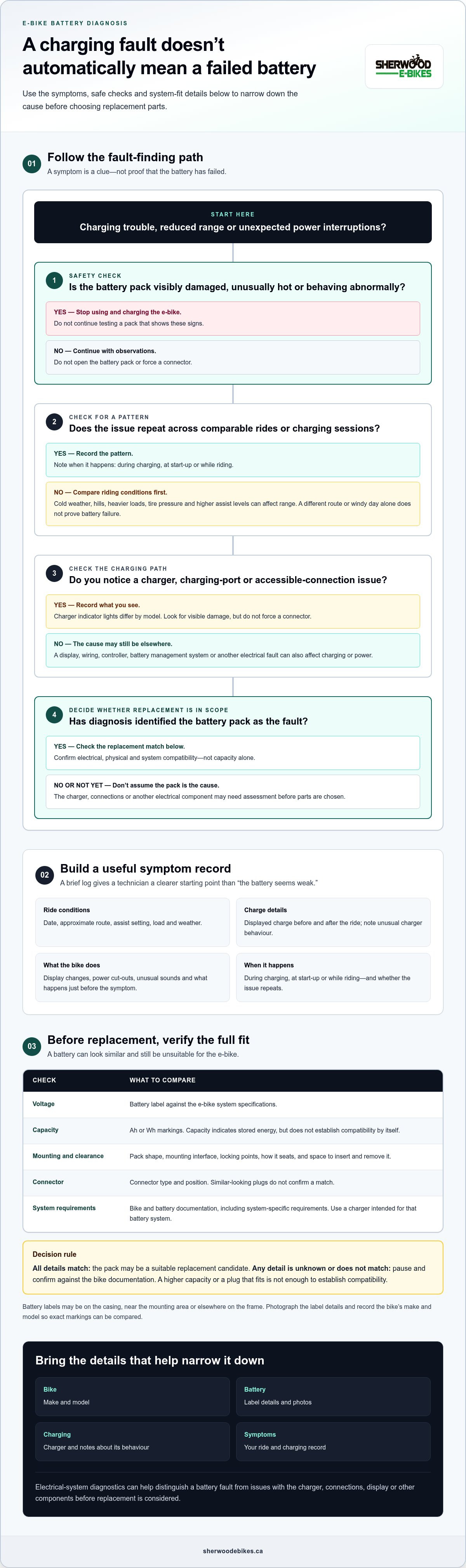
A sudden drop in range or a battery that won’t charge calls for diagnosis, not guesswork. The battery may be losing usable capacity, but similar symptoms can come from riding conditions, the charger, a loose connection or another part of the electrical system. Before pursuing ebike battery replacement Edmonton riders can record what is happening and look for patterns.
Range varies with conditions. Cold weather, hills, heavier loads, tire pressure and higher assist levels can all affect how far a charge takes you. A shorter ride on a windy day or a different route doesn’t, by itself, prove the battery is failing. For general background on batteries in electric bicycles, see Electric Bicycle Battery Technology.
What signs can point to an e-bike battery problem?
Look for changes that continue across comparable rides or charging sessions. Reduced usable range, inconsistent charging and unexpected power interruptions are useful clues, but each needs context. A battery indicator that changes suddenly is worth recording; the display alone doesn’t confirm the cause.
Keep a brief symptom log. Note the date, approximate route, assist setting, load, weather, displayed charge before and after the ride, and when an interruption occurs. Record whether the issue repeats and whether it happens during charging, at startup or while riding. These details give a technician a clearer starting point than “the battery seems weak.”
A symptom can point toward battery trouble, but it can’t confirm battery failure on its own.
Could the charger or another e-bike component be at fault?
Yes. A charger fault or a problem at the charging port or another connection can prevent normal charging. A display issue may show misleading battery information, while wiring, the controller or another electrical-system fault can interrupt power or affect motor assistance. Because the same symptom can have different causes, replacing the pack without checking the system may not fix the problem.
Make a note of what you observe, and keep these checks safe:
- Note whether the charger behaves differently than usual. Indicator lights don’t work the same way on every model.
- Look for visible damage around the battery casing, charging port and accessible connections. Don’t open the battery pack or force a connector.
- Record display changes, power cut-outs, unusual sounds and what happens just before the symptom.
- Stop using and charging the e-bike if the battery pack is visibly damaged, unusually hot or behaving abnormally.
Sherwood E-Bikes Ltd. provides e-bike electrical-system diagnostics as part of its maintenance support. Diagnostics can help narrow down whether the fault is in the battery, charger, connection, display or another component before replacement is considered. A clear symptom record makes the assessment more focused and helps guide the repair or replacement decision.
E-Bike Battery Compatibility: What Edmonton Riders Need to Match
A replacement pack can look right and still fail to fit or work with your e-bike. For ebike battery replacement Edmonton riders should compare its electrical details, physical fit and system requirements with the existing setup. A higher capacity alone doesn’t make a battery a suitable upgrade.
Compatibility means an electrical, physical and system-level match between the battery and the e-bike. Use the battery and bike labels, owner’s manual and technical documentation as references. Labels may be on the battery casing, near its mounting area or elsewhere on the frame. Photograph the information so you can compare exact markings rather than relying on memory or appearance.
Which battery specifications and fit details should you compare?
Voltage is an electrical rating that must suit the bike’s system. Capacity, shown in amp-hours (Ah) or watt-hours (Wh), indicates how much energy the pack can store; it doesn’t establish compatibility by itself. Compare the original battery’s figures with the bike documentation. Don’t assume a larger capacity will fit or operate correctly.
| Check | What to compare |
|---|---|
| Voltage | Battery label against the e-bike’s system specifications. |
| Capacity | Ah or Wh markings; treat capacity as separate from voltage. |
| Mounting | Pack shape, mounting interface, locking points and how it seats. |
| Connector | Connector type and position. Similar-looking plugs don’t prove a match. |
| Clearance | Space around the mounted pack, including room to insert and remove it. |
| System compatibility | Bike and battery documentation, including system-specific requirements. |
Compare the pack’s outline and mounting interface with the frame, then check whether it can be removed without obstruction. A pack that attaches but leaves too little clearance may not be practical. Record the bike’s make and model along with every label detail. Together, these references help narrow down compatible parts.
Why the battery management system and charger matter
The battery management system (BMS) is part of the battery pack’s electronic control and protection. A replacement must suit the e-bike’s electrical system, not just connect physically. The charger matters too: use one intended for the specific battery system. A plug that fits doesn’t prove the charger is appropriate.
Don’t choose a battery based on appearance or one matching number. Compare the specifications as a set, and keep the original charger details with the battery information. Sherwood E-Bikes provides e-bike system diagnostics and replacement-part installation to help guide your next step before you select a pack.
Repair or Replace an E-Bike Battery? A Practical Edmonton-Area Decision
A charging problem or shorter ride can make a new battery seem like the obvious fix. It may be, but the charger, a connection or another electrical component can cause similar symptoms. For ebike battery replacement Edmonton riders are better served by identifying the fault first, then weighing repair or replacement against the bike’s condition and their riding needs.
When should diagnosis come before buying a replacement?
Choose diagnosis first when symptoms are inconsistent, the battery indicator changes unexpectedly, charging stops intermittently or power cuts out without a clear pattern. None of these issues points to one cause on its own. Replacing a battery before testing the electrical system could mean buying a pack when the existing one is still functioning and another component needs attention.
Keep notes about when the problem occurs and bring the charger and available battery information for assessment. Electrical diagnostics can help distinguish a battery fault from a charger, connection or bike-system issue. Sherwood E-Bikes provides e-bike maintenance and electrical-system diagnostics for riders in Edmonton and nearby communities, including Sherwood Park and Leduc.
What factors shape the replacement decision?
Once the fault is clearer, consider the pack’s condition, the e-bike’s exact system requirements and your plans for the bike. A replacement must fit electrically and physically; a pack that doesn’t suit the system isn’t a practical solution. Also consider the condition of the bike’s other components and how you plan to use it.
- Observed condition: Is there evidence the battery itself is failing, or does diagnosis point elsewhere?
- System fit: Do the replacement battery’s specifications, mounting and connection suit the e-bike?
- Parts requirements: Does the replacement need compatible mounting hardware or other parts?
- Installation needs: Does the job call for professional installation or further system checks?
- Riding needs: How does the bike fit your regular routes, carrying needs and plans for continued use?
Repair and replacement are different paths, not automatic choices. If an assessment identifies a serviceable fault, repair may be worth considering. If the pack is damaged or no longer suits the bike’s needs, replacement may be more appropriate. The decision depends on the specific battery and system, not a general rule that every range or charging issue requires a new pack.
Price is part of the decision, but an assessment needs to account for the parts and labour required for that particular bike. A battery’s listed price alone doesn’t represent the full replacement project. Sherwood E-Bikes can assess the electrical system, identify compatible parts and provide professional replacement-part installation through its e-bike maintenance and service support. This connects the diagnosis to a practical repair or replacement plan.
Preparing for E-Bike Battery Replacement Around Edmonton
A little preparation makes a battery assessment more useful. Whether you’re coming from Edmonton, Sherwood Park or Leduc, bring information that helps identify your e-bike’s system and describe what has changed. It gives the assessment a clear starting point before parts or installation are considered.
What information helps identify the correct replacement?
Gather the details below before your assessment. Photograph labels where possible, and make sure the images are readable. Don’t remove covers or open the battery to find information inside.
- 1. Bike make and model: Record the name shown on the frame, purchase documents or manual. Include the model year if you know it.
- 2. Battery label details: Photograph visible markings, including voltage and capacity. Note any model or part identifiers exactly as printed.
- 3. Charger: Bring it if practical, or photograph its label and connector. Keep its details with the battery information for comparison.
- 4. System documents: Include the owner’s manual, purchase record or other paperwork that identifies the e-bike’s electrical components, if available.
- 5. Symptom notes: Write down when the issue occurs, what the display shows, how charging behaves and whether the problem repeats. Note recent changes in route, load or assist use that may help explain the difference.
These records help distinguish a system-fit question from a symptom that needs further diagnosis. Clear photographs also reduce the chance of confusing similar-looking packs or misreading a label from memory.
How can local conditions affect what you notice?
Temperature can affect observed battery behaviour and the range you experience. During colder rides around Edmonton and nearby communities, record the conditions alongside the route, load and assist setting. Compare rides made in similar conditions where possible. A change during a cold spell doesn’t, by itself, establish permanent battery damage.
The size and cause of any temperature-related change depend on the battery and e-bike system. Check technical claims about a particular pack against its manufacturer documentation rather than assuming every battery behaves the same way. Don’t open the pack, modify its wiring or attempt to test individual cells. If the battery is visibly damaged, unusually hot or acting abnormally, stop using and charging it.
Keep your notes with the bike’s make, model, battery label and charger information. This gives an e-bike maintenance assessment a practical record and helps inform the next step, whether that’s diagnosis, compatible parts or installation. For related care guidance and local maintenance support, review Sherwood E-Bikes’ e-bike maintenance services.
For ebike battery replacement Edmonton riders can bring this information to an assessment and discuss the symptoms with Sherwood E-Bikes. Arrange e-bike service and diagnosis to start with the bike’s actual system and observed condition.
E-Bike Battery Replacement Support from Sherwood E-Bikes
Battery replacement involves more than choosing a part. Sherwood E-Bikes supports riders with e-bike parts, electrical-system diagnostics and professional replacement-part installation. For ebike battery replacement Edmonton riders can start by describing the issue, then work through an assessment and parts plan.
How local diagnostics and parts support fit together
Start with the symptoms: when does charging stop, or when does power change during a ride? A technician can use those details to assess the e-bike’s electrical system and narrow down the cause. If the battery is at fault, the bike’s system and fit requirements guide the replacement-part choice. If another component is responsible, replacing the battery may not address the problem.
Once the required part is identified, professional installation connects it to the bike as intended and forms part of the repair plan. The work is specific to the e-bike and its needs, rather than based on a one-size-fits-all part. Review Sherwood E-Bikes’ e-bike maintenance and service support for details about diagnostics and replacement-part installation.
What to expect when you take the next step
Bring the e-bike and charger, along with photographs or notes from the battery and charger labels. Include the bike’s make and model and a short account of the symptoms, including when they happen and whether they repeat. These details give the assessment a useful starting point and keep the discussion focused on the bike’s actual system.
The assessment is based on the individual e-bike, its condition, the parts required and the installation needs. That means the next steps can be discussed in context, without assuming every charging issue calls for a replacement. Sherwood E-Bikes’ showroom offers personalized advice for local riders in Edmonton, Sherwood Park, Leduc, Camrose, Fort Saskatchewan, Ardrossan, St Albert, Vegriville, Morinville, Wetaskiwin and Spruce Grove.
Bring your notes and questions to the showroom or arrange a service visit through the booking page. A clear account of the symptoms helps start the conversation, while diagnostics and parts guidance help shape a practical plan for your next rides.
Book e-bike service with Sherwood E-Bikes.
Get Your E-Bike Ready for the Next Ride
The right next step is based on your bike’s condition, not a guess made after one frustrating ride. A focused assessment can help turn uncertainty into a practical plan, so you can make a considered decision about your e-bike and how you rely on it. For ebike battery replacement Edmonton riders can bring their questions to a local specialist and get clear guidance.
Sherwood E-Bikes connects e-bike parts and maintenance with electrical-system diagnostics and professional replacement-part installation. This support keeps the decision grounded in your bike’s needs, whether the assessment points to the battery or another issue.
Book an e-bike service assessment and take a practical first step toward getting your e-bike ready for the rides ahead.
Frequently Asked Questions
Can I replace an e-bike battery with one that has a higher capacity?
Possibly, but higher capacity alone doesn’t make a battery suitable for your e-bike. The pack must meet the bike’s electrical requirements and fit its mounting space, connector and system controls. A higher-capacity option may also change the pack’s size or weight. Compare its specifications with the bike documentation and original battery details before purchase. If the requirements are unclear, have the system assessed rather than assuming an upgrade will work.
Can I use a battery from another e-bike brand?
Only if that specific battery is compatible with your e-bike’s electrical system, mounting and connections. Brand names alone don’t establish a match, and batteries from different brands may use different system controls or communication features. Check the exact bike and battery model information, not just voltage or plug shape. Riders in Sherwood Park, Edmonton, Leduc, Camrose, Fort Saskatchewan, Ardrossan, St Albert, Vegriville, Morinville, Wetaskiwin and Spruce Grove can have the system assessed to help resolve compatibility questions.
Is it safe to keep using an e-bike battery that gets unusually hot?
No. Stop riding and charging the battery if it becomes unusually hot, visibly damaged or behaves abnormally. Don’t open the casing, attempt a cell-level test or keep using the pack to see whether the issue repeats. If there’s smoke, a burning smell or signs of fire, keep clear and contact emergency services. Have the battery and e-bike assessed before using the system again.
What should I bring for an e-bike battery replacement assessment?
Bring the e-bike and its charger, plus clear photos of the battery and charger labels if they’re difficult to read in place. Include any battery key needed to remove a locked pack, if applicable. A short ride log can also help: note the route distance, assist setting and displayed charge when a problem appears. This information can help distinguish a repeatable fault from a one-off change in riding conditions.
How much does e-bike battery replacement cost in Edmonton?
There isn’t one price for every e-bike battery replacement in Edmonton. The cost depends on the compatible pack for your bike, any additional parts required and the installation work involved. A fault elsewhere in the electrical system can also change what work is needed. Sherwood E-Bikes can assess the system and outline the project-specific parts and labour so you can decide how to proceed.
Can an e-bike battery be repaired instead of replaced?
Sometimes, but repair suitability depends on the battery’s condition, the fault and the pack’s construction. A charging issue may originate outside the battery, while internal damage can affect whether repair is appropriate. Don’t open or modify the pack yourself. An electrical-system assessment can help identify the likely source and clarify whether repair is practical or a compatible replacement part is the next step.


