

Imagine you're halfway through your morning commute in Sherwood Park when your motor suddenly cuts out, leaving you to pedal a 25-kilogram bike against a stiff Alberta headwind. It's a frustrating moment that many Canadian riders face as their equipment ages. This 2026 e-bike battery replacement guide is designed to help you move past that anxiety and reclaim your mobility with total confidence.
It's completely normal to feel overwhelmed by technical specs like voltage or connector types, especially when fire safety and high replacement costs are top of mind. We agree that your bike should be a source of freedom, not a source of confusion or stress. This guide promises to simplify the process by teaching you how to accurately diagnose your battery health, choose a perfectly compatible replacement, and install it safely. We also provide specialized advice for maintaining peak performance in the challenging Alberta climate. You will walk away with a clear plan to restore your bike's range and ensure your new power cell lasts for years to come.
Key Takeaways
- Identify critical failure signs like the "range cliff" and "voltage sag" to determine if your current power cell is nearing the end of its life.
- Follow this e-bike battery replacement guide to master technical specifications and ensure your new battery matches your motor's voltage requirements perfectly.
- Recognize the importance of selecting high-quality OEM parts to avoid the fire safety risks associated with uncertified aftermarket options.
- Learn the safe way to remove, inspect, and dispose of old batteries using authorized Canadian recycling centres to protect the environment.
- Understand how professional diagnostics at a specialized centre can save you money by identifying the difference between battery failure and minor electrical issues.
Signs Your E-Bike Battery Needs a Replacement
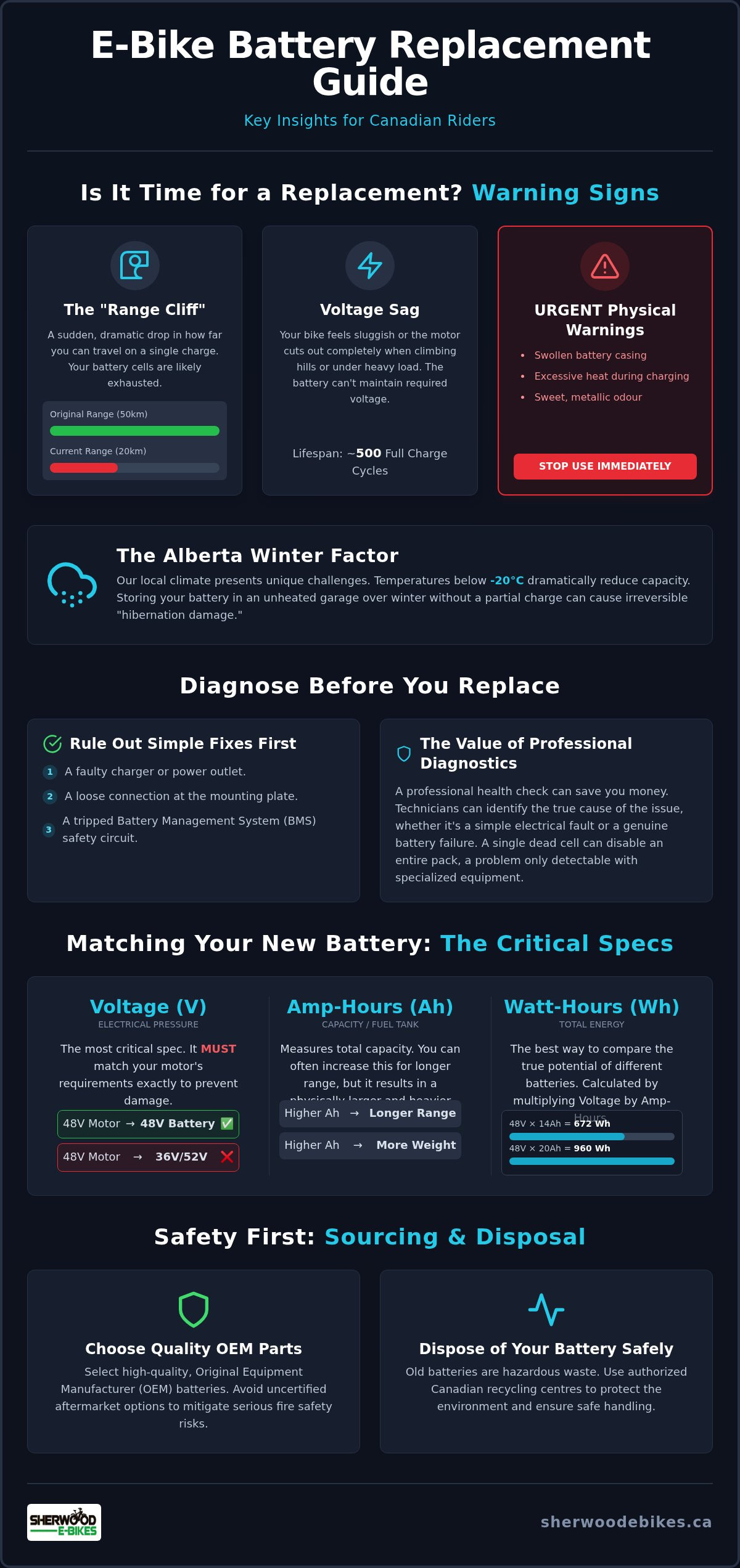
Recognizing when your power source is failing is the first step in any e-bike battery replacement guide. Most lithium-ion packs provide peak performance for about 500 full charge cycles. In Alberta, where temperature swings are dramatic, you might notice this degradation sooner than riders in milder climates. Regular monitoring of your performance ensures you aren't left stranded during a commute.
One of the most obvious indicators is the "range cliff." If your daily commute used to be a reliable 50-kilometre round trip but now barely reaches 20 kilometres, your cells are likely exhausted. You should also watch for "voltage sag." This occurs when your bike feels sluggish or even cuts out entirely while climbing a hill it used to handle with ease. This happens because the aging battery can no longer maintain the required voltage under a heavy load.
Physical changes are urgent warning signs that require immediate attention. If your battery casing appears swollen, feels excessively hot during charging, or emits a sweet, metallic odour, stop using it immediately. These symptoms suggest internal damage that could lead to a thermal event. Understanding Electric bicycle components helps you realize that while the motor and controller are durable, the battery is a consumable part with a finite lifespan.
The Alberta Winter Factor
Our local climate presents unique challenges for battery chemistry. When temperatures drop below -20°C, internal resistance within the lithium cells skyrockets. This makes it harder for energy to move, effectively shrinking your available capacity for the duration of the cold snap. Many riders discover "hibernation damage" in the spring. If a battery is stored in an unheated garage over winter without a partial charge, the voltage can drop below a critical threshold. A pack that powered you through July might fail to wake up in November because the internal chemistry has fundamentally shifted.
Diagnostic Errors vs. Battery Death
Before assuming you need a new pack, rule out simple electrical glitches. A faulty charger or a loose connection at the mounting plate can often mimic a dead battery. Sometimes, the Battery Management System (BMS) trips a safety circuit to protect the cells from a minor short, which can be reset by a technician in our showroom. However, a dead cell acts as a single point of failure that can disable an entire pack even if the remaining cells are healthy. We recommend a professional health check to confirm whether you need a replacement or just a simple repair.
Understanding Battery Compatibility and Specs
Technical alignment is the foundation of any successful e-bike battery replacement guide. You must navigate three primary metrics: Voltage (V), Amp-Hours (Ah), and Watt-Hours (Wh). Voltage represents the electrical pressure, and it is the most critical spec to get right. It must match your motor's requirements exactly. If your system is 48V, a 36V battery will fail to provide enough power, while a 52V battery could potentially damage your motor controller.
Amp-Hours measure the total capacity, similar to the size of a fuel tank. Unlike voltage, you often have the flexibility to increase your Amp-Hours to achieve a longer range. However, this usually results in a physically larger and heavier battery pack. Watt-Hours represent the total energy stored and are the best way to compare the true potential of different batteries. You calculate this figure by multiplying Voltage by Amp-Hours.
Beyond the internal chemistry, you must account for the physical connection. Standardized plugs like the XT60 or Anderson connectors are common, but many manufacturers use proprietary multi-pin interfaces. These ensure a secure, communication-ready link between the battery and the bike's brain. Always consult the Health Canada battery safety guidelines when handling these high-capacity components to ensure safe storage and charging.
Voltage and Watt-Hour Math
Calculating your potential range is straightforward. A 48V battery with 14Ah provides 672Wh. If you upgrade to a 20Ah pack at the same voltage, you gain 960Wh of energy. This extra capacity is vital for conquering hilly Alberta terrain or fighting through headwinds, but remember that high-capacity cells add significant weight to your frame. You must balance the desire for distance with the need for a nimble, manageable ride.
Physical Fit and Mounting Systems
Your choice is often dictated by the frame design. Many modern commuter e-bikes utilize integrated down tube batteries for a sleek, minimalist aesthetic. These require exact replacements that slide perfectly into the internal cavity. Older or more utilitarian models often use external rear rack mounts or "hailong" style cases that bolt onto the frame's water bottle bosses.
Proprietary lock-and-key systems from brands like Rize or Envo add another layer of complexity. These systems ensure the battery remains rattle-free and secure during transit, but they mean you cannot simply swap in a generic part. If you are unsure which mounting system or plug your model uses, our technicians can help you find the right e-bike parts for a seamless fit.
OEM vs. Aftermarket: Which Battery Should You Choose?
Selecting a new power source is the most critical decision in any e-bike battery replacement guide. You generally have two paths: purchasing an Original Equipment Manufacturer (OEM) battery or opting for a third-party aftermarket pack. OEM batteries are designed by the same company that built your bike, ensuring that every electrical handshake between the battery and the motor controller is perfect. While the upfront cost is often higher, the peace of mind regarding safety and longevity is a significant advantage for daily commuters.
The risks associated with "no-name" or uncertified batteries are substantial. These packs often use generic cells with poor cell balancing, which can lead to premature failure or, in extreme cases, fire hazards. Toronto witnessed an approximate 600% increase in lithium-ion battery fires between 2020 and 2024, highlighting the danger of low-quality charging systems. To stay safe, always verify that your battery uses high-quality cells from reputable manufacturers like Samsung, LG, or Panasonic. These brands are known for stable chemistry and consistent discharge rates even in variable temperatures.
Canadian riders should also look for specific safety certifications. While UL 2849 is a voluntary standard for the entire electrical system in Canada, the UL 2271 certification specifically covers batteries for light electric vehicles. Choosing a certified product ensures the pack has undergone rigorous testing for impact, overcharging, and thermal stability. Before you make a purchase, it is wise to safely recycle your e-bike battery through authorized programs like Call2Recycle, which handles the specialized disposal of lithium-ion cells over 300Wh.
The Benefits of Staying with OEM
Choosing an OEM battery ensures your manufacturer warranty remains valid. Many brands will void your motor or controller warranty if they detect a non-authorized battery was used. Beyond the legalities, OEM packs feature a Battery Management System (BMS) tuned specifically for your bike's power curves. This precise communication prevents "voltage sag" and maximizes the lifespan of the cells. Having access to professional support at a local ebike store means you can get help with firmware updates or physical fitment issues that third-party sellers cannot address.
When Aftermarket Makes Sense
Aftermarket options are sometimes necessary, particularly if you are sourcing a battery for a discontinued model. They are also popular for riders building custom long-range packs for heavy-duty cargo or delivery applications. If you must go this route, vet the builder with extreme care. Look for Alberta-based specialists who provide transparent data on the cells they use and offer their own localized warranties. Be aware that starting July 1, 2026, provinces like Quebec are introducing Environmental Handling Fees for these products, a trend likely to spread across Canada to support better recycling infrastructure.
How to Safely Replace and Dispose of Your Battery
Executing a safe swap is the most hands-on part of this e-bike battery replacement guide. Before you begin, ensure your bike's display is powered down and the battery's physical switch, if present, is in the "off" position. Unlock the pack using your key and carefully slide it out of its cradle. Avoid using metal tools like screwdrivers to pry the battery loose, as this can cause a short circuit or puncture the casing.
Once the old pack is removed, take a moment to inspect the mounting plate and the connector pins. Look for signs of carbon buildup, greenish corrosion, or warped plastic around the terminals. These are indicators of poor electrical contact or excessive heat. If you see melted components, do not install your new battery, as the faulty connection will likely damage the new cells immediately. Align your new battery with the frame rails and slide it into place until you hear a distinct mechanical click. Verify the lock is engaged to prevent the battery from vibrating loose during your ride.
Your first charge cycle is a critical step for long-term health. Plug the charger into the battery first, then into the wall outlet. Monitor the pack for the first two hours to ensure it doesn't become excessively hot. Never leave a brand-new battery charging unattended or overnight during its initial cycle. This allows you to verify that the Battery Management System (BMS) is balancing the cells correctly and that the charger is functioning as intended.
Terminal Maintenance and Cleaning
Alberta's humid spring weather and road salt can quickly degrade your electrical contacts. Use a small amount of dielectric grease on the battery terminals to create a moisture-proof barrier. This simple step prevents oxidation and ensures a consistent flow of current even in wet conditions. You can also clean the pins periodically with a cotton swab dipped in isopropyl alcohol to remove dirt and grease. For a more comprehensive look at keeping your ride in peak condition, explore our guide on e-bike maintenance.
Safe Disposal in the Edmonton Area
Lithium-ion batteries are classified as hazardous waste and must never be placed in your household blue bin or regular trash. In the Edmonton area, you have several reliable options for responsible disposal. The Sherwood Park Eco Centre and various Edmonton Eco Stations accept e-bike batteries for specialized recycling. Before transporting your old pack, place clear packing tape over the terminals to prevent accidental shorts. This protects the facility workers and prevents potential fires during transit. If you prefer a hands-off approach, book a professional installation service at our showroom and we will handle the recycling process for you.
The Sherwood Advantage: Professional Diagnostics and Fitting
While many online resources suggest testing your equipment with a simple home multimeter, these tools only provide a surface-level reading of a battery at rest. A multimeter cannot show how your cells perform under a heavy motor load. Our e-bike battery replacement guide emphasizes that a professional load test is the only definitive way to realize the true health of your power pack. By simulating real-world riding conditions, our technicians can identify if your range issues stem from a failing battery or an inefficient motor controller.
This diagnostic precision often saves you money. We frequently discover that a "dead" battery is actually a simple wiring fault or a corroded connector that can be repaired for a fraction of the cost of a full replacement. If a new pack is necessary, we offer a unique "try-before-you-buy" opportunity through our rental fleet. This allows you to experience the weight and range of different battery capacities on the road before committing to a purchase. It's the best way to ensure your upgrade matches your specific riding style.
In-Store Health Checks
When you visit our showroom, you receive a comprehensive diagnostic report. This document details the internal resistance of your cells and the remaining cycle life of the pack. Our staff provides personalized advice on which Rize or Wolff battery fits your specific frame geometry. We also handle essential firmware updates that ensure your new battery communicates perfectly with your bike's onboard computer. This professional service eliminates the guesswork and technical frustration often associated with DIY swaps.
Post-Replacement Support
We believe our relationship with riders starts after the sale. We assist with all warranty registration paperwork to ensure your investment is protected by the manufacturer. To help you maximize the lifespan of your new pack, we provide specialized training on the "80/20 Rule." By keeping your battery charge between 20% and 80% for daily use, you can potentially double the total number of cycles the cells can handle. This is especially vital for maintaining health during the fluctuating Alberta seasons we discussed earlier. You can easily book your next diagnostic fitting or consultation at our Sherwood Park showroom through our online portal.
Power Your Next Adventure with Total Confidence
Replacing your battery is more than just a maintenance task; it's an opportunity to restore the freedom and efficiency of your ride. You now have the tools to identify failing cells and navigate the technical world of voltage and watt-hours. By choosing high-quality OEM replacements and following a proper e-bike battery replacement guide, you protect both your investment and your safety.
As a locally owned and operated Alberta specialist, Sherwood E-Bikes Ltd. is here to support your transition to a more modern mode of transit. We are an authorized service centre for Envo, Rize, and Wolff, equipped with professional on-site load-testing tools to give you a definitive answer on your battery's health. Don't let technical confusion or range anxiety hold you back from enjoying the trails or your daily commute. Take the guesswork out of your upgrade and book a battery diagnostic at our Sherwood Park shop today. We look forward to helping you get back on the road with total peace of mind.
Frequently Asked Questions
How long should an e-bike battery typically last in Canada?
Most e-bike batteries typically last between 3 and 5 years or approximately 500 to 1,000 full charge cycles. In Canada, extreme temperature fluctuations can accelerate degradation if the bike isn't stored properly. Lithium-ion batteries lose capacity faster if kept in unheated garages during Alberta winters. Proper storage at room temperature with a partial charge during the off-season helps maximize the longevity of your power source.
Can I replace my 36V battery with a 48V battery for more speed?
You should not replace a 36V battery with a 48V model unless your motor and controller are specifically rated for that higher voltage. Forcing higher voltage into a system designed for 36V will likely destroy the sensitive electronics in your controller. Always match the voltage of your original battery exactly. If you want more speed, you generally need to upgrade the entire drive system rather than just the battery.
Where can I recycle my old e-bike battery in Sherwood Park?
You can recycle your old e-bike battery at the Sherwood Park Eco Centre or participating retail locations. Call2Recycle operates a national program that partners with many bike shops to handle lithium-ion cells over 300Wh safely. Ensure you tape the terminals with clear packing tape before drop-off to prevent short circuits. Never place these batteries in your household recycling or trash bins due to the fire risk they pose.
What is the average cost of a replacement e-bike battery in 2026?
Industry data for 2026 shows that replacement e-bike batteries in Canada typically range from C$250 to C$800. Premium models with higher capacity or specialized brand requirements can reach up to C$1,200. A standard 48V 14Ah battery, which is common for many daily commuters, often falls within the C$500 to C$700 range. These prices reflect the current downward trend in lithium cell costs compared to previous years.
Is it safe to buy a used e-bike battery online?
Buying a used battery online is generally unsafe because you cannot verify its internal health or history. Used packs may have hidden damage from crashes or improper storage that could lead to fires. For a reliable e-bike battery replacement guide, we suggest investing in a new, certified pack with a valid warranty. This ensures the Battery Management System is functioning correctly and provides peace of mind during your daily commute.
How do I know if my charger is the problem instead of the battery?
Test your charger by checking the indicator lights or using a voltmeter to see if it outputs the correct voltage. A charger that stays green when plugged into a dead battery or never shows a red light is often the culprit. If the battery charges fully but loses power rapidly during a ride, the issue is likely with the internal cells. A professional diagnostic test can confirm this by checking the pack under load.
Can I upgrade my e-bike battery to get a longer range?
You can upgrade to a battery with higher Amp-Hours to achieve a longer range as long as the voltage stays the same. Increasing the capacity allows you to travel further on a single charge, which is helpful for hilly Alberta terrain. This is a common strategy for riders who find their current e-bike battery replacement guide needs have changed. Always ensure the larger pack fits your bike's physical mounting system securely.
Does the weight of a larger battery affect my bike’s handling?
A larger capacity battery is heavier, and this extra weight can change how your bike handles. If the battery is mounted on a rear rack, the bike may feel tail-heavy and less stable during sharp turns. Integrated down tube batteries distribute weight more centrally, which minimizes the impact on balance. Most riders find the slight increase in weight is a fair trade-off for the significantly improved range and power consistency.


