

Did you know that the 750-watt e-bike you saw online is actually illegal to ride on Sherwood Park roads? Many riders realize too late that high-powered American imports don't meet Canadian safety standards. This leaves them with an expensive machine they cannot legally use on public paths. It is easy to feel overwhelmed by technical jargon like Volts, Watts, and Amp-hours. You might also worry if a battery will survive a typical Alberta winter. You want a reliable ride that offers freedom, not a collection of confusing specs and service headaches.
We understand that choosing between different electric bikes bicycle models in 2026 feels like a major commitment. This guide provides a clear path forward by demystifying motor categories and battery maintenance for our unique climate. You will learn how to identify a compliant 500W power bicycle. We will also explain how to protect your investment during the cold months and why local support is vital for long-term reliability. From commuter models to rugged explorers, we'll help you find the right fit so you can ride with total confidence.
Key Takeaways
- Learn the difference between pedal-assist and throttle-only modes to find the motor system that best suits your riding style.
- Identify the right motor for your geography, choosing mid-drive for climbing Alberta's hills or hub motors for efficient city travel.
- Discover essential maintenance habits to protect your drivetrain from dust and salt while ensuring your battery remains healthy year-round.
- Realize why a rental strategy is the smartest way to test different electric bikes bicycle styles in your own neighbourhood before committing.
- Understand the importance of a professional showroom fitting to ensure your frame style provides maximum comfort and accessibility.
What is an Electric Bike? Understanding the E-Bike Revolution
The modern electric bikes bicycle category is much more than a standard frame with a battery attached. It represents a fundamental shift in how Canadians move through their communities. At its core, an e-bike is a bicycle with an integrated electric motor used to assist propulsion. This technology has sparked a revolution across the country, particularly as riders look for ways to extend their range and reduce physical strain. For a comprehensive overview of electric bicycles, history shows these vehicles have evolved from heavy prototypes into the sleek, lithium-ion powered machines we see today.
Commuters are choosing these bikes to replace second vehicles, effectively eliminating parking fees and reducing their carbon footprint. Seniors find that the added boost makes cycling accessible again, allowing them to tackle hills and headwinds that previously felt insurmountable. This shift toward efficient, low-impact transit is redefining our local trail systems and city streets. It's an aspirational change that turns a grueling commute into an enjoyable outdoor experience.
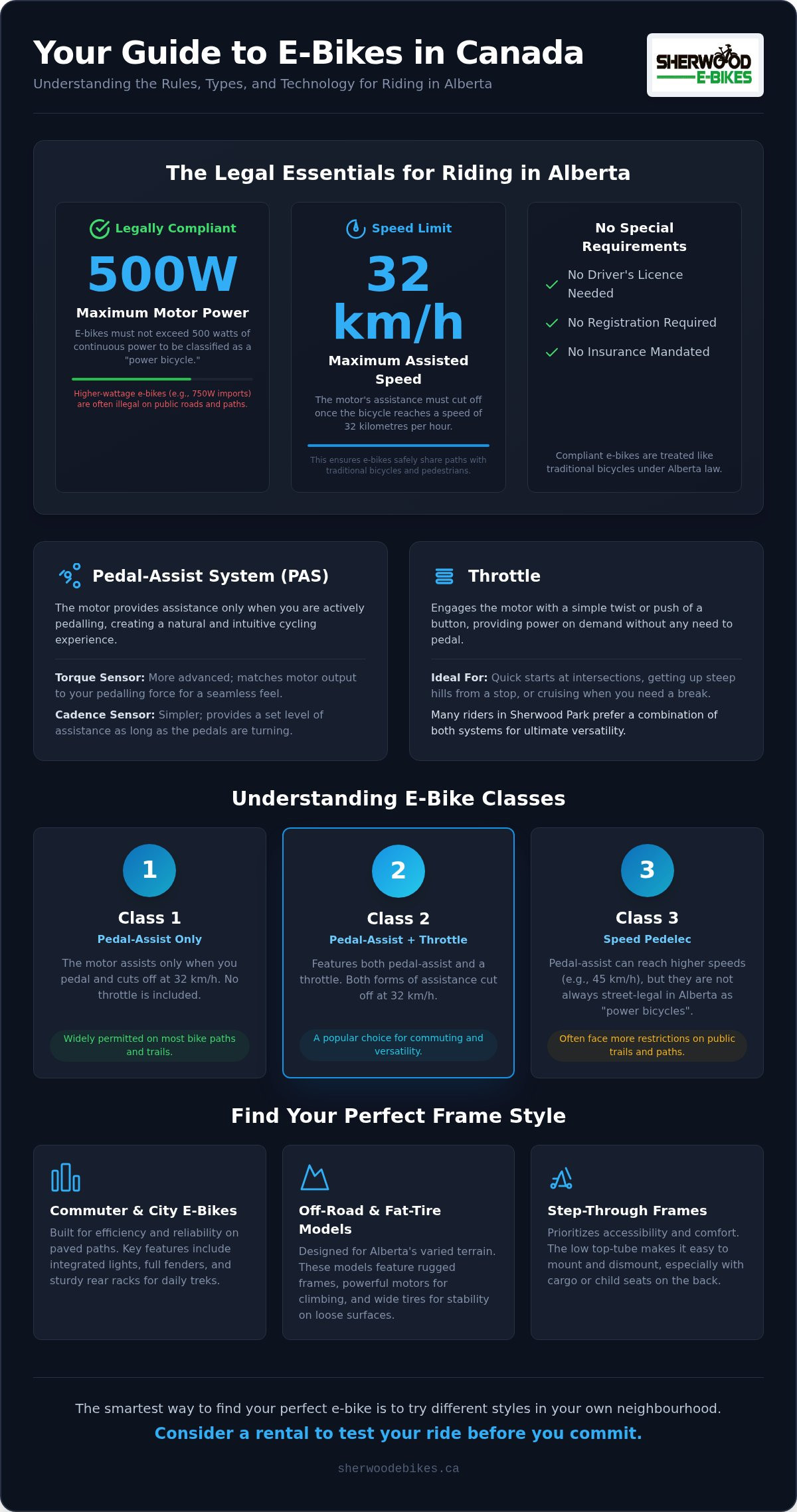
Alberta's legal landscape is very specific about what qualifies as a "power bicycle." To ride legally on public roads and pathways, the motor must be limited to 500 watts of continuous power. Additionally, the motor's assistance must stop helping you once you hit 32 km/h. Staying within these limits ensures you don't need a driver's license, registration, or insurance. It keeps the experience simple and accessible for everyone from teenagers to retirees.
Pedal Assist vs. Throttle: Which is Better?
Pedal-assist (PAS) creates a seamless connection between the rider and the machine. Cadence sensors track if you're pedaling, while torque sensors measure how much force you're applying to the pedals. Torque sensors offer a much more intuitive, natural feel because the motor responds to your effort in real time. Throttles provide an immediate burst of power without needing to turn the pedals, which is incredibly helpful for crossing busy intersections or starting on a hill. Many riders in Sherwood Park prefer a combination of both to handle varied trail conditions and personal energy levels throughout the day.
Class 1, 2, and 3 E-Bikes Explained
Choosing the right class determines where you can legally ride. Class 1 bikes are pedal-assist only and are generally permitted on any path where a standard bicycle can go. Class 2 models add a throttle for cruising, which is a favourite for those with joint concerns or longer commutes. Class 3 e-bikes are built for speed and often reach higher limits, but they face more restrictions on public trails. Knowing these categories helps you avoid buying a electric bikes bicycle that's restricted from your favourite local park. If you aren't sure which class feels right, exploring e-bike rentals is a practical way to test these systems on real paths.
Choosing Your Ride: A Guide to Electric Bicycle Styles
Selecting the perfect frame starts with your daily routine. Are you hauling heavy grocery bags or racing to the office? The electric bikes bicycle market has evolved to offer specialized frames for every lifestyle. Choosing the right style ensures your investment provides comfort for years to come. Finding the ideal electric bikes bicycle for your specific needs is easier when you can compare frame geometry in person.
Step-through frames are no longer just for city cruising. These frames provide excellent accessibility, allowing you to mount the bike without swinging a leg over a high top-tube. This is a favourite feature for riders who have their rear rack loaded with panniers or a child seat. For those prioritizing portability, consider the weight of the motor and battery. Most models weigh between 25 and 40 kg. If you need to lift your bike onto a vehicle rack or into a garage, look for lightweight alloys that don't sacrifice motor power.
Commuter and City E-Bikes
Efficiency and reliability are the priorities for urban riders. When browsing Commuter E-Bikes, look for integrated safety features. High-visibility lights, full fenders, and sturdy rear racks are essential for the daily trek. For a typical commute from Sherwood Park to downtown Edmonton, you need a drivetrain that handles paved paths and occasional loose debris. These models focus on a narrow tire profile to reduce rolling resistance, helping you reach your destination faster with less battery drain.
Off-Road and Fat-Tire Models
Alberta's varied terrain often demands more grip. Fat-tire e-bikes, with their 4-inch wide tires, have become the all-season standard for Canadian riders. They provide unmatched stability on the sandy trails of Elk Island or the snowy paths of the Edmonton River Valley. You can lower the tire pressure to float over soft surfaces like mud or fresh powder.
Suspension is the next big decision. A hardtail model features front suspension only, making it lighter and more affordable for gravel paths. Full-suspension models add a rear shock, which is vital if you plan on technical trail riding. This extra cushioning protects your back and keeps your tires in contact with the ground on rough descents. If you want to see how these styles handle in person, our physical showroom is the best place to start your search.
Batteries and Motors: The Technical Side of Canadian E-Biking
The motor and battery act as the heart of your machine. Understanding how they interact with our local geography is the key to a successful purchase. Mid-drive motors are positioned at the cranks, allowing them to use the bike's existing gears for maximum efficiency. This makes them superior for climbing the steep Alberta river valleys. Hub motors are located directly in the wheel and offer a simpler, more cost-effective solution for flat city commuting. Choosing the right motor ensures your electric bikes bicycle handles the specific terrain of your daily route without overheating.
Battery capacity is measured in Watt-hours (Wh). Think of this as the size of your fuel tank. A higher Wh rating typically translates to a longer range between charges. However, manufacturer claims like "up to 80km" are often based on ideal conditions. In the real world, factors like strong prairie winds and frequent hills will reduce your actual mileage. You should plan your journeys based on a conservative estimate to ensure you always have enough power to reach your destination. Reliable power delivery is what turns a simple ride into a dependable mode of transit.
E-Bike Battery Care in Sub-Zero Temperatures
Alberta winters present unique challenges for lithium-ion technology. Follow the "room temperature" rule: never charge a battery that is frozen. Bring it inside and let it reach a stable indoor temperature before plugging it in to prevent permanent cell damage. If you aren't riding during the off-season, store your battery at 50-70% charge in a cool, dry place. Cold weather temporarily reduces your range by up to 30%, so don't be surprised if your winter trips require more frequent charging. Knowing these limits helps you extend your e-bike battery life and maintain peak performance year-round.
Motor Power and Torque
Many online listings feature 750W motors, but these are designed for the American market and aren't legal for road use in Canada. In Alberta, the legal limit for a power-assisted electric bikes bicycle is 500W. Torque, measured in Newton-metres (Nm), is actually more important than wattage for most riders. High torque provides the rotational force needed to accelerate from a dead stop or conquer a sudden incline. Look for a motor with 60Nm to 85Nm of torque if you frequently haul groceries or ride through hilly neighbourhoods. This ensures you have the power you need while staying fully compliant with local regulations.
Maximizing Your Investment: Maintenance and the Rental Strategy
Investing in a modern electric bikes bicycle is a commitment to a new lifestyle. To protect that investment, you need a strategy that covers both the initial selection and long-term care. Alberta's environment is notoriously tough on machinery. Dusty summer trails and salty winter roads can quickly degrade a drivetrain if left uncleaned. Routine maintenance is the only way to ensure your ride remains smooth and efficient year-round. Wipe down your chain after every ride in wet conditions. Use a dry lubricant for summer dust and a wet lubricant for winter slush. These small steps prevent the grinding feel that ruins a premium motor's performance.
Safety checks also take on new importance. Because e-bikes are heavier and travel at higher average speeds than acoustic bicycles, brake pads wear down more quickly. Checking your pad thickness and tire pressure weekly is a simple habit that prevents costly repairs. Modern e-bikes function as integrated electronic systems. A standard bicycle shop might not have the specific tools to interface with your motor's firmware. Professional diagnostics can reveal hidden battery cell imbalances or sensor calibration errors. This level of care extends the life of your electric bikes bicycle far beyond the typical lifespan of a budget model.
The Value of Electric Bike Rentals
Reading about motor specs is helpful, but nothing compares to a real-world test. Using Sherwood E-Bikes Rentals allows you to take a model on your actual commute route. You can see how the battery handles that final hill or if the frame geometry feels comfortable after forty minutes in the saddle. This try-before-you-buy approach removes the anxiety of making the wrong choice. It helps you realize if you truly need a step-through frame for easy mounting or if a step-over model suits your riding style better.
Finding Specialized E-Bike Parts
One of the biggest risks of buying from a big box store or a discount online retailer is the lack of local support. These bikes often use proprietary parts that are difficult to source when something breaks. Local specialists ensure that your motor, battery, and controller remain serviceable for years. Access to genuine Maintenance Services means your bike won't end up in a landfill because of a single faulty sensor. Our technicians use specialized diagnostics to catch small issues before they become major failures.
If you want to ensure your ride stays in peak condition, book a professional tune-up today to keep your investment rolling reliably.
Finding Your Perfect Electric Bicycle in Sherwood Park
Choosing the right electric bikes bicycle shouldn't feel like a digital guessing game. While online specs provide a baseline, they cannot replicate the physical sensation of a test ride. A showroom visit allows you to get fitted by an expert who understands the nuances of frame geometry and rider posture. You wouldn't buy a pair of shoes without trying them on; a specialized vehicle requires the same level of personal attention. Spend 15 minutes in the saddle instead of 15 hours scrolling through reviews. This hands-on approach ensures you select a frame that feels natural and responsive from the first pedal stroke.
Local support is the backbone of a successful e-biking experience. We serve riders across Edmonton, St. Albert, and the surrounding region from our Sherwood Park base. Being a local specialist means we have deep expertise in Alberta-specific riding conditions. We know which tires handle the river valley's loose gravel and which accessories make winter commuting more comfortable. Customization is where your bike truly becomes yours. Whether you need heavy-duty fenders for wet spring days or integrated racks for your grocery hauls, we help you build a setup that fits your lifestyle. This personal interaction ensures you leave with a bike that is ready for the road.
What to Expect During Your Showroom Visit
When you walk into our centre, you receive personalized advice tailored to your goals. We help you compare leading brands like Rize and Wolff side-by-side. This direct comparison helps you realize the subtle differences in motor engagement and display interfaces. Our team also provides guidance on local trail regulations. We can point you toward the best routes in Strathcona County and explain how to stay compliant with municipal bylaws. It's about finding a electric bikes bicycle that integrates seamlessly into your daily routine without any technical confusion.
Joining the Sherwood Park E-Bike Community
E-biking is more than just a transit choice; it's a social shift. We are seeing a massive change in urban mobility as more people realize the benefits of efficient, motor-assisted travel. Joining our community gives you access to upcoming group rides and local cycling events that celebrate this progress. These gatherings are a great way to meet fellow enthusiasts and discover new paths in a supportive environment. If you are ready to start your journey, check out our guide on Finding the Best E-Bikes Near Me to explore the options available in your neighbourhood today.
Step Into the Future of Local Transit
Choosing a new electric bikes bicycle is a significant step toward more efficient and enjoyable travel. By matching your motor choice to Alberta's river valleys and prioritizing local serviceability, you ensure your investment lasts for years. Proper winter storage and routine drivetrain care remain the best ways to protect your battery life in our challenging climate. Specialized maintenance and professional diagnostics are essential for keeping these high-tech machines in peak condition. Whether you are commuting to Edmonton or exploring local trails, the right fit makes every journey feel effortless.
Visit our local Sherwood Park showroom to see our curated selection from top Canadian brands like Envo and Rize. We are an authorized dealer committed to providing hands-on support and expert advice for every rider. Don't settle for a generic online purchase when you can test different styles on your actual daily routes using our rental fleet. Book a test ride or rent an e-bike today at Sherwood E-Bikes to find your perfect match. We look forward to helping you move through the world with more freedom and confidence.
Frequently Asked Questions
Do I need a special licence to ride an electric bike in Alberta?
No, you do not need a driver's licence, vehicle insurance, or registration to operate a power bicycle in Alberta. To remain compliant, the motor must be limited to 500 watts and the top speed must cut off at 32 km/h. Riders in Sherwood Park and Edmonton must be at least 12 years old and wear an approved helmet at all times. This makes e-bikes an accessible option for everyone.
How much does it cost to charge an e-bike battery at home?
Charging your battery at home is incredibly cost-effective, typically costing only a few cents per full charge based on local Alberta utility rates. Most riders find that the impact on their monthly electricity bill is negligible, even with daily commuting. This efficiency is a primary reason why many residents in Leduc and Fort Saskatchewan are shifting toward electric bikes bicycle use for short-range trips. It is significantly cheaper than gas.
Can I ride my electric bicycle in the rain or snow?
Yes, you can ride in varied weather, but specialized care is required for Alberta's winters. Most high-quality e-bikes feature water-resistant components that handle rain and light splashes. For snow, we recommend fat-tire models for better stability on icy paths in St. Albert or Spruce Grove. Always wipe down your frame and drivetrain after riding in wet or salty conditions. Never submerge the motor or battery in deep water.
What is the average lifespan of an e-bike battery?
A typical lithium-ion battery lasts between three and five years, or approximately 500 to 1,000 full charge cycles, before its capacity begins to noticeably decline. You can extend this lifespan by following proper storage guidelines, especially during cold snaps in the Edmonton region. Keeping the battery between 20% and 80% charge and avoiding extreme temperatures helps maintain its health. Our showroom provides specialized diagnostics to check your battery's current performance levels.
How fast can an electric bike go in Canada?
Federal and provincial regulations state that an e-bike motor must stop providing assistance once the vehicle reaches 32 km/h. You can certainly pedal faster using your own physical effort, but the motor will not help you exceed that limit on public roads or pathways. This speed cap is designed to ensure safety on shared trails in Sherwood Park and Ardrossan. It keeps e-bikes compatible with standard bicycle traffic on local paths.
Is an e-bike worth the investment if I already have a car?
An e-bike is an excellent companion to a car, particularly for trips under ten kilometres where parking in downtown Edmonton is difficult or expensive. Many owners find they use their cars much less for errands, grocery hauls, and local visits in Wetaskiwin or Camrose. You save on fuel and maintenance while gaining the health benefits of active transportation. It offers a refreshing way to experience your community without traffic stress.
Can I convert my existing bicycle into an electric bike?
While conversion kits exist, we generally recommend purchasing a purpose-built electric bikes bicycle for safety and reliability. E-bike frames are specifically engineered to handle the additional weight and torque of a motor and battery system. Standard bicycle components, especially brakes and spokes, often wear out prematurely under the increased stress of an electric drive. A factory-built model ensures all components are balanced and covered by a comprehensive warranty for your protection.
What kind of maintenance does an e-bike motor require?
Most modern hub and mid-drive motors are sealed units that require very little internal maintenance from the rider. However, you should bring your bike in for professional diagnostics to check for firmware updates and sensor calibration. We focus on keeping the external connections clean and ensuring the mounting bolts remain tight. Regular tune-ups at a specialized shop in Sherwood Park prevent small electrical issues from becoming costly repairs over time.


