
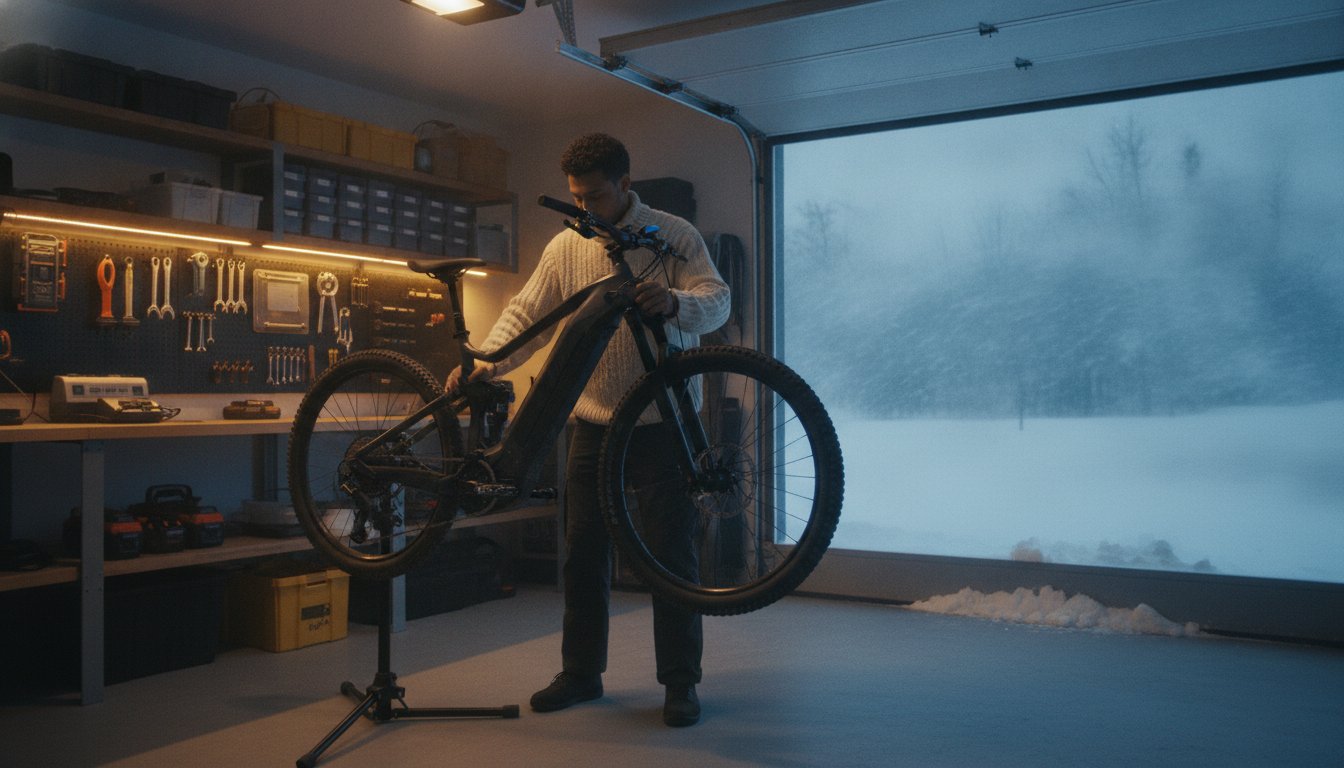
Leaving your e-bike in an unheated Alberta garage this winter is the fastest way to turn a high-tech investment into a heavy paperweight. You’ve likely felt that pang of worry when the temperature drops toward -30°C, wondering if your battery will ever hold a full charge again. It's a valid concern. Between the bone-chilling cold and the corrosive salt on our local roads, your bike faces a punishing season. Specialized e-bike winter maintenance in Sherwood Park is about more than just clearing floor space; it’s a necessary strategy to protect your mobility and your wallet.
We understand the frustration of limited heated storage and the fear of facing permanent battery damage by spring. This 2026 guide provides the professional tips you need to keep your battery healthy and your frame rust-free throughout the coldest months. You’ll learn how to manage discharge rates in extreme temperatures and why a little preparation now leads to total peace of mind later. We’ll walk through the essential steps to ensure your ride emerges from the snow ready to tackle the 287 kilometres of Strathcona County trails the moment the ice thaws.
Key Takeaways
- Understand the critical risks of -30°C temperatures on battery chemistry and why you should never charge a frozen battery.
- Learn the "Golden Rule" of maintaining a 40-60% charge to preserve cell health during months of storage.
- Master the cleaning techniques needed to neutralize Alberta road salt and magnesium chloride before they cause permanent corrosion.
- Follow a professional checklist for e-bike winter maintenance in Sherwood Park to ensure your components stay lubricated and functional.
- Discover how professional diagnostics can identify hidden electrical errors before the spring riding season begins.
Why Alberta’s Cold Requires a Specialized E-Bike Winter Storage Strategy
Sherwood Park winters are legendary for their intensity. While a traditional bicycle might survive a season tucked away in a drafty garden shed, an electric bicycle is a sophisticated piece of technology that requires a more deliberate approach. The combination of extreme sub-zero temperatures and bone-dry prairie air creates a unique set of challenges. Standard storage habits often lead to expensive repairs by April. Prioritizing e-bike winter maintenance in Sherwood Park isn't just about tidying up; it's about protecting the chemical and mechanical integrity of your ride.
Leaving your bike exposed to the elements can be a costly mistake. Alberta's climate fluctuates wildly. We see rapid shifts from deep freezes to chinook-driven thaws. These cycles invite moisture into places it doesn't belong. Without a specific strategy, you risk permanent battery degradation and seized components. A proactive plan ensures your investment remains ready for the local trail network once the snow clears.
The Science of Cold and Lithium-Ion
Lithium-ion batteries rely on liquid electrolytes to move ions between the anode and cathode. When the temperature hits -30°C, this liquid becomes viscous. Chemical reactions slow down significantly. This increases internal resistance, which is why your range drops during winter rides. The real danger lies in long-term exposure to extreme cold. If a battery stays in a sub-zero environment while at a low state of charge, it can enter a "deep discharge" state. Once the voltage drops below a certain threshold, the battery's management system may prevent it from ever charging again for safety reasons.
The optimal temperature for storing your battery is between 10°C and 20°C. Storing it in a heated basement or a climate-controlled room is the only way to guarantee its lifespan. If you must leave the bike frame in an unheated garage, always remove the battery and bring it indoors. This simple step prevents the electrolyte from freezing and maintains the cell's ability to hold a full charge in the spring. It's a small effort that saves hundreds of dollars in replacement costs.
Corrosion: The Silent Winter Killer
Road maintenance in Strathcona County involves heavy use of road salt and magnesium chloride. These de-icing agents are excellent for safety but devastating for bike components. They act as catalysts for rust, eating through chain links and pitting metal surfaces. Even if you don't ride in the snow, salt dust from the roads can find its way into your storage space. When you bring a cold bike into a warmer area, condensation forms inside the frame tubes and motor housing. This trapped moisture, combined with salt residue, creates a corrosive environment that can ruin bearings and electrical connectors.
A deep clean before storage is essential. You need to neutralize these chemicals to prevent them from sitting on your bike for four months. Pay close attention to motor seals and suspension stanchions. Professional e-bike winter maintenance in Sherwood Park includes a thorough cleaning and the application of specialized lubricants that displace moisture. This protective barrier is your best defence against the "silent killer" of winter storage.
Protecting Your Battery: The Core of E-Bike Winter Maintenance
Your battery is the most expensive component on your bike. In Alberta, it's also the most vulnerable. Effective e-bike winter maintenance in Sherwood Park starts with a clear plan for your power source. Lithium-ion cells don't just dislike the cold; they can be permanently damaged by it. If you ride an Envo or a Rize, your first priority is removing the battery pack entirely. Storing it in a climate-controlled environment is the only way to ensure it survives until spring.
Protecting Your Battery involves managing its internal chemistry. You can't just set it and forget it for four months. Set a recurring calendar reminder for the first of every month. Use this time to check the voltage and ensure the charge level hasn't dipped too low. Monitoring these levels prevents the dreaded "bricked" battery that refuses to take a charge when the trails finally dry out.
The 50% Charge Rule Explained
Many riders make the mistake of charging to 100% before storage. This creates high voltage stress on the cells, which leads to faster degradation. On the other hand, storing at 0% is a recipe for disaster. Batteries naturally lose a small amount of power over time. If a battery is empty, it can drop into a deep-discharge state that kills the pack. The "Golden Rule" is to keep the charge between 40% and 60%. Don't rely on the simple bars on your display. If your LCD allows it, check the actual voltage for a more precise reading. Store your charger in a separate location. This eliminates any risk of phantom power draw while the bike is sitting idle.
Safe Indoor Battery Charging Protocols
Temperature shock is a real threat. If you've just brought your battery in from a cold garage, don't plug it in immediately. Charging a frozen battery can cause permanent plating of the lithium, which is a significant fire risk. Follow the two-hour acclimatization rule. Let the battery reach room temperature naturally before connecting the charger. Using a fire-safe bag or a dedicated metal container provides an extra layer of security during the winter months. Always inspect the casing for signs of swelling or cracks. If the battery looks different than it did in the summer, it's time for a professional inspection. Our technicians can perform specialized e-bike diagnostics to ensure your cells are balanced and safe for indoor storage. Taking these simple precautions is the smartest way to handle e-bike winter maintenance in Sherwood Park.
Preparing Your E-Bike Frame and Components for Seasonal Storage
While your battery is tucked away in a warm room, the rest of your bike needs its own defence plan. Comprehensive e-bike winter maintenance in Sherwood Park involves more than a quick wipe-down. Alberta’s winter roads are treated with aggressive de-icing agents like magnesium chloride. These chemicals are highly corrosive. If left on your frame and drivetrain for months, they will pit the finish and seize moving parts. A clean bike is a preserved bike.
Heavy commuter e-bikes are particularly susceptible to flat spots on tires if left stationary for months. Ensure your tires are inflated to the recommended pressure before storage. If possible, use a bike stand to keep the weight off the rubber. For bikes with non-removable LCD screens or controllers, wrap these components in a soft cloth and cover them with plastic. This shields them from dust and humidity shifts that can occur even in a sheltered garage.
Deep Cleaning Without Damaging Electronics
High-pressure washers are the enemy of longevity. They force water past seals and into sensitive motor housings or bearing races. Instead, use a soft brush and a bucket of water mixed with a specialized e-bike cleaner. Focus on the underside of the frame and the area around the bottom bracket where road grime accumulates. This is where salt does the most damage during the off-season.
Once the bike is clean, drying is the most critical step. Use a clean microfibre cloth to remove all moisture, especially around the battery port and sensor areas. If you’ve already removed your battery to avoid the physical cracking described in scientific research on cold-weather battery damage, ensure the terminal pins are dry. Applying a light coating of dielectric grease to these pins prevents oxidation while the bike sits idle.
Drivetrain and Mechanical Preservation
A dry chain will rust in a typical Alberta garage. Apply a generous coating of wet-weather lubricant to the chain, derailleurs, and any exposed cables. This creates a protective barrier against moisture. Before you walk away, shift your chain to the smallest cog. This relaxes the tension on the derailleur spring, which helps maintain shifting precision for the following season.
Inspect your brake pads now rather than waiting for the spring rush. Salt and slush can cause glazing on the pads, which significantly reduces stopping power. If you notice significant wear or contamination, it’s a good idea to book a professional e-bike maintenance session. Addressing these mechanical issues in the autumn ensures that when the snow melts, your bike is ready for the road immediately. Taking these steps provides the peace of mind that your investment is protected through the harshest months.

Choosing the Right Storage Location: Garage vs. Indoor Living Spaces
Deciding where to park your bike for the next four months is just as critical as the cleaning process. Many residents in Strathcona County default to the garage. While an unheated garage is perfectly acceptable for the frame and mechanical components, it's a harsh environment for the sensitive electronics. If you choose this route, you must ensure the bike is shielded from the rapid temperature swings that characterize an Alberta winter. These fluctuations are the primary cause of internal condensation, which can lead to invisible rust inside the frame tubes.
Indoor storage in a basement or spare room is often a better choice, but it isn't without risks. A common mistake is placing the bike directly next to a furnace or water heater. These areas are often too dry and too warm. Extreme low humidity can cause rubber seals, hydraulic brake lines, and tire sidewalls to become brittle and crack. Finding a balanced environment is the secret to successful e-bike winter maintenance in Sherwood Park.
Temperature and Humidity Control
The ideal environment for your e-bike is a cool, dry space with humidity levels between 30% and 50%. This range prevents metal oxidation while keeping your rubber gaskets supple. If you are storing the bike in a garage, never leave the tires directly on a concrete floor. Concrete is porous and draws moisture and cold directly into the rubber, which can lead to flat spots or premature dry rot. Use a dedicated bike stand or a simple piece of plywood to create a thermal barrier.
Dust is another silent enemy of electrical sensors and display units. Use a breathable fabric cover rather than a plastic tarp. Plastic traps moisture against the bike, whereas a breathable cover allows air to circulate while keeping grit out of your motor's cooling fins and handlebar controls. If you're unsure if your storage setup is optimal, visit our local Sherwood Park showroom for expert advice on protective accessories.
Winter Security for Your Investment
Winter is prime time for residential garage thefts in the Edmonton area. Thieves know that expensive equipment is often left unattended for months at a time. Even if your garage is locked, you should still secure your e-bike to a fixed anchor point with a high-quality U-lock. This adds a critical layer of deterrence. Removing the battery and storing it in a hidden indoor location doesn't just protect the cells; it makes the bike much less attractive to thieves. A high-value e-bike without its proprietary battery and charger is significantly harder to resell. Check your home insurance policy as well. Some providers require specific locking protocols for e-bikes to remain covered during the off-season. Taking these security steps ensures your investment is still there when the spring riding season arrives.
Just as protecting your e-bike ensures its value is preserved for future seasons, professional financial planning can safeguard your broader assets; for Canadians looking to secure their future, Evergreen Wealth Management provides comprehensive retirement planning services.
Professional Winterization and Service at Sherwood E-Bikes Ltd.
Professional care is the ultimate insurance policy for your ride. While DIY steps are helpful, a comprehensive maintenance service at Sherwood E-Bikes Ltd. ensures every technical detail is addressed. Our specialized diagnostics catch hidden sensor errors or firmware glitches that standard tools often miss. By visiting our local showroom at 2008a Sherwood Drive, you get personalized advice tailored to your specific riding habits. It's smart to book your appointment before the October rush to avoid the seasonal backlog. Expert e-bike winter maintenance in Sherwood Park is about being proactive rather than reactive.
Our technicians understand the specific toll that Alberta's climate takes on modern electronics. We don't just look at the mechanical parts; we analyze the entire system, including checking wiring harnesses for wear. Because maintaining complex electrical systems requires absolute precision, similar to the standards upheld by Electrical Repair 4U, we ensure all connections are treated with dielectric grease to prevent oxidation during the humid spring thaw. Sherwood E-Bikes Ltd. is here to help you navigate these technical complexities so you don't have to guess if your bike is safe.
What’s Included in an E-Bike Winterization?
A professional session goes far beyond a simple wipe-down. We perform critical torque checks on all structural bolts to ensure nothing has rattled loose during your summer commutes. Our technicians provide detailed battery health reports; we use specialized equipment to measure capacity and internal resistance. We also install the latest manufacturer firmware updates to optimize your motor's performance and efficiency. Our team specializes in deep cleaning and degreasing for drivetrains that have been exposed to Alberta’s harsh road salt. This level of care provides total peace of mind for owners of brands like Wolff or Aima. You'll rest easy knowing your bike is preserved in peak condition.
Planning for Spring: Rentals and Upgrades
The quiet winter months are actually the best time to think about the next season. It's the perfect opportunity to browse e-bike rentals if you're planning family outings or want to test a different style of bike. Many riders also use this time to order replacement parts or custom accessories like fenders or racks. Ordering now helps you avoid the supply chain delays that often hit the industry when the weather warms up in April. If you're looking for more local insights, check out our guide on finding the best e-bikes near me. Investing in e-bike winter maintenance in Sherwood Park today means you’ll be the first one back on the trails when the ice finally melts. Don't wait until the first warm day to realize your bike needs attention.
Ready Your Ride for a Successful Spring
Protecting your investment during an Alberta winter requires a proactive strategy. By keeping your battery at a stable 40-60% charge indoors and neutralizing corrosive road salt, you ensure your bike remains in peak condition. Choosing a storage location with balanced humidity prevents brittle seals and rust. These simple steps make the difference between a seamless spring start and an expensive repair bill. For those looking to apply these battery storage principles to their home energy needs, you can discover Eastern Electric to see how high-performance systems are designed for maximum efficiency.
For total peace of mind, consider professional e-bike winter maintenance in Sherwood Park. Our centrally located showroom offers expert diagnostics for all major brands. We provide authorized service for Envo, Rize, and Wolff; this ensures your specific model receives the technical attention it deserves. Catching potential sensor errors now prevents the stress of the spring rush later.
Don't let the extreme cold compromise your mobility. Book Your Professional E-Bike Winterization Today and stay ahead of the weather. We look forward to helping you move toward a more efficient and modern way of exploring Strathcona County trails.
Frequently Asked Questions
Can I leave my e-bike in an unheated garage in Sherwood Park?
Yes, you can store the frame in an unheated garage, but you must remove the battery and bring it indoors. Alberta’s -30°C temperatures can cause permanent capacity loss or even freeze the electrolyte inside the cells. Storing the mechanical components in a garage is fine as long as they are cleaned and lubricated. This is a core part of effective e-bike winter maintenance in Sherwood Park.
Should I charge my e-bike battery to 100% before storing it for winter?
No, you should avoid storing your battery at 100% charge. High voltage puts unnecessary stress on the lithium-ion cells, which leads to faster degradation over the winter months. Instead, aim for a storage charge between 40% and 60%. This range provides enough stability to prevent the battery from dropping into a dangerous deep-discharge state while minimizing the chemical wear on the internal components.
How often should I check my battery charge during the winter months?
You should check your battery's charge level once every 30 days. Batteries naturally lose a small amount of voltage over time, even when they aren't in use. By setting a monthly calendar reminder, you can ensure the charge stays within the healthy 40-60% range. If the level drops below 30%, give it a short top-up to bring it back to the optimal storage level.
Will the cold weather permanently damage my e-bike motor?
Cold weather won't typically damage the motor itself, but the moisture and salt associated with winter can. The real danger is condensation forming inside the motor housing when a cold bike is moved into a warmer space. This moisture, combined with Alberta road salt, can lead to internal corrosion. Professional e-bike winter maintenance in Sherwood Park includes applying protective lubricants to seals to prevent this silent damage.
Do I need to remove the tires or store the bike on a rack?
Storing your e-bike on a rack is highly recommended but not strictly mandatory. Because e-bikes are significantly heavier than standard bicycles, leaving them on a cold concrete floor can cause the rubber to develop permanent flat spots. If you don't have a rack, inflate your tires to the maximum recommended pressure and place a piece of plywood or thick cardboard between the tires and the concrete.
What is the best way to clean salt off my e-bike without a hose?
Use a bucket of warm water, a soft-bristled brush, and a microfibre cloth to neutralize salt without a hose. Avoid using high-pressure sprayers, as they force salt and water into sensitive electrical connections. Apply a specialized e-bike cleaner to the frame and drivetrain to break down magnesium chloride. Once finished, ensure you dry the bike completely, especially the battery terminal pins, to prevent oxidation during storage.


