

Choosing the right Aventon Pace 500 vs Level 2 for Edmonton winter commuting hinges on how motor assist meets icy pavement when you ride below freezing. Cadence versus torque sensor control, frame posture, and ready-to-ride utility gear decide whether you stay stable on slush or fight for traction. The Pace 500 uses an upright frame for comfortable city rides, while the Level 2 brings integrated accessories built for tough weather. Compare the two against your route, cargo needs, and local cold so you pick the setup that fits your winter commute.
Key Takeaways:
- Market prices for mid-range commuter e-bikes average between $1,499 and $2 899 CAD.
- Models built with North American market design provenance feature fine-tuned motor control.
- Cold-weather power output is stabilized using UL certified motor systems.
- Canadian-based origin engineering focuses on durable micro-electric mobility products.
Match motor style to your Edmonton winter route before you buy
How the motor answers your pedals on frozen pavement decides whether winter rides feel predictable or sketchy. Three common Edmonton situations point to clear picks from the facts already on the table:
- Cleared multi-use paths and an upright posture preference: the Pace 500 cruiser geometry keeps you comfortable on maintained trails.
- Deep slush, cargo, and dark morning starts: the Level 2 with included fenders and rack arrives commute-ready.
- Patch ice where sudden power spikes worry you: a torque-sensor model gives pressure-matched assist instead of rotation-only surges.
Market figures spanning 58 retail samples show models typically range from mid-tier to premium price bands, with a median sample price of 2,000 CAD. For severe weather, swapping stock rubber for wide winter tires (fat tire ebike) improves stability on ruts. You can compare fit and assist feel during a visit to the local shop floor and see which geometry matches your route. More on this: Sherwood E-Bikes Ltd.
Tip: Evaluate your winter route for deep snow or steep river valley climbs before deciding on motor engagement style.
Torque sensors give steadier ice traction than cadence sensors
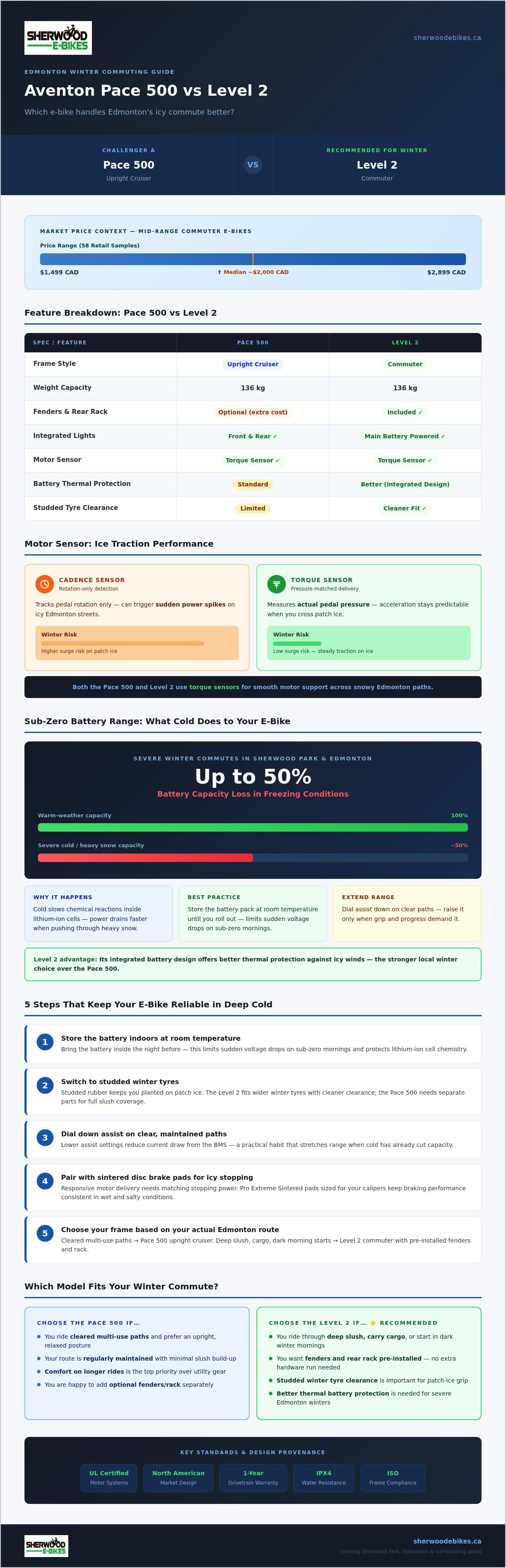
On icy streets you need assist that rises with real pedal pressure, not a blunt on-off surge. Torque sensors deliver instant motor output matched to your physical pedaling effort. Cadence sensors merely track pedal rotation, which can trigger sudden power spikes on icy Edmonton streets. A torque sensor calculates actual pressure, so acceleration stays predictable when you cross patch ice.
For stopping power that keeps pace with that control, pair responsive motor delivery with Pro Extreme Sintered pads sized for your calipers. Models tuned for the North American market use fine-tuned software for subtle motor engagement that helps keep tires planted on slick pavement. Riders who need exact speed control in winter benefit from torque sensing; cadence setups still suit regular trips on dry, clear roads.
Sub-zero battery range shrinks fast in Edmonton's climate
Freezing mornings in Sherwood Park and Edmonton can cut e-bike battery capacity by up to 50 percent on severe winter commutes. Cold slows the chemical reactions inside lithium-ion cells, so power drains faster when you push through heavy snow.
In our professional view, the Level 2 is the stronger local winter choice over the Pace 500 because its integrated battery design offers better thermal protection against icy winds. Store the pack at room temperature until you roll out: that habit limits sudden voltage drops on sub-zero mornings. UL certified motor systems help these bikes keep working in freezing conditions so you can skip traffic, yet deep snow still draws high current from the battery brain (BMS). Dial assist down when paths are clear to stretch range; raise it only when grip and progress demand it.
Riders on snow-covered trails gain grip from wide winter tires when cold already lowers efficiency. Browse the current bike selection when you are ready to match a winter commuter to your distance and storage routine.
Aventon Pace 500 vs Level 2 for Edmonton winter commuting: feature breakdown
Your load, posture, and appetite for pre-installed gear decide which of these two frames earns a place in the shed.
| Spec / Feature | Aventon Pace 500 | Aventon Level 2 |
|---|---|---|
| Frame Style | Upright Cruiser | Commuter |
| Weight Capacity | 136 kg | 136 kg |
| Fenders & Rack | Optional | Included |
Both models use torque sensors to deliver smooth motor support across snowy Edmonton paths. The Level 2 arrives with pre-installed fenders and a rear rack for wet, salty roads. The Pace 500 offers a relaxed upright riding stance that reduces strain on longer rides when paths are cleared. Frame choice then follows a simple split: heavy daily cargo favours the equipped commuter layout, while maximum upright comfort on maintained routes favours the cruiser.
You can review both layouts in the product line-up and match geometry to the cargo and posture you actually use. More on this: Sherwood E-Bikes Ltd.
Racks and fenders ready out of the box cut winter setup time
Slush, road spray, and grocery runs punish bikes that still need basic accessories bolted on. The Level 2 ships commute-ready with pre-installed fenders and a rear rack for Edmonton winter riding. Integrated lights powered by the main battery keep you visible on dark morning trips.
The Pace 500 includes front and rear lights built into the frame, but it lacks standard fenders or a rear rack. Adding wide winter tires on the Pace 500 still means buying separate parts if you want full slush coverage. The Level 2 suits daily utility riders who need cargo capacity without an extra hardware run.
Studded winter tires fit cleaner on the Level 2 clearance
Studded rubber is what keeps contact when polished ice replaces asphalt. The Level 2 offers generous clearance for studded tires, and its front suspension fork absorbs harsh hits from frozen ruts. The Pace 500 uses a rigid front fork and swept-back handlebars that prioritize comfort on clear paths over deep-snow agility. In heavy snowfall, broad options such as wide winter tires float better than standard city rubber.
Packed slush freezes inside narrow fenders and can lock wheel rotation unless you leave clearance and clear debris. The Level 2 fits riders who face serious winter control demands; the Pace 500 fits dry-cold conditions on maintained routes.
5 Steps that keep your electric bike reliable in deep cold
A short pre-season checklist protects range, grip, and fasteners before Edmonton frost sets in.
- Equip wide winter tires: Mount treaded rubber to boost traction across icy roads.
- Insulate the battery: Protect the pack from extreme cold to hold steady range and guard your battery brain (BMS).
- Inspect the drive system: Set assist so power delivery stays smooth on slippery surfaces.
- Mount frame bags: Attach a DEUTER MONDEGO FRAME BAG to carry essential tools on the commute.
- Tighten fasteners: Use a Park Tool AWS-11 Folding Hex Wrench Set to check hardware before harsh cycles of freeze and thaw.
Cold weather drains an unmaintained pack quickly. Extra tire surface contact is the practical path to fewer sudden slides when snow piles up.
When an upright commuter e-bike loses grip in heavy snow
Upright commuter frames lose traction quickly when slush builds on unplowed Edmonton roads. Narrow tires through deep drifts behave like a shopping cart on ice: forward momentum stalls as treads dig into hidden ruts instead of floating over snowpack. High rider weight position also makes sudden balance corrections harder.
ENVO Drive Systems is a Canadian-based pioneer in engineering and manufacturing micro-electric mobility products. Their engineering addresses these winter hazards by prioritizing frame stability and torque delivery. A dedicated fat tire ebike platform keeps you rolling with more float when storms leave routes unplowed.
Tip: If your route includes deep unplowed snow trails, consider a dedicated fat tire ebike platform instead of an urban commuter.
Local Alberta shops where you can test ride before winter
Shops across Edmonton, St. Albert, and Sherwood Park offer winter testing on the Pace 500 and Level 2. You can feel 500W output on snowy municipal streets and learn how torque-sensor assist reacts to freezing asphalt. An authorized dealer visit also lets you judge build quality in person before cold locks in your routine.
Treat a short local ride as a rehearsal for the real commute. Ask regional retailers for a personalized quote on model availability and local promotions.
- Edmonton cycling hubs offer hands-on fitting.
- Sherwood Park locations stock seasonal cold-weather accessories.
Local support keeps servicing within reach through harsh Alberta winters.
Frequently asked questions
Which bike is lighter and more nimble?
Frame geometry and component selection determine overall weight, so lighter builds are easier to move through tight urban traffic. The Pace 500 uses an upright cruiser frame that emphasises comfort, whereas commuter models like the Level 2 add built-in racks and fenders that increase functional weight. For riders who want urban agility, ENVO Drive Systems, a Canadian-based pioneer in engineering and manufacturing micro-electric mobility products, designs lightweight alternatives aimed at active city riding. Request a personalized quote if you need specific weight figures for your daily route.
Do hydraulic brakes matter for city commuting?
Hydraulic disc brakes provide strong stopping power and consistent lever feel in freezing or wet weather. Standard mechanical setups need frequent cable adjustments as temperatures drop on Edmonton winter commutes. Reliable braking matters when you face icy road hazards, and high-performance hydraulic systems help you slow with less lever effort in the cold.
Can I adjust PAS levels on these models?
You can customize pedal help levels (PAS levels) through the handlebar display on both models. The integrated controller lets you step motor output to match cadence or terrain. Fine-tuning assist helps manage energy use in heavy snow, and software-controlled motors designed for the North American market support precise power changes.
How does a torque sensor compare to a cadence sensor?
A torque sensor measures physical effort on the pedals and delivers dynamic assistance that follows your natural pedaling motion. Cadence sensors detect rotation speed and push preset power regardless of how hard you press. Torque sensing responds when you start on steep inclines or push through deep winter slush, which helps battery use and control on slippery surfaces.
What battery range can I expect from these bikes?
Cold weather reduces overall efficiency, yet realistic winter commuting often yields between 30 and 60 kilometers per charge depending on assist settings. Higher assist and low tire pressures deplete reserves faster. In the broader Canadian retail market, current industry offerings span a price band from $1,499 to $2,899 based on 58 listing samples from top market competitors. Contact the team for a personalized quote on extra battery options if you need more winter range.
Ready Your E-Bike for Cold Conditions
The Aventon Pace 500 versus Level 2 choice for Edmonton winter commuting still turns on sensor feel, frame posture, and whether fenders and racks arrive installed. Both electric bicycles can handle cold-weather travel on snowy Alberta roads when you match the bike to route and cargo. For stronger stopping control on icy descents in 2026, fit Jagwire Mountain Pro Extreme Brake Pads before the heaviest slush arrives. Components built with North American market design provenance and strict UL certification support safer daily rides. Reach the advisers at Sherwood E-Bikes Ltd. for a personalized quote on your winter setup.


